Educational Challenges Faced by Women in India
Social Issues Social Inequalities and exclusionPosted by NewAdmin on 2025-01-24 10:05:03 |
Share: Facebook | Twitter | Whatsapp | Linkedin Visits: 71
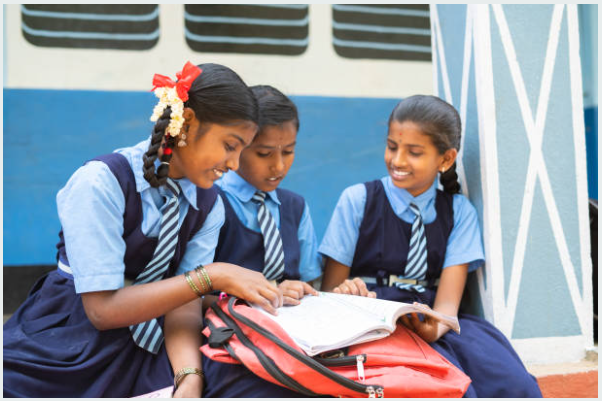
Despite significant improvements in the status of Indian women over the last century, many still remain part of an underprivileged group, particularly in terms of education. While women in India do not constitute a homogenous group in terms of class or caste, they all face unique challenges that require attention. The 1953 Backward Classes Commission recognized Indian women as a backward group, underscoring the need for specialized support. The Ministry of Education identifies girls as one of the most disadvantaged groups, alongside Scheduled Castes and Tribes, in terms of educational access and opportunities.
In a country where women are legally equal to men, their social and educational standing often does not reflect this. Despite their constitutional rights, Indian women continue to face educational, economic, political, and social obstacles, making them one of the largest barriers to rapid social change. The government's appointment of a separate committee to address the status of women in India acknowledges the deep-rooted nature of these challenges. The gap between legal equality and societal reality is particularly evident in education, where women’s lower literacy rates contribute to the nation’s overall low literacy figures.
This disparity is visible in the enrollment rates of girls and boys across all levels of education. From primary schools to universities, fewer girls are enrolled compared to boys, a gap that is especially pronounced in rural areas. Despite the constitutional mandate for free and compulsory education until the age of 14, achieving 100% enrollment for girls remains an elusive goal, particularly in villages. The economic and social factors that prevent girls from attending school are multifaceted. In rural settings, girls are often tasked with household chores, such as caring for siblings, fetching water, and assisting with farming work, which leaves little time for education. Moreover, limited financial resources often lead families to prioritize the education of boys over girls, as they are seen as the primary earners or inheritors.
The traditional mindset that girls will eventually marry and become housewives further discourages investment in their education. This lack of motivation is compounded by the absence of a direct connection between education and economic betterment in the eyes of many families. However, it is crucial to recognize the link between education, effective motherhood, and efficient household management. Educated women are more likely to raise well-educated children, which can have long-term benefits for society.
For India’s democratic and social progress to be genuine, education must be linked with economic and social development. The focus should be on improving primary education, particularly for girls in rural areas, to ensure that future generations are better equipped to contribute to the nation’s growth. Ignoring the educational needs of women not only hinders their personal development but also impedes the broader development of the country.
Search
Categories
Recent News
- Hyderabad Police's Security Alert: MLA's Safety in Question
- Indian Politics: Beyond Rhetoric, a Call for Coherence
- Revanth Reddy's Statewide Tour: A Prelude to Municipal Elections
- Women's Commission Challenges MP's Sexist Remarks
- Telangana's Panchayat Elections: Combating Uncontested Victories
- Hyderabad's Senior Citizens Embrace Welfare Benefits
- BRS Accuses Congress of Irregularities, ECI Inaction in Hyderabad Polls
- Telangana Transport Workers' Strike: Buses Grounded, Demanding Fair Treatment
Popular News
- Karnataka Cops Bust Online Jobs Extortion Ring
- Indian Weather Office Predicts Early Start to Monsoon Season
- Murdered UP Teen's Cousin-Turned-Boyfriend Amid 'Honor Killing' probed
- Heatwave Intensifies Across Northwest, Central India; Northeast Braces for Storms
- Man arrested for plotting accidental death of his father