Child Marriage in India - Recent Statistics and Insights
Social Issues Social Inequalities and exclusionPosted by NewAdmin on 2025-01-24 10:15:11 |
Share: Facebook | Twitter | Whatsapp | Linkedin Visits: 68
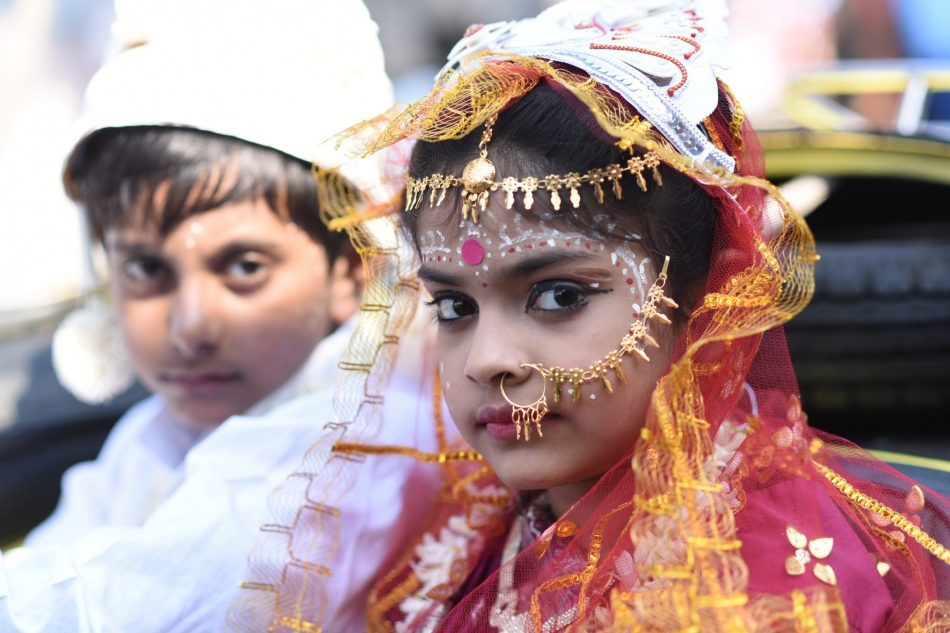
Child marriage has been a deeply rooted issue in India for centuries, and despite legal prohibitions, it continues to be a significant challenge. Marriage, a sacred bond between consenting individuals, is often distorted when it involves minors, which goes against the very essence of this institution. In India, the practice of child marriage remains widespread, negatively affecting the lives of young girls and their communities.
Recent government data reveals alarming statistics about the prevalence of child marriage. Among married Hindu women, 31.3% marry before the age of 18, while 30.6% of Muslim women are married off at a similar age. Furthermore, 16% of Hindu women marry before the age of 10, while the figure for Muslim women is 5%. In comparison, only 6% of men marry before the age of 18. The legal age for marriage in India is 18 for women and 21 for men, and any marriage under these ages is considered a child marriage.
Child marriage exposes young girls to multiple risks, including higher maternal mortality rates and increased vulnerability to domestic violence. Girls who give birth before the age of 15 face greater health risks, and their infants are more likely to experience health complications. Moreover, early marriages often disrupt education, leaving child brides without the skills or agency to negotiate within their households, making them prone to domestic abuse.
Despite the government’s efforts, India has struggled to enforce laws aimed at curbing child marriage. The Child Marriage Restraint Act, first enacted by the British in 1929, set the minimum age for marriage at 14 for girls and 18 for boys. In 2006, the legal age for girls was raised to 18. However, law enforcement has been ineffective, with only a small percentage of cases resulting in convictions. In 2014, police registered just 280 cases under the Prohibition of Child Marriage Act, with only 15 convictions from the 103 cases decided by courts that year.
The fight against child marriage requires more than just legal action; it necessitates a shift in societal attitudes. Awareness campaigns, education for girls, and gender equality initiatives are essential in addressing this issue. Only when these practices are eradicated can India move closer to achieving true gender equality and social progress.
Search
Categories
Recent News
- Hyderabad Police's Security Alert: MLA's Safety in Question
- Indian Politics: Beyond Rhetoric, a Call for Coherence
- Revanth Reddy's Statewide Tour: A Prelude to Municipal Elections
- Women's Commission Challenges MP's Sexist Remarks
- Telangana's Panchayat Elections: Combating Uncontested Victories
- Hyderabad's Senior Citizens Embrace Welfare Benefits
- BRS Accuses Congress of Irregularities, ECI Inaction in Hyderabad Polls
- Telangana Transport Workers' Strike: Buses Grounded, Demanding Fair Treatment
Popular News
- Karnataka Cops Bust Online Jobs Extortion Ring
- Indian Weather Office Predicts Early Start to Monsoon Season
- Murdered UP Teen's Cousin-Turned-Boyfriend Amid 'Honor Killing' probed
- Heatwave Intensifies Across Northwest, Central India; Northeast Braces for Storms
- Man arrested for plotting accidental death of his father