The Partition of Bengal: Lord Curzon’s Divisive Policy
History Indian HistoryPosted by NewAdmin on 2025-01-31 09:20:31 |
Share: Facebook | Twitter | Whatsapp | Linkedin Visits: 60
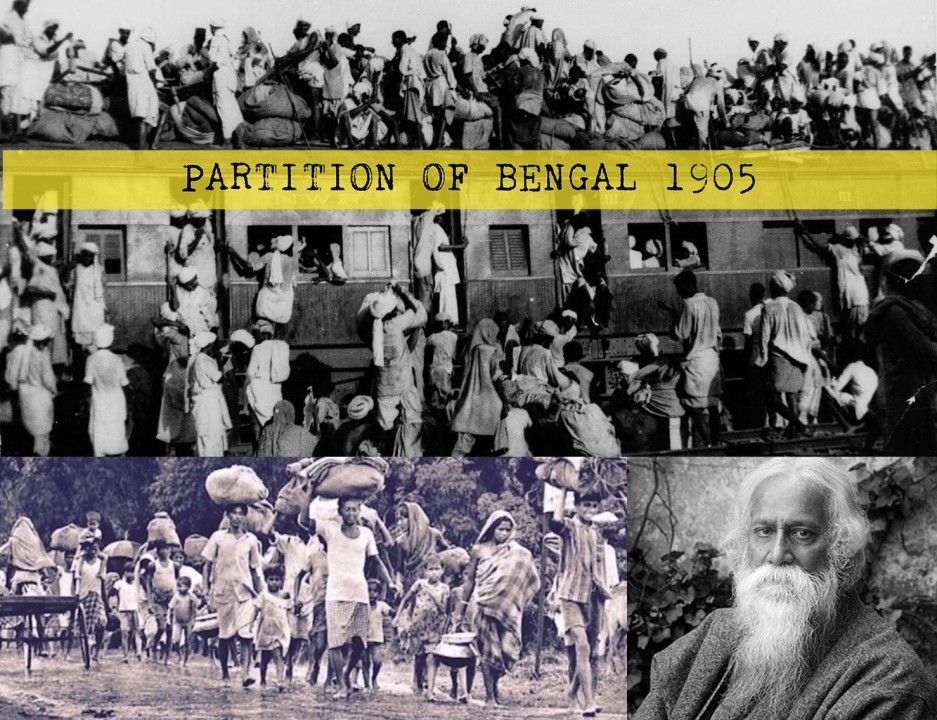
The Partition of Bengal was announced in 1905 by Lord Curzon, the then Viceroy of India, and it remains one of the most controversial and significant events in the history of British India. The partition was presented as an administrative necessity, aimed at improving the efficiency of governance in a large and diverse region. However, it was widely seen as a divide-and-rule strategy intended to weaken the growing nationalist movement by creating divisions between the Bengali Hindus and Muslims.
Bengal, at the time, was one of the largest provinces in British India and had a population that was deeply heterogeneous, with a significant number of Hindus and Muslims living in close proximity. Curzon argued that the region’s vast size and its diverse population made it difficult to govern effectively. The solution he proposed was to split Bengal into two separate provinces: one consisting of Eastern Bengal and Assam, with a Muslim majority, and the other comprising Western Bengal with a Hindu majority. Curzon justified this move as an effort to improve administrative efficiency, but the real motive was seen as an attempt to dilute the political power of the Hindus, who were leading the nationalist movement at the time, while strengthening the influence of the Muslim community.
The reaction to the partition was vehemently negative across India, particularly in Bengal. Hindus saw the move as a direct attack on their unity and cultural identity, as Bengal had long been a center of intellectual and nationalist activities. Nationalists, including leaders like Surendranath Banerjee, vehemently opposed the partition, seeing it as a way to break the unity of the Bengali people and suppress their political awakening. The partition also led to widespread protests, including boycotts of British goods and institutions, which became a hallmark of the early Swadeshi Movement.
The Partition of Bengal intensified communal tensions between Hindus and Muslims, which had not been as pronounced before. The creation of two provinces, with a Muslim-majority East Bengal and a Hindu-majority West Bengal, exacerbated the divide between the communities, fueling sectarian strife.
Due to mounting protests, both from political groups and the general population, the British government eventually reversed the partition in 1911, recognizing the damage it had done to national unity. However, the effects of the partition on communal relations and political consciousness continued to influence Indian politics for years, contributing to the eventual division of India in 1947. The partition remains a symbol of British colonial manipulation and the use of divide-and-rule tactics that had long-term consequences for Indian society.
Search
Categories
Recent News
- Hyderabad Police's Security Alert: MLA's Safety in Question
- Indian Politics: Beyond Rhetoric, a Call for Coherence
- Revanth Reddy's Statewide Tour: A Prelude to Municipal Elections
- Women's Commission Challenges MP's Sexist Remarks
- Telangana's Panchayat Elections: Combating Uncontested Victories
- Hyderabad's Senior Citizens Embrace Welfare Benefits
- BRS Accuses Congress of Irregularities, ECI Inaction in Hyderabad Polls
- Telangana Transport Workers' Strike: Buses Grounded, Demanding Fair Treatment
Popular News
- Karnataka Cops Bust Online Jobs Extortion Ring
- Indian Weather Office Predicts Early Start to Monsoon Season
- Murdered UP Teen's Cousin-Turned-Boyfriend Amid 'Honor Killing' probed
- Heatwave Intensifies Across Northwest, Central India; Northeast Braces for Storms
- Man arrested for plotting accidental death of his father