Surat Split of the Indian National Congress (1907): A Turning Point in Indian Politics
History Indian HistoryPosted by NewAdmin on 2025-02-03 08:52:52 |
Share: Facebook | Twitter | Whatsapp | Linkedin Visits: 64
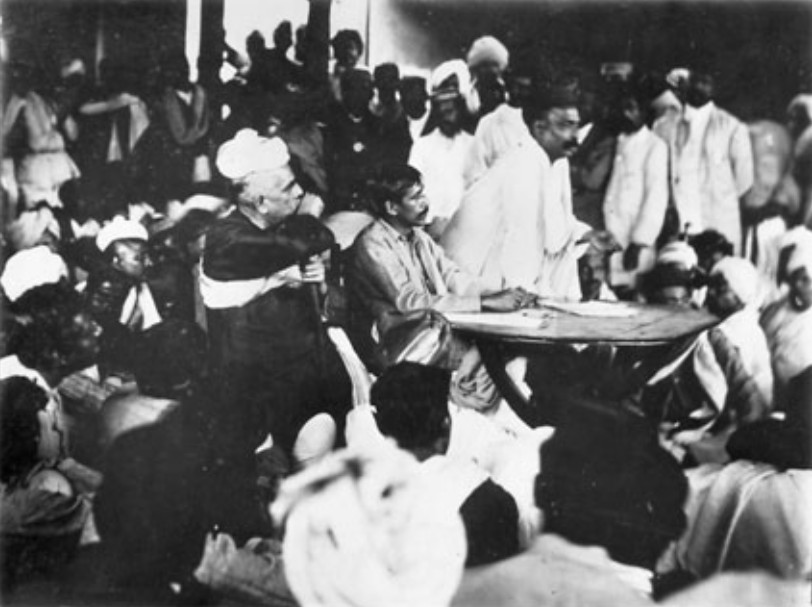
The Surat Split of the Indian National Congress (INC) occurred in 1907 during the annual session held in Surat, a city in present-day Gujarat. This event marked a significant division between the Moderates and the Extremists within the Congress, leading to a deep ideological rift that shaped the course of the Indian freedom movement in the years to come.
The split arose primarily due to differences in political approach and methods. The Moderates, led by leaders such as Gopal Krishna Gokhale, Dadabhai Naoroji, and Surendranath Banerjee, believed in gradual reforms and sought to achieve self-governance by cooperating with the British through constitutional means. They preferred methods such as petitions, discussions, and negotiations. On the other hand, the Extremists, led by Bal Gangadhar Tilak, Lala Lajpat Rai, and Bipin Chandra Pal, were frustrated with the slow pace of reforms and advocated for more aggressive strategies, including boycotts, passive resistance, and mass movements.
Tensions between the two factions had been building for some time, particularly after the Partition of Bengal in 1905, which the British had imposed to weaken Indian nationalism. While the Extremists sought immediate action through mass protests and Swadeshi movements, the Moderates remained committed to constitutional methods. The conflict reached a breaking point during the Surat session in December 1907, when the election of the Congress president became a matter of contention. The Extremists wanted Bal Gangadhar Tilak as the president, while the Moderates supported Rash Behari Ghosh.
As disagreements escalated, the session turned chaotic. Heated arguments led to physical clashes, and eventually, the Congress split, with the Moderates gaining control of the organization while the Extremists were expelled. This division weakened the nationalist movement temporarily, as the British took advantage of the internal conflict by repressing the Extremists and supporting the Moderates.
However, despite the setback, the Extremists continued their struggle, and their ideas eventually gained more prominence, especially after the rise of Mahatma Gandhi in the 1920s. The Surat Split remains a crucial event in Indian history, highlighting the ideological struggles within the national movement and the evolving strategies for achieving independence.
Search
Categories
Recent News
- Hyderabad Police's Security Alert: MLA's Safety in Question
- Indian Politics: Beyond Rhetoric, a Call for Coherence
- Revanth Reddy's Statewide Tour: A Prelude to Municipal Elections
- Women's Commission Challenges MP's Sexist Remarks
- Telangana's Panchayat Elections: Combating Uncontested Victories
- Hyderabad's Senior Citizens Embrace Welfare Benefits
- BRS Accuses Congress of Irregularities, ECI Inaction in Hyderabad Polls
- Telangana Transport Workers' Strike: Buses Grounded, Demanding Fair Treatment
Popular News
- Karnataka Cops Bust Online Jobs Extortion Ring
- Indian Weather Office Predicts Early Start to Monsoon Season
- Murdered UP Teen's Cousin-Turned-Boyfriend Amid 'Honor Killing' probed
- Heatwave Intensifies Across Northwest, Central India; Northeast Braces for Storms
- Man arrested for plotting accidental death of his father