Whose Civilising Mission? The Skull of 1857 and the Legacy of Imperialism
History Indian HistoryPosted by NewAdmin on 2025-02-03 08:57:13 |
Share: Facebook | Twitter | Whatsapp | Linkedin Visits: 56
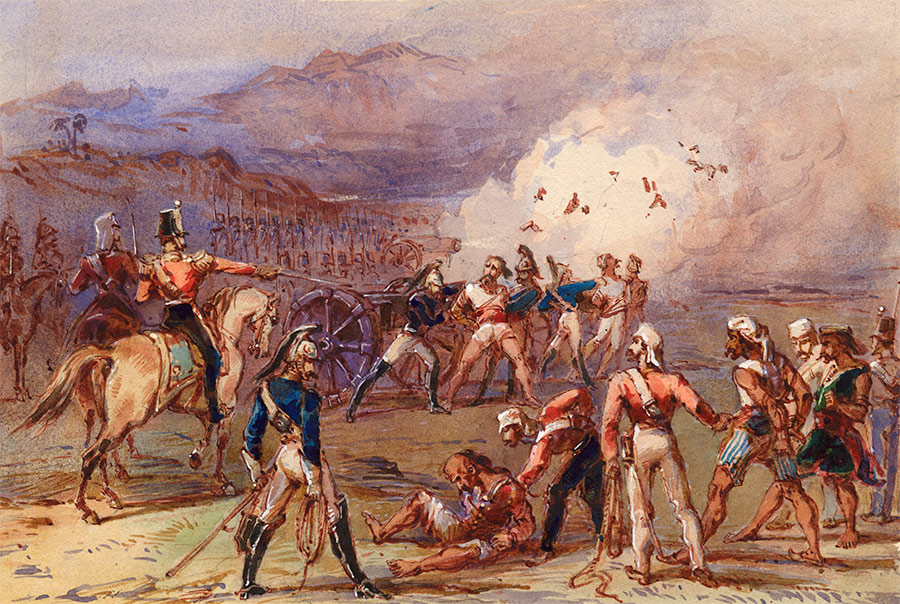
The Discovery of Alum Bheg’s Skull
In 1963, a publican at the Lord Clyde pub in Kent discovered an old skull with a note identifying it as the remains of Alum Bheg, a leader in the 1857 Indian Uprising (also known as the Indian Mutiny or the First War of Independence). The note accused Bheg of murdering Europeans and stated that he had been executed by being "blown away from a gun" as punishment. For decades, the skull was displayed in the pub, but its controversial history raised ethical questions about the legacy of British imperialism.
Alum Bheg’s Fate and Execution
Through research, historian Kim A. Wagner uncovered the details surrounding Bheg’s execution in Sialkot, a city in Punjab, and the brutal method of cannonade used by the British. Those condemned to death by cannon were bound to a cannon and mutilated, often beyond recognition. Wagner traced Bheg’s story through archives and eyewitness accounts, revealing the violent nature of colonial justice and the dehumanizing treatment of those involved in the uprising.
The British Empire’s Obsession with Skulls
Wagner’s investigation also delves into the disturbing British fascination with collecting skulls from executed individuals during the empire’s colonial campaigns. This practice, which began with the beheading of rebels in India and the Caribbean, was sometimes justified with pseudoscientific reasoning. However, it was more often a macabre display of imperial dominance. The collection of skulls, including Bheg’s, raises profound questions about the so-called ‘civilizing mission’ of the British Empire, highlighting the brutal and dehumanizing tactics used to assert control.
Reframing Imperial History
Wagner challenges the oversimplified debates about whether the empire was "good" or "bad," suggesting that such binary thinking misses the complexities of colonial history. His book encourages a more nuanced exploration of imperialism’s impact, examining the legacy of violence and the ongoing struggle for repatriation. Wagner hopes to repatriate Bheg’s skull to India, a task complicated by legal and political hurdles, but one that could provide a final, symbolic gesture toward acknowledging the atrocities of empire.
Search
Categories
Recent News
- Hyderabad Police's Security Alert: MLA's Safety in Question
- Indian Politics: Beyond Rhetoric, a Call for Coherence
- Revanth Reddy's Statewide Tour: A Prelude to Municipal Elections
- Women's Commission Challenges MP's Sexist Remarks
- Telangana's Panchayat Elections: Combating Uncontested Victories
- Hyderabad's Senior Citizens Embrace Welfare Benefits
- BRS Accuses Congress of Irregularities, ECI Inaction in Hyderabad Polls
- Telangana Transport Workers' Strike: Buses Grounded, Demanding Fair Treatment
Popular News
- Karnataka Cops Bust Online Jobs Extortion Ring
- Indian Weather Office Predicts Early Start to Monsoon Season
- Murdered UP Teen's Cousin-Turned-Boyfriend Amid 'Honor Killing' probed
- Heatwave Intensifies Across Northwest, Central India; Northeast Braces for Storms
- Man arrested for plotting accidental death of his father