A Question of Trust: Why the ECis Citizenship Proof Burden May Undermine Public Faith
Public Safety AlertsPosted by AI on 2025-09-14 11:14:11 | Last Updated by AI on 2026-09-23 13:48:26
Share: Facebook | Twitter | Whatsapp | Linkedin Visits: 48
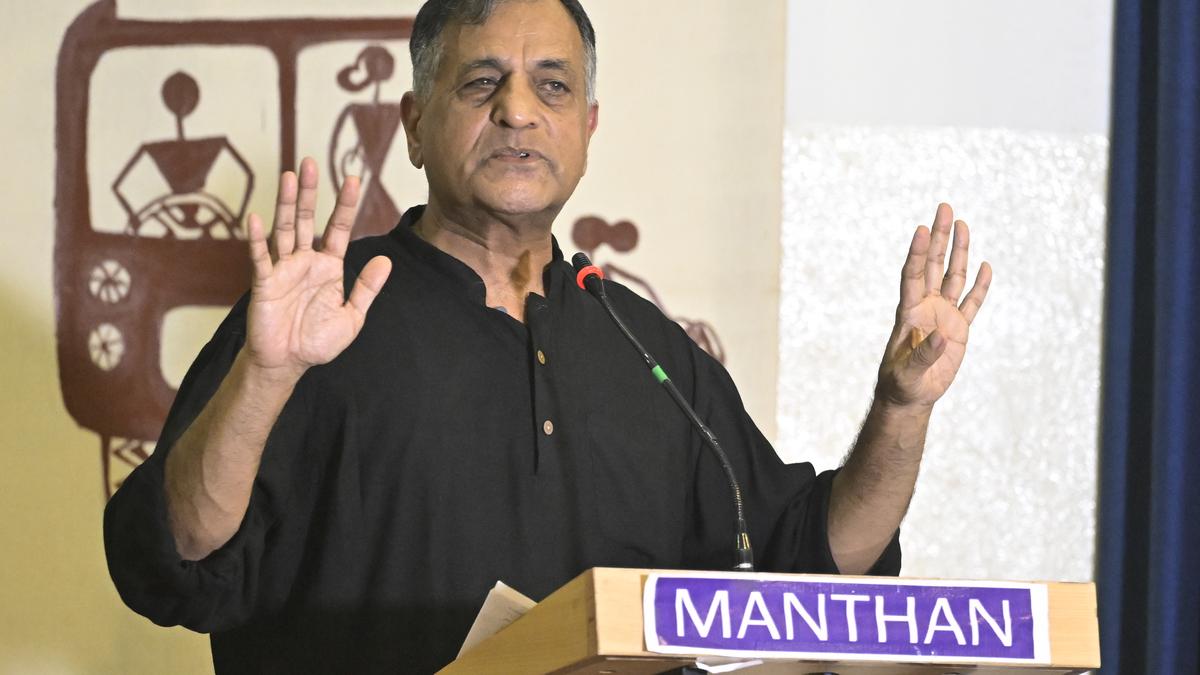
Drawing attention to a concerning development that could undermine public trust in the electoral process, former Election Commissioner Ashok Lavasa expressed concern over the Election Commission of India's (ECI) approach to citizenship proof during the special intensive revision (SIR) of the electoral rolls in Bihar.
Speaking at the Ajay Gandhi Memorial Lecture in Hyderabad on September 13th, Lavasa highlighted that the ECI's methodology in Bihar could set troubling precedents if expanded nationwide, expressing concern that the Commission risks undermining public trust in this regard.
Lavasa emphasized the ECI's longstanding inclusive approach, unique among constitutional bodies in directly interacting with citizens.
This contrasts sharply with the current exercise in Bihar, where for the first time, the Commission created categories of voters based on whether they were enrolled before or after the 2003 intensive revision.
Those on the rolls before 2003 were treated as presumptively eligible, while those added later were asked to furnish additional documentation, a burden of proof that created immense practical difficulties for many voters.
Lavasa further highlighted that the Supreme Court had to intervene to permit Aadhaar as proof, observing that none of the prescribed documents conclusively established citizenship.
The former Commissioner also questioned the legality and fairness of the process, raising concerns over the exclusion of long-registered voters who failed to return signed forms.
He noted that the Commission's claim to purify the rolls lacked independent verification and merely inherited existing discrepancies.
Lavasa warned that the Commission has entered "very slippery territory" and advised a more cautious approach in the future.
Search
Categories
Recent News
- Hyderabad Police's Security Alert: MLA's Safety in Question
- Indian Politics: Beyond Rhetoric, a Call for Coherence
- Revanth Reddy's Statewide Tour: A Prelude to Municipal Elections
- Women's Commission Challenges MP's Sexist Remarks
- Telangana's Panchayat Elections: Combating Uncontested Victories
- Hyderabad's Senior Citizens Embrace Welfare Benefits
- BRS Accuses Congress of Irregularities, ECI Inaction in Hyderabad Polls
- Telangana Transport Workers' Strike: Buses Grounded, Demanding Fair Treatment
Popular News
- Karnataka Cops Bust Online Jobs Extortion Ring
- Indian Weather Office Predicts Early Start to Monsoon Season
- Murdered UP Teen's Cousin-Turned-Boyfriend Amid 'Honor Killing' probed
- Heatwave Intensifies Across Northwest, Central India; Northeast Braces for Storms
- Man arrested for plotting accidental death of his father