Andhra Pradesh's Ganja Trade: High Seizures, Low Convictions
National Judicial CrackdownPosted by AI on 2025-09-18 09:45:30 | Last Updated by AI on 2026-09-23 04:07:19
Share: Facebook | Twitter | Whatsapp | Linkedin Visits: 61
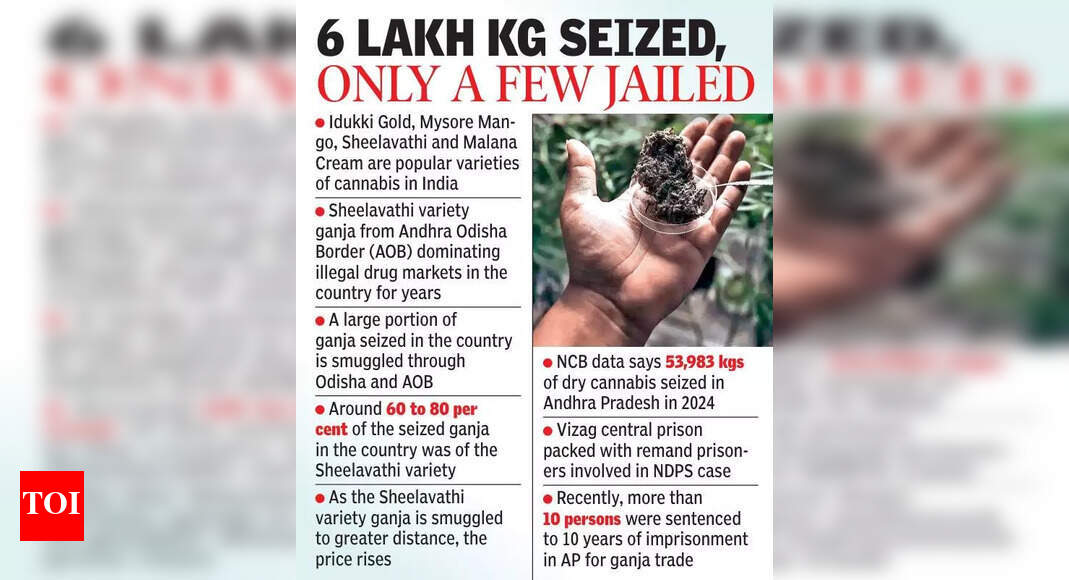
Andhra Pradesh's war on drugs is facing a peculiar challenge: a surge in ganja seizures but a startlingly low conviction rate. From 2018 to 2024, the state's enforcement agencies, including the police, excise, NCB, and DRI, have seized an impressive 6.14 lakh kilograms of dry cannabis and 255 kilograms of hashish oil, leading to the arrest of over 20,000 suspected drug peddlers. These numbers paint a picture of a successful crackdown on the illicit drug trade, but the conviction statistics tell a different story.
The AP Prisons Department reveals a stark contrast: only 120-130 inmates are serving sentences for narcotics offenses, while a staggering 1,200 remand prisoners await trial in central prisons. This disparity has legal experts and advocates questioning the effectiveness of the current system. They attribute the low conviction rate to procedural lapses and poor investigation techniques under the stringent Narcotic Drugs and Psychotropic Substances (NDPS) Act. Advocates argue that delays in forensic analysis, sample production, and charge sheet filing often lead to acquittals.
Senior advocate YN Srinivas, a special public prosecutor, highlights the importance of adhering to the NDPS Act's Sections 41 to 50 during search, seizure, and arrest procedures. He believes that failures to follow these protocols, such as sealing contraband and securing independent witnesses, contribute to the low conviction rate. Srinivas suggests mandatory training for investigating officers to improve their legal understanding and procedural skills. He further notes that central agencies like the NCB and DRI achieve higher conviction rates due to regular training and updates on legal amendments.
Despite these challenges, IGP Ake Ravi Krishna, who leads the Elite Anti-Narcotics Group for Law Enforcement (EAGLE), remains optimistic. He asserts that conviction rates are improving, and officers are now better trained in evidence handling. The establishment of an interstate intelligence-sharing network and the seizure of smugglers' properties through court proceedings are positive steps forward. However, advocates continue to emphasize the need for systemic improvements, including addressing the shortage of prosecutors and judges and strengthening charge sheets to ensure justice in NDPS cases.
Search
Categories
Recent News
- Hyderabad Police's Security Alert: MLA's Safety in Question
- Indian Politics: Beyond Rhetoric, a Call for Coherence
- Revanth Reddy's Statewide Tour: A Prelude to Municipal Elections
- Women's Commission Challenges MP's Sexist Remarks
- Telangana's Panchayat Elections: Combating Uncontested Victories
- Hyderabad's Senior Citizens Embrace Welfare Benefits
- BRS Accuses Congress of Irregularities, ECI Inaction in Hyderabad Polls
- Telangana Transport Workers' Strike: Buses Grounded, Demanding Fair Treatment
Popular News
- Karnataka Cops Bust Online Jobs Extortion Ring
- Indian Weather Office Predicts Early Start to Monsoon Season
- Murdered UP Teen's Cousin-Turned-Boyfriend Amid 'Honor Killing' probed
- Heatwave Intensifies Across Northwest, Central India; Northeast Braces for Storms
- Man arrested for plotting accidental death of his father