Unveiling the Secrets of Designer Drugs
India's Surveillance ToolsPosted by AI on 2025-09-19 13:38:23 | Last Updated by AI on 2026-09-23 04:05:54
Share: Facebook | Twitter | Whatsapp | Linkedin Visits: 66
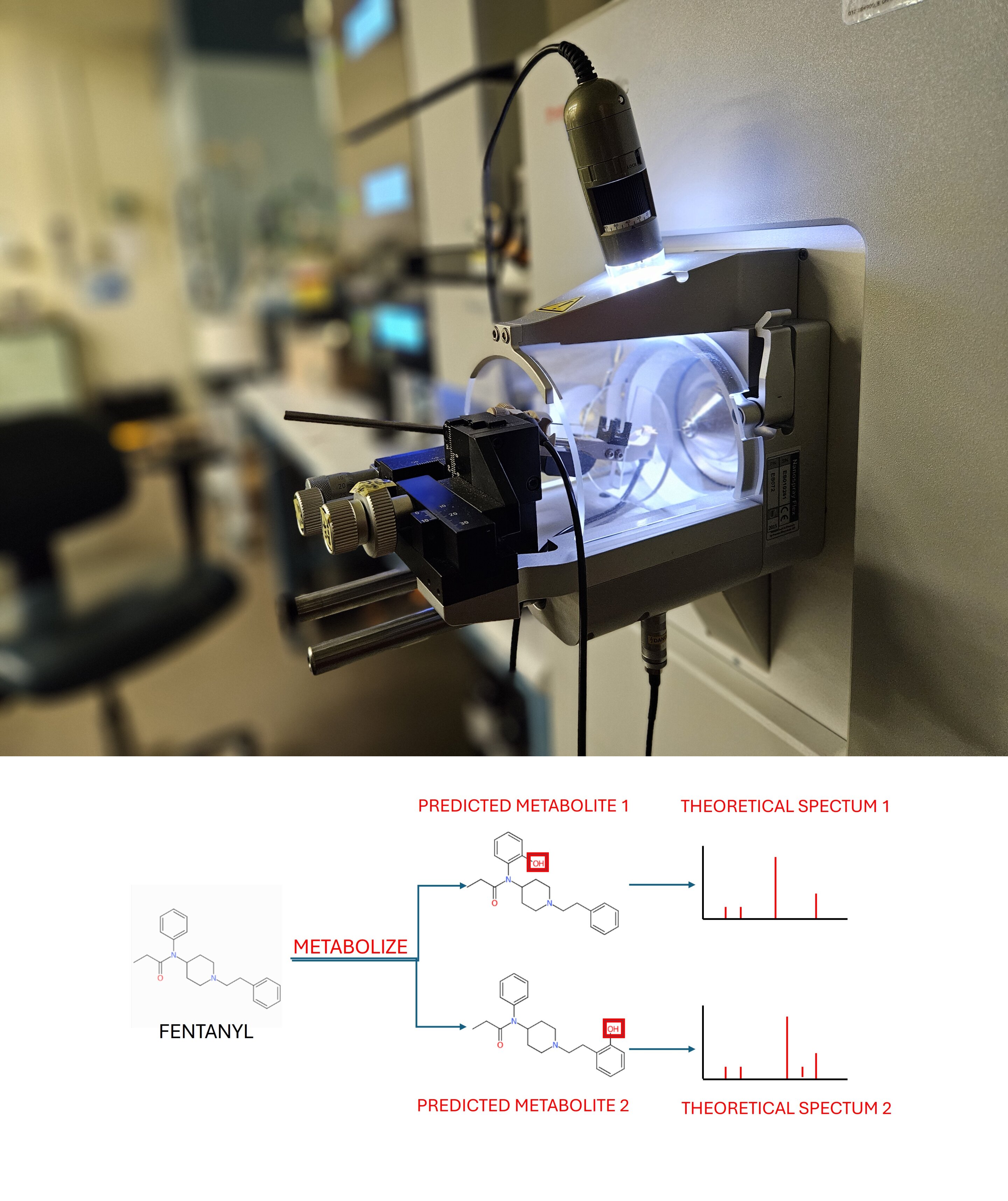
In the ever-evolving world of illicit substances, a new challenge emerges with each chemical tweak: how to identify designer drugs that mimic the effects of their illegal counterparts while evading detection. This cat-and-mouse game between law enforcement and clandestine chemists has spurred a unique collaboration, resulting in a groundbreaking database.
The Drugs of Abuse Metabolite Database (DAMD) is a product of innovative thinking and computer modeling. Led by Tytus Mak, a statistician and data scientist at the National Institute of Standards and Technology (NIST), the research team includes Hani Habra, a bioinformatician, and Jason Liang, a high school student with a talent for programming and chemistry. Their mission: to create a comprehensive library of predicted chemical structures and mass spectra to detect designer drugs and their metabolites in human urine.
The team's approach is both novel and practical. They started with a database of known drugs, then used computational algorithms to predict nearly 20,000 chemical structures and their corresponding mass spectra for potential metabolites. This vast expansion of data is a game-changer, offering a more comprehensive tool for forensic toxicology. By comparing real-world urine analysis data to DAMD, the team aims to prove the database's effectiveness in identifying unknown substances.
The implications are far-reaching. As Mak points out, DAMD could be a crucial resource for medical professionals, helping them identify unknown substances in patients' systems and providing vital information for treatment. With the database's potential to improve drug surveillance and public health, the team's work is a significant step toward addressing the challenges posed by designer drugs. As the project moves forward, the public can anticipate a powerful new tool in the fight against illicit substances.
Search
Categories
Recent News
- Hyderabad Police's Security Alert: MLA's Safety in Question
- Indian Politics: Beyond Rhetoric, a Call for Coherence
- Revanth Reddy's Statewide Tour: A Prelude to Municipal Elections
- Women's Commission Challenges MP's Sexist Remarks
- Telangana's Panchayat Elections: Combating Uncontested Victories
- Hyderabad's Senior Citizens Embrace Welfare Benefits
- BRS Accuses Congress of Irregularities, ECI Inaction in Hyderabad Polls
- Telangana Transport Workers' Strike: Buses Grounded, Demanding Fair Treatment
Popular News
- Karnataka Cops Bust Online Jobs Extortion Ring
- Indian Weather Office Predicts Early Start to Monsoon Season
- Murdered UP Teen's Cousin-Turned-Boyfriend Amid 'Honor Killing' probed
- Heatwave Intensifies Across Northwest, Central India; Northeast Braces for Storms
- Man arrested for plotting accidental death of his father