Resurgence of Ancient Hindu Sects at Kumbh Mela 2025
Politics Politics of IndiaPosted by NewAdmin on 2025-02-19 04:32:46 |
Share: Facebook | Twitter | Whatsapp | Linkedin Visits: 120
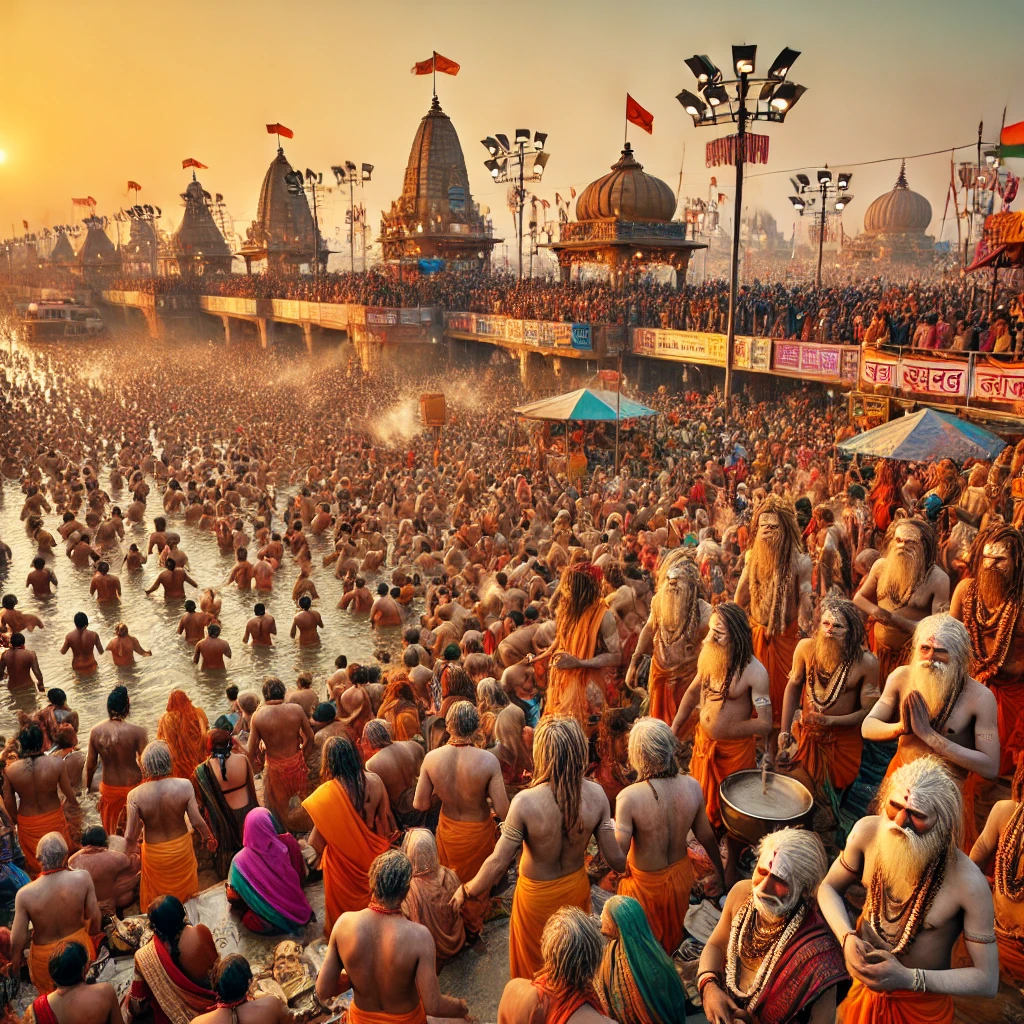
The Kumbh Mela festival in Prayagraj has witnessed a remarkable revival of ancient Hindu sects known as akharas. This year’s event, expected to draw over 400 million attendees, is not only a spiritual gathering but also a reflection of the growing influence of Hindu traditions in India's socio-political landscape.
A Grand Revival of Akharas
The akharas, which are monastic orders of Hindu ascetics, have played a crucial role in preserving and promoting Hindu philosophy for centuries. These sects, which include Dashanami, Naga, and Vaishnav akharas, have long been associated with Kumbh Mela. However, in recent years, their prominence had declined due to modernization and changing societal values. The 2025 Kumbh Mela, however, has seen an unprecedented resurgence of these sects, with thousands of new initiations taking place.
One of the most striking aspects of this revival is the dramatic increase in sadhu initiations. Over 10,000 new sadhus have taken vows this year, marking one of the largest influxes of ascetics in recent history. Many young individuals, including those from urban backgrounds, have embraced the ascetic way of life, renouncing material possessions and dedicating themselves to spiritual pursuits.
Political and Cultural Influences
The resurgence of these ancient sects is closely linked to the broader socio-political climate in India. The Modi-led BJP government has emphasized the promotion of Hindu cultural heritage, and this has played a significant role in the increased visibility of akharas at the Kumbh Mela. Government initiatives have provided logistical support to akharas, ensuring better facilities for sadhus and pilgrims.
Furthermore, the influence of these sects extends beyond religion. Many political analysts see this revival as part of a larger movement towards reinforcing India’s Hindu identity. The presence of prominent political figures at the Kumbh Mela, along with speeches emphasizing India’s spiritual heritage, has reinforced the connection between religious revival and national identity.
Inclusion of Women and Transgender Individuals
In a significant departure from traditional norms, efforts are being made to include women and transgender individuals in the akharas. Historically, the monastic orders were dominated by male sadhus, with very few opportunities for women and marginalized communities to participate. However, progressive voices within these sects are advocating for greater inclusivity.
For the first time, a group of female sadhus has been granted formal recognition within an akhara. Similarly, transgender sadhus have been welcomed into certain sects, signaling a shift towards a more inclusive spiritual environment. This development has been met with both support and resistance, reflecting the ongoing tension between tradition and modernity.
The Global Impact of Kumbh Mela 2025
The revival of these ancient sects has attracted international attention. Scholars, religious leaders, and cultural enthusiasts from around the world have traveled to Prayagraj to witness this unique phenomenon. The Kumbh Mela has always been a symbol of India’s spiritual wealth, but this year’s event has amplified its global significance.
With millions of devotees participating in sacred rituals, mass bathing in the Ganges, and engaging in discourses with spiritual leaders, the 2025 Kumbh Mela stands as a testament to the enduring power of Hindu traditions. The resurgence of akharas, combined with efforts towards inclusivity, ensures that this ancient festival remains relevant in the modern era.
As the festival progresses, it continues to highlight the intricate relationship between spirituality, culture, and politics in contemporary India. Whether viewed as a religious awakening or a political statement, the revival of Hindu sects at Kumbh Mela 2025 is undeniably one of the most significant cultural developments of the year.
Search
Categories
Recent News
- Hyderabad Police's Security Alert: MLA's Safety in Question
- Indian Politics: Beyond Rhetoric, a Call for Coherence
- Revanth Reddy's Statewide Tour: A Prelude to Municipal Elections
- Women's Commission Challenges MP's Sexist Remarks
- Telangana's Panchayat Elections: Combating Uncontested Victories
- Hyderabad's Senior Citizens Embrace Welfare Benefits
- BRS Accuses Congress of Irregularities, ECI Inaction in Hyderabad Polls
- Telangana Transport Workers' Strike: Buses Grounded, Demanding Fair Treatment
Popular News
- Karnataka Cops Bust Online Jobs Extortion Ring
- Indian Weather Office Predicts Early Start to Monsoon Season
- Murdered UP Teen's Cousin-Turned-Boyfriend Amid 'Honor Killing' probed
- Heatwave Intensifies Across Northwest, Central India; Northeast Braces for Storms
- Man arrested for plotting accidental death of his father