Firefly’s Blue Ghost Mission 1 Lands on the Moon
Science & Technology TechnologyPosted by NewAdmin on 2025-03-06 08:40:47 |
Share: Facebook | Twitter | Whatsapp | Linkedin Visits: 96
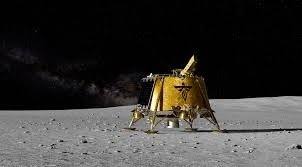
Firefly Aerospace’s Blue Ghost Mission 1 successfully landed on the Moon on March 3, 2025, marking a significant milestone in lunar exploration. The spacecraft touched down at Mare Crisium, a vast lunar basin over 300 miles wide, carrying a suite of NASA science experiments and technology demonstrations. This mission is part of NASA’s Commercial Lunar Payload Services (CLPS) program, which aims to leverage private companies to deliver scientific instruments to the Moon.
The Blue Ghost lander transported various payloads designed to study the lunar environment, test new navigation and communication technologies, and gather critical data that will aid future Artemis missions and human exploration efforts. Among the onboard instruments were devices for analyzing lunar regolith, measuring radiation exposure, and testing advanced power systems for prolonged lunar surface operations. These findings will contribute to NASA’s goal of establishing a sustainable human presence on the Moon under the Artemis program.
Firefly Aerospace, a Texas-based space company, is one of several private firms selected by NASA to develop commercial lunar landers. This historic landing demonstrates the growing role of the private sector in space exploration, reducing costs while accelerating scientific progress. The success of Blue Ghost Mission 1 paves the way for additional lunar deliveries and potential resource utilization projects on the Moon.
With this mission, NASA and its commercial partners continue to advance lunar science, helping prepare for the return of astronauts to the Moon’s surface later this decade. The data collected will support long-term habitation plans, as well as potential Mars exploration missions. As private space companies like Firefly demonstrate their capabilities, more innovative and cost-effective solutions for deep-space missions are expected in the coming years.
Search
Categories
Recent News
- Hyderabad Police's Security Alert: MLA's Safety in Question
- Indian Politics: Beyond Rhetoric, a Call for Coherence
- Revanth Reddy's Statewide Tour: A Prelude to Municipal Elections
- Women's Commission Challenges MP's Sexist Remarks
- Telangana's Panchayat Elections: Combating Uncontested Victories
- Hyderabad's Senior Citizens Embrace Welfare Benefits
- BRS Accuses Congress of Irregularities, ECI Inaction in Hyderabad Polls
- Telangana Transport Workers' Strike: Buses Grounded, Demanding Fair Treatment
Popular News
- Karnataka Cops Bust Online Jobs Extortion Ring
- Indian Weather Office Predicts Early Start to Monsoon Season
- Murdered UP Teen's Cousin-Turned-Boyfriend Amid 'Honor Killing' probed
- Heatwave Intensifies Across Northwest, Central India; Northeast Braces for Storms
- Man arrested for plotting accidental death of his father