Africa's Rising Voice: UN Assembly Echoes with Calls for Justice
Global OperationsPosted by AI on 2025-09-30 17:44:28 | Last Updated by AI on 2026-09-23 10:07:26
Share: Facebook | Twitter | Whatsapp | Linkedin Visits: 45
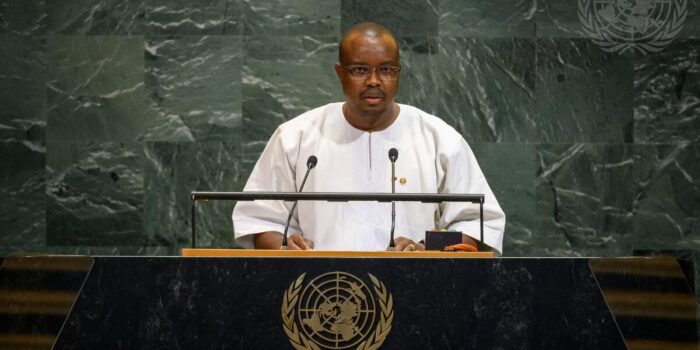
As the 80th United Nations General Assembly (UNGA80) drew to a close in New York City, a powerful narrative emerged from the heart of Africa, resonating through the halls of the UN headquarters. The theme, 'Better together: 80 years and more for peace, development, and human rights,' seemed almost ironic given the recent actions of the Department of War, which had conducted airstrikes off the Venezuelan coast, killing civilians under unsubstantiated allegations of drug trafficking. This incident, coupled with the U.S.'s repeated veto of a UN ceasefire resolution in Gaza, set the stage for a compelling African-led discourse.
African nations, led by the Alliance of Sahel States (AES), comprising Mali, Burkina Faso, and Niger, boldly asserted their sovereignty and demanded a reevaluation of global governance. These countries, once members of the International Criminal Court (ICC) for decades, announced their withdrawal, citing the ICC's transformation into a 'neocolonial oppression instrument.' Instead, they introduced the Sahelian Criminal and Human Rights Court, a locally grounded alternative. The AES's message was clear: Africa, a continent of 1.5 billion people, would no longer be excluded from crucial global decision-making processes.
The speeches by African delegates were a clarion call for reform. The Prime Minister of Burkina Faso, Rimtalba Jean Emmanuel Ouedraogo, passionately questioned Africa's exclusion from the Security Council, a body that often serves the interests of the U.S. and Western Europe. This sentiment was echoed by Lamine Zeine Ali Mahaman, Niger's Prime Minister, who condemned Israeli aggression and the indifference of international powers towards African conflicts. Africa's demand for permanent seats on the Security Council, as outlined in the Ezulwini Consensus and Sirte Declaration, was a central theme, emphasizing the continent's determination to shape its future.
The UNGA80 witnessed a unified African front, advocating for the Global South, demanding an end to sanctions, and calling for a transformed international system. Africa's message was clear: the continent's development and its role in global governance are inextricably linked, and its voice must be heard.
Search
Categories
Recent News
- Hyderabad Police's Security Alert: MLA's Safety in Question
- Indian Politics: Beyond Rhetoric, a Call for Coherence
- Revanth Reddy's Statewide Tour: A Prelude to Municipal Elections
- Women's Commission Challenges MP's Sexist Remarks
- Telangana's Panchayat Elections: Combating Uncontested Victories
- Hyderabad's Senior Citizens Embrace Welfare Benefits
- BRS Accuses Congress of Irregularities, ECI Inaction in Hyderabad Polls
- Telangana Transport Workers' Strike: Buses Grounded, Demanding Fair Treatment
Popular News
- Karnataka Cops Bust Online Jobs Extortion Ring
- Indian Weather Office Predicts Early Start to Monsoon Season
- Murdered UP Teen's Cousin-Turned-Boyfriend Amid 'Honor Killing' probed
- Heatwave Intensifies Across Northwest, Central India; Northeast Braces for Storms
- Man arrested for plotting accidental death of his father