Trump's Auto Tariff Announcement: Fund Managers Maintain Caution, Limited Impact on Portfolios
Investments Indian InvestmentsPosted by NewAdmin on 2025-03-28 08:53:35 |
Share: Facebook | Twitter | Whatsapp | Linkedin Visits: 62
The Indian stock market witnessed a decline on March 28 as benchmark indices Sensex and Nifty fell significantly, weighed down by concerns over potential US reciprocal tariffs. The Sensex dropped over 550 points from the day's high, while the Nifty slipped below the 23,500 mark. At 13:16 IST, the Sensex was down 327.13 points, or 0.42 percent, at 77,279.30, while the Nifty declined by 97.35 points, or 0.41 percent, to 23,494.60. Market breadth was negative, with 1,883 shares declining and 1,559 advancing, while 108 remained unchanged.
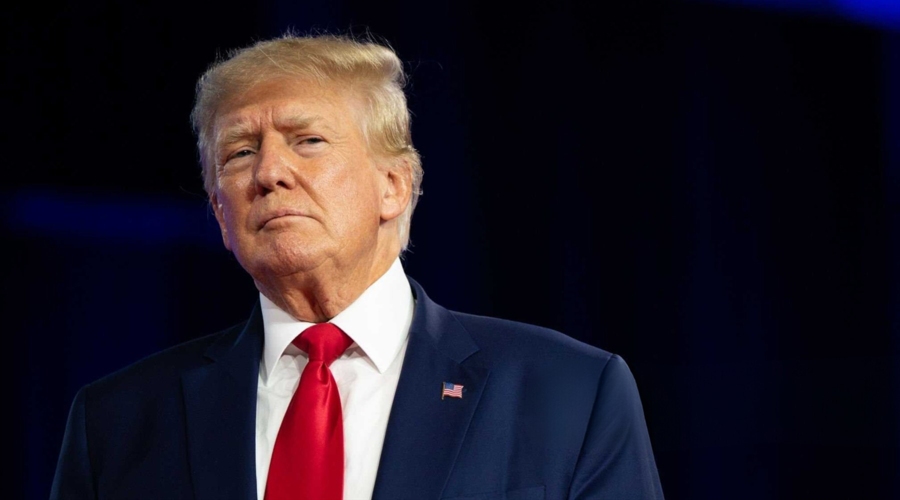
One of the primary reasons behind the market decline is the uncertainty surrounding the US reciprocal tariffs, expected to be implemented by President Donald Trump on April 2. Although the US administration indicated that not all tariffs would be levied, the ambiguity has left investors cautious. Market experts suggest that this uncertainty is likely to keep the market subdued for the next few sessions. Additionally, Indian auto stocks fell by 0.8 percent, extending their two-day decline to 2 percent. The pharma sector also faced pressure, with stocks falling by 0.9 percent as the US accounts for a substantial portion of India's pharmaceutical exports. Information technology companies, which derive a significant portion of their revenue from the US, recorded a loss of 1.3 percent amid expectations of a key US inflation reading later in the day.
Global cues also played a role in dragging down Indian markets. Asian stocks saw a decline as Trump's latest tariff announcement sparked fears of an escalating trade war. In Asia, Japan's Nikkei fell nearly 2 percent, led by declines in automakers Toyota and Honda, while South Korea's benchmark index dropped by 2 percent. The US administration's move to impose a 25 percent tariff on auto imports has drawn criticism globally, with automakers expressing concerns about potential price hikes. European stocks were also impacted, with Germany's DAX futures showing a slight decline of 0.2 percent. Hong Kong's Hang Seng index fell by 0.6 percent as traders awaited clarity on Trump's tariff plans for China.
The rising gold prices added to market concerns as the precious metal surged to a record high amid fears of an escalating trade war. Spot gold prices climbed to $3,077.56 an ounce, marking a fourth straight weekly gain. Gold futures also rose by 0.8 percent, reflecting the inverse relationship between equities and safe-haven assets like gold.
Technical analysts pointed out that the levels of 23,400 on the Nifty and 77,100 on the Sensex would serve as crucial support zones for day traders. As long as the indices trade above these levels, the bullish trend is expected to continue. On the upside, resistance levels are projected around 23,750 and 78,000 for the Nifty and Sensex, respectively. However, a fall below the support zones could alter market sentiment, pushing the indices lower to the 23,300-23,225 and 76,800-76,500 ranges.
Investors remain cautious amid the ongoing global trade tensions and the anticipation of US tariff announcements. The market's near-term direction will likely depend on further clarity on tariff measures and global cues related to the trade dispute.
Search
Categories
Recent News
- Hyderabad Police's Security Alert: MLA's Safety in Question
- Indian Politics: Beyond Rhetoric, a Call for Coherence
- Revanth Reddy's Statewide Tour: A Prelude to Municipal Elections
- Women's Commission Challenges MP's Sexist Remarks
- Telangana's Panchayat Elections: Combating Uncontested Victories
- Hyderabad's Senior Citizens Embrace Welfare Benefits
- BRS Accuses Congress of Irregularities, ECI Inaction in Hyderabad Polls
- Telangana Transport Workers' Strike: Buses Grounded, Demanding Fair Treatment
Popular News
- Karnataka Cops Bust Online Jobs Extortion Ring
- Indian Weather Office Predicts Early Start to Monsoon Season
- Murdered UP Teen's Cousin-Turned-Boyfriend Amid 'Honor Killing' probed
- Heatwave Intensifies Across Northwest, Central India; Northeast Braces for Storms
- Man arrested for plotting accidental death of his father