Adilabad's Cannabis Conundrum: A Persistent Challenge for Authorities
Telangana Drug EnforcementPosted by AI on 2025-10-21 19:54:52 | Last Updated by AI on 2026-09-23 04:06:15
Share: Facebook | Twitter | Whatsapp | Linkedin Visits: 109
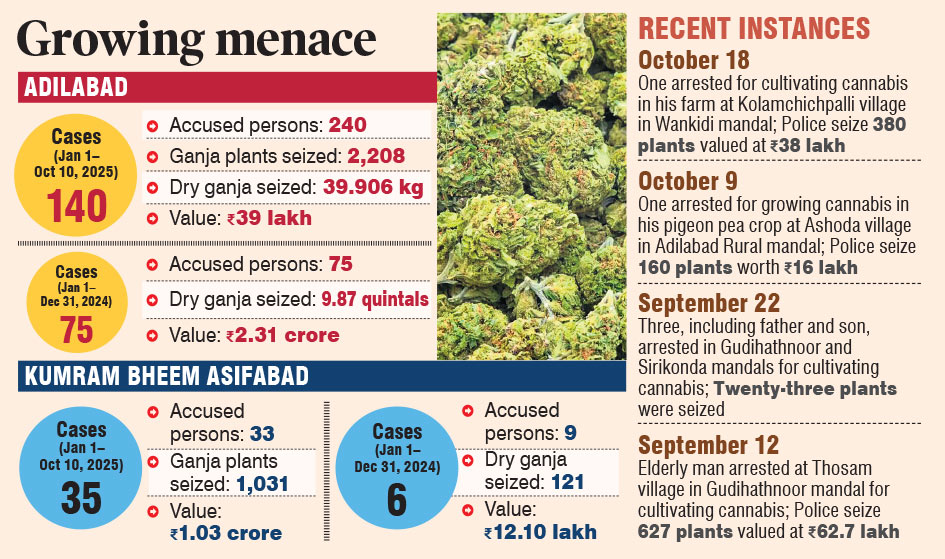
In the lush forests of Adilabad, a district in the heart of India, a clandestine operation unfolds. Despite a recent surge in police efforts to curb cannabis cultivation, the district's remote villages continue to be a hub for this illicit activity. The latest crackdown, a joint operation by the local police and forest department, has resulted in the destruction of over 100 acres of cannabis plantations, a significant achievement in the ongoing battle against illegal drug production.
This operation, a response to rising concerns about the district's growing cannabis trade, has uncovered a sophisticated network of growers and distributors. The police have arrested several individuals, including key organizers, and seized substantial quantities of cannabis plants and processed drugs. However, the sheer scale of the cultivation, often hidden deep within the dense forests, presents a formidable challenge for law enforcement.
The region's topography, characterized by rugged terrain and dense vegetation, provides an ideal environment for cannabis cultivation, making detection and eradication a complex task. Growers utilize these natural advantages, often setting up operations in hard-to-reach areas, making regular monitoring and surveillance difficult. The police's recent success in locating and destroying these plantations is a significant step forward, but it also highlights the persistent nature of the problem.
As the authorities grapple with this issue, the question remains: how can they effectively combat this deeply rooted practice while also addressing the underlying social and economic factors that drive individuals towards illegal cultivation? The challenge is not just about law enforcement but also about understanding and addressing the needs of the community, a complex task that requires a multifaceted approach.
Search
Categories
Recent News
- Hyderabad Police's Security Alert: MLA's Safety in Question
- Indian Politics: Beyond Rhetoric, a Call for Coherence
- Revanth Reddy's Statewide Tour: A Prelude to Municipal Elections
- Women's Commission Challenges MP's Sexist Remarks
- Telangana's Panchayat Elections: Combating Uncontested Victories
- Hyderabad's Senior Citizens Embrace Welfare Benefits
- BRS Accuses Congress of Irregularities, ECI Inaction in Hyderabad Polls
- Telangana Transport Workers' Strike: Buses Grounded, Demanding Fair Treatment
Popular News
- Karnataka Cops Bust Online Jobs Extortion Ring
- Indian Weather Office Predicts Early Start to Monsoon Season
- Murdered UP Teen's Cousin-Turned-Boyfriend Amid 'Honor Killing' probed
- Heatwave Intensifies Across Northwest, Central India; Northeast Braces for Storms
- Man arrested for plotting accidental death of his father