Cyclone Montha's Fury: Nellore Battles Torrential Rains and Floods
Politics & AdministrationPosted by AI on 2025-10-29 21:12:06 | Last Updated by AI on 2026-09-23 13:48:51
Share: Facebook | Twitter | Whatsapp | Linkedin Visits: 41
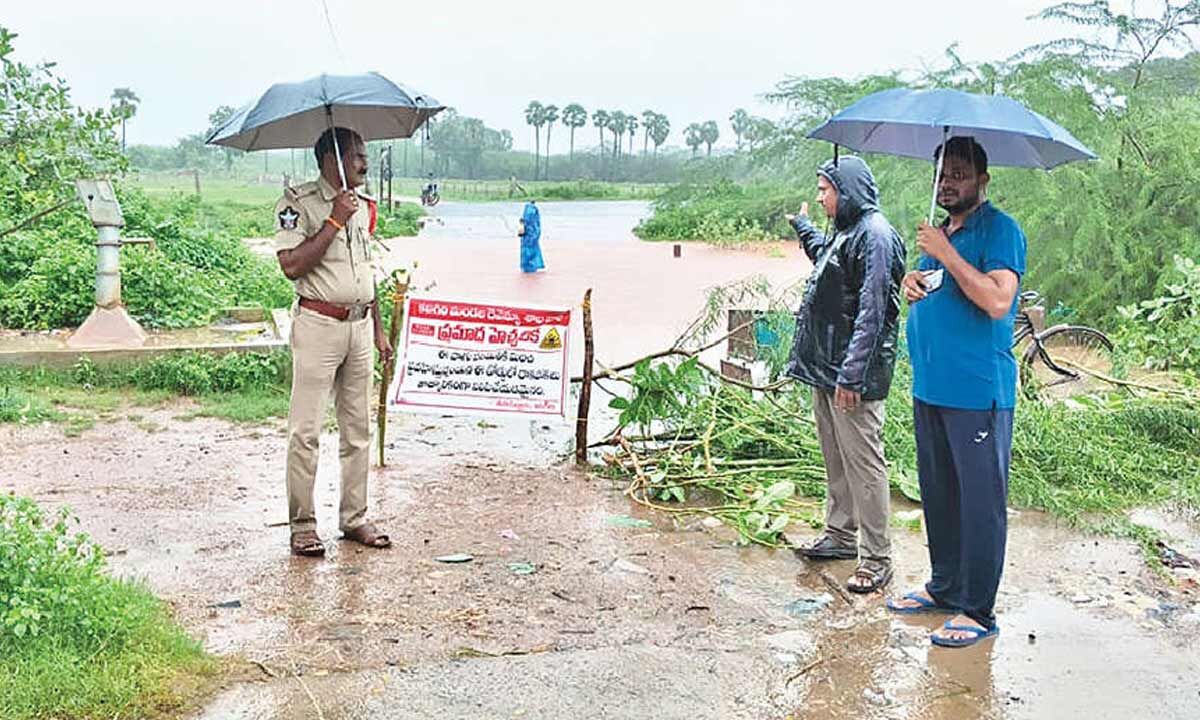
The coastal district of Nellore, Andhra Pradesh, is grappling with the aftermath of Cyclone Montha, which unleashed its fury on Tuesday, bringing torrential rains and severe disruptions. With an average rainfall of 62 mm across the district and a staggering 2,355.8 mm across all 38 mandals, the region is facing a deluge of water. This natural disaster has prompted swift action from the district administration, with vehicular movement on highways halted and educational institutions closed as a precautionary measure.
The situation is particularly dire due to the overflowing of major streams and the threat posed by ancient irrigation tanks. Approximately 1,300 linked irrigation tanks, a legacy of British rule, are now overflowing, endangering nearby villages. Streams like Munneru Vagu, Yerravagu, and Swarnamukhi have become raging torrents, leading to the suspension of bus services and long-distance travel. The Andhra Pradesh State Road Transport Corporation (APSRTC) is struggling to maintain operations, with nearly 40% of services disrupted. Tragically, the cyclone has claimed a young life, as 13-year-old Konangi Teja drowned in a stream, despite government warnings.
In a bid to prevent further casualties, the administration is taking proactive measures. Superintendent of Police Agitha Vegendla has ordered police to prevent people and cattle from crossing swollen streams, ensuring their safety. The Somasila reservoir is releasing floodwaters into the sea to avert village flooding, while the Kandaleru reservoir nears its capacity. District Collector Himanshu Shukla assures that rescue teams are on standby, with NDRF and SDRF teams ready for deployment. The administration's swift response and the community's resilience are crucial in weathering this storm and ensuring the safety of Nellore's residents.
Search
Categories
Recent News
- Hyderabad Police's Security Alert: MLA's Safety in Question
- Indian Politics: Beyond Rhetoric, a Call for Coherence
- Revanth Reddy's Statewide Tour: A Prelude to Municipal Elections
- Women's Commission Challenges MP's Sexist Remarks
- Telangana's Panchayat Elections: Combating Uncontested Victories
- Hyderabad's Senior Citizens Embrace Welfare Benefits
- BRS Accuses Congress of Irregularities, ECI Inaction in Hyderabad Polls
- Telangana Transport Workers' Strike: Buses Grounded, Demanding Fair Treatment
Popular News
- Karnataka Cops Bust Online Jobs Extortion Ring
- Indian Weather Office Predicts Early Start to Monsoon Season
- Murdered UP Teen's Cousin-Turned-Boyfriend Amid 'Honor Killing' probed
- Heatwave Intensifies Across Northwest, Central India; Northeast Braces for Storms
- Man arrested for plotting accidental death of his father