Mugger Crocodile Conservation Efforts in Tamil Nadu
Current Affairs NationalPosted by newadmin on 2025-04-16 08:58:34 |
Share: Facebook | Twitter | Whatsapp | Linkedin Visits: 252
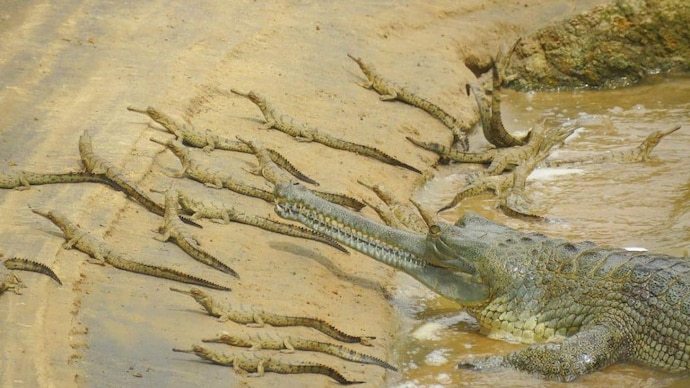
The Tamil Nadu Forest Department has recently intensified its efforts to map the population of mugger crocodiles in an attempt to mitigate human-crocodile conflicts in the Cauvery delta. The mugger crocodile, also known as the marsh crocodile or Crocodylus palustris, is the most widely distributed crocodilian species in India. A preliminary survey revealed a significant presence of these reptiles along the Kollidam River, with over 50 individuals spotted in the Anaikarai region alone.
The initial phase of this study, conducted by the Wildlife Portal of India, aimed to establish a foundational understanding of mugger crocodile populations, as no previous baseline data existed. Regular monitoring is essential to observe changes in population dynamics and habitat use. The survey also pinpointed critical habitats and areas where human-crocodile interactions are more likely to occur, setting the stage for long-term conservation planning.
One key finding from the study is that many important crocodile habitats fall outside officially designated Reserve Forest areas. These zones are often managed by the Public Works Department and are easily accessible to local communities. This creates a potential risk, especially in regions where fishing, washing, and open defecation take place near crocodile basking sites. The overlap between human activity and crocodile behavior significantly raises the chances of encounters and potential conflict.
The ongoing survey, which spans nearly 1,000 kilometers and includes water bodies such as Thenpannaiyar and Veeranam, has already recorded sightings of 85 live crocodiles. This number indicates that the actual population may be even larger. In addition to these wild populations, Tamil Nadu’s crocodile breeding centers continue to host healthy numbers. The Sathanur facility houses 299 crocodiles, Hogenakkal has 93, and Amaravathi is home to 82.
To address the growing concern of human-crocodile conflicts, the study has proposed the creation of an Emergency Response Team in districts identified as high-risk, such as Cuddalore. This team would be tasked with managing conflict situations quickly and effectively. It is also recommended that public access to known crocodile basking and nesting sites be restricted to reduce the likelihood of accidents. Infrastructure improvements, such as fencing or warning signs, along with awareness campaigns, are crucial in promoting safe practices around crocodile habitats.
The Tamil Nadu government has stepped up its commitment to crocodile conservation by allocating ₹2.5 crore for a Crocodile Conservation Centre in Anaikarai. Of this budget, ₹1 lakh has already been used for awareness programs, ₹5 lakh for essential equipment, and ₹6.5 lakh for ongoing research activities. These efforts include studying the current population, identifying breeding zones, and developing strategies to minimize conflicts. Although initial land issues delayed progress, an alternative site has now been finalized for the conservation centre, ensuring the continuation of this vital initiative.
Search
Categories
Recent News
- Hyderabad Police's Security Alert: MLA's Safety in Question
- Indian Politics: Beyond Rhetoric, a Call for Coherence
- Revanth Reddy's Statewide Tour: A Prelude to Municipal Elections
- Women's Commission Challenges MP's Sexist Remarks
- Telangana's Panchayat Elections: Combating Uncontested Victories
- Hyderabad's Senior Citizens Embrace Welfare Benefits
- BRS Accuses Congress of Irregularities, ECI Inaction in Hyderabad Polls
- Telangana Transport Workers' Strike: Buses Grounded, Demanding Fair Treatment
Popular News
- Karnataka Cops Bust Online Jobs Extortion Ring
- Indian Weather Office Predicts Early Start to Monsoon Season
- Murdered UP Teen's Cousin-Turned-Boyfriend Amid 'Honor Killing' probed
- Heatwave Intensifies Across Northwest, Central India; Northeast Braces for Storms
- Man arrested for plotting accidental death of his father