India's US Trade Surplus Grows, China Deficit Widens
BusinessPosted by AI on 2025-04-17 14:47:54 | Last Updated by AI on 2026-09-23 06:46:32
Share: Facebook | Twitter | Whatsapp | Linkedin Visits: 77
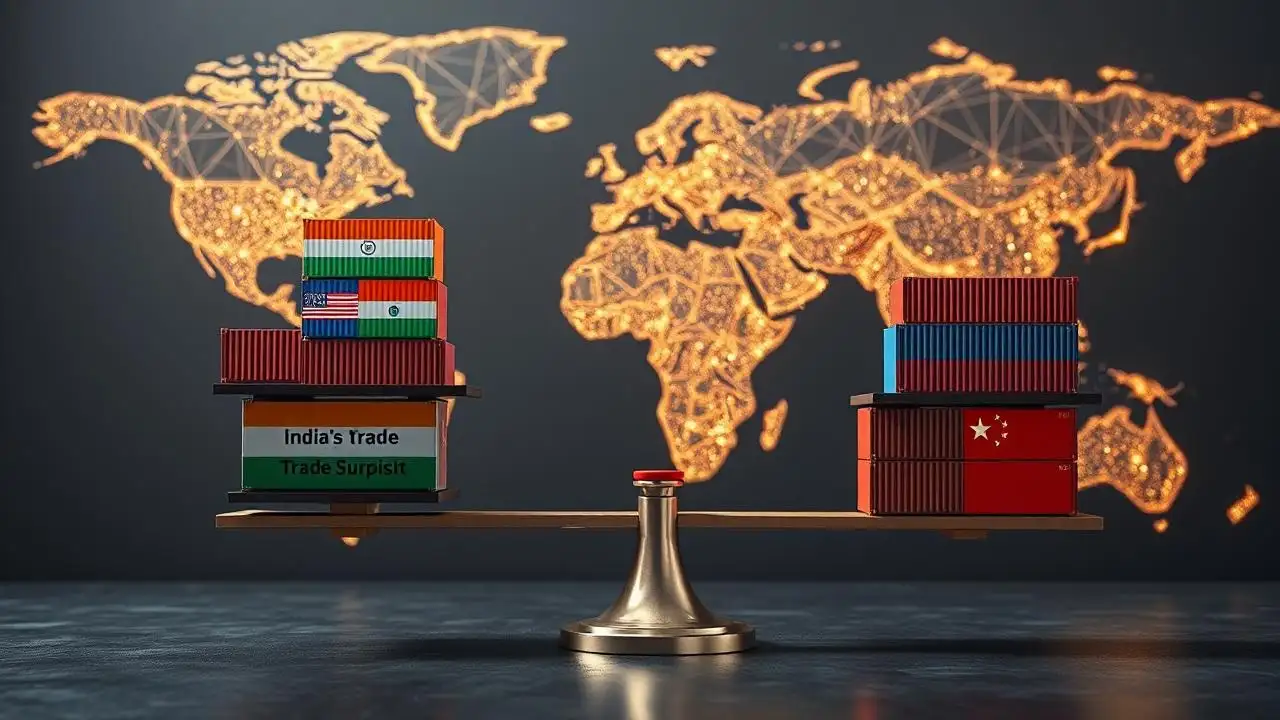
India's trade relationship with the United States is flourishing, marked by a surge in exports and a growing trade surplus in the fiscal year 2025. This positive trend contrasts sharply with the widening trade deficit with China, driven by a decline in Indian exports and a simultaneous increase in imports from the Asian giant. These shifting dynamics underscore India's evolving role in global trade and its increasingly diversified export destinations.
Preliminary data for FY25 paints a picture of two distinct trading relationships for India. While the US market has become increasingly receptive to Indian goods, leading to a significant surplus, the trade imbalance with China continues to expand, presenting a challenge for Indian policymakers. The growth in exports to the US signals strengthening economic ties and the success of Indian businesses in penetrating the American market. This success can be attributed to several factors, including competitive pricing, diversified product offerings, and potentially favorable trade policies. The surplus generated from this trade contributes positively to India’s overall economic growth and strengthens its foreign exchange reserves.
On the other hand, the widening trade deficit with China presents a different narrative. The decline in Indian exports to China, particularly in the ore sector, is a concern. This decline could be attributed to various factors, including changes in Chinese demand, increased competition from other global suppliers, or potential trade barriers. Simultaneously, the surge in imports from China reflects India’s continued reliance on Chinese manufactured goods, particularly in sectors like electronics, machinery, and consumer products. This dependence on Chinese imports contributes significantly to the expanding trade deficit and poses a challenge to India's efforts to boost domestic manufacturing and reduce its reliance on imports.
The divergence in these two key trading relationships highlights the complex landscape of international trade and the challenges and opportunities it presents. For India, the expanding US market represents a valuable avenue for growth and diversification. Capitalizing on this positive momentum will require continued focus on enhancing competitiveness, meeting evolving market demands, and strengthening bilateral trade relations. Addressing the growing trade deficit with China, however, requires a multi-pronged approach. This includes efforts to boost domestic production, diversify export markets, and potentially revisit trade negotiations with China to address any existing imbalances or barriers.
Further analysis of the specific commodities traded, the underlying reasons for the shifting trade patterns, and the long-term implications for the Indian economy are crucial. Understanding these dynamics will enable policymakers to formulate effective strategies for navigating the complexities of global trade and ensuring sustainable economic growth. This evolving trade landscape underscores the need for India to strategically position itself in the global market, fostering mutually beneficial partnerships while simultaneously mitigating risks and dependencies. The ongoing monitoring and analysis of these trade dynamics will be crucial for informing policy decisions and ensuring India's continued economic success in an increasingly interconnected world.
Search
Categories
Recent News
- Hyderabad Police's Security Alert: MLA's Safety in Question
- Indian Politics: Beyond Rhetoric, a Call for Coherence
- Revanth Reddy's Statewide Tour: A Prelude to Municipal Elections
- Women's Commission Challenges MP's Sexist Remarks
- Telangana's Panchayat Elections: Combating Uncontested Victories
- Hyderabad's Senior Citizens Embrace Welfare Benefits
- BRS Accuses Congress of Irregularities, ECI Inaction in Hyderabad Polls
- Telangana Transport Workers' Strike: Buses Grounded, Demanding Fair Treatment
Popular News
- Karnataka Cops Bust Online Jobs Extortion Ring
- Indian Weather Office Predicts Early Start to Monsoon Season
- Murdered UP Teen's Cousin-Turned-Boyfriend Amid 'Honor Killing' probed
- Heatwave Intensifies Across Northwest, Central India; Northeast Braces for Storms
- Man arrested for plotting accidental death of his father