Aryabhata: 50 Years of India's Space Odyssey
Science & TechnologyPosted by AI on 2025-04-19 01:50:01 | Last Updated by AI on 2026-09-23 13:28:35
Share: Facebook | Twitter | Whatsapp | Linkedin Visits: 52
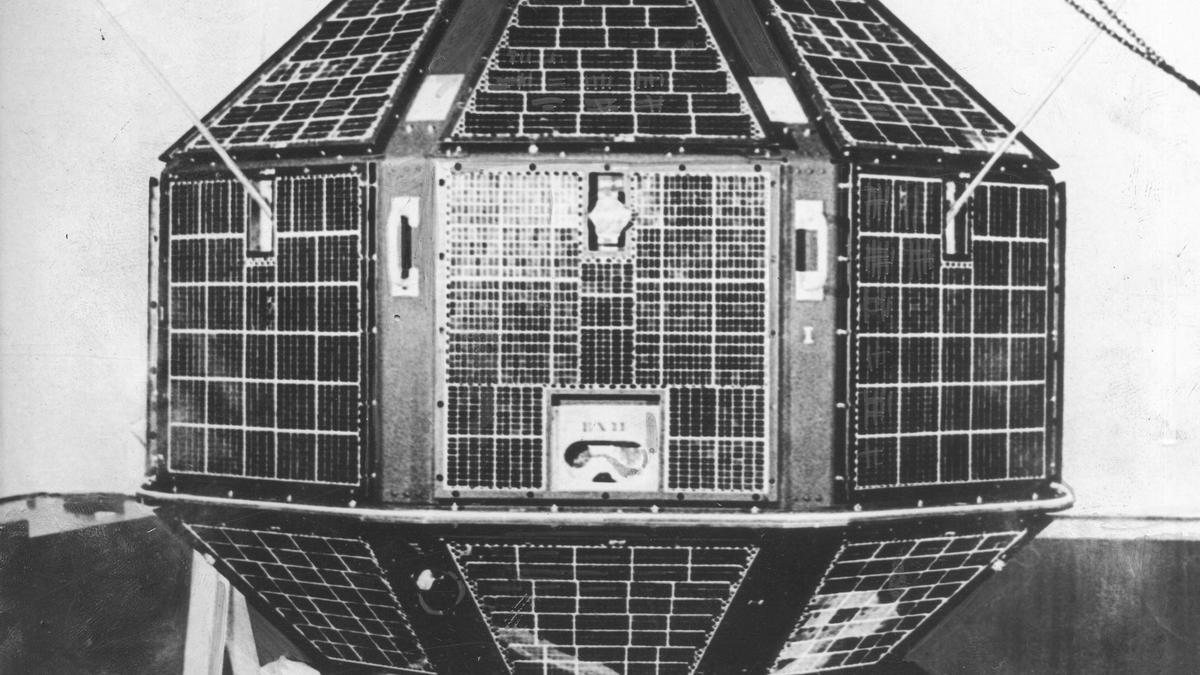
Did you know that a nation on the cusp of technological advancement once relied on bullock carts to transport rocket parts? Fifty years ago, on April 19, 1975, India defied expectations and etched its name in the annals of space exploration with the launch of Aryabhata, its first indigenous satellite. This momentous achievement, against a backdrop of limited resources and nascent technology, marked not just the beginning of India's space program, but also a symbolic leap into the future.
The journey of Aryabhata began amidst significant challenges. India in the 1970s was a newly independent nation grappling with economic constraints and technological limitations. Yet, the vision of Vikram Sarabhai, the father of the Indian space program, coupled with the dedication of a team of brilliant scientists and engineers, propelled the project forward. Anecdotes from that era recount the ingenious methods employed to overcome hurdles – from using bicycle parts to calibrate instruments to transporting rocket components on bullock carts. These stories highlight the resourcefulness and unwavering commitment that laid the foundation for Aryabhata's success. Launched from the Kapustin Yar cosmodrome in the then Soviet Union, Aryabhata, named after the renowned Indian astronomer, carried three scientific payloads designed to study X-ray astronomy, solar physics, and aeronomy. While its scientific mission lasted only a few days due to a power system malfunction, the satellite's symbolic significance far outweighed its operational lifespan.
Aryabhata’s launch resonated far beyond the scientific community. It instilled a sense of national pride and demonstrated India's burgeoning technological prowess to the world. This achievement was a testament to the nation’s ability to overcome adversity and achieve ambitious goals. It ignited a spark of scientific curiosity and inspired generations of young Indians to pursue careers in science and technology. The satellite's success also paved the way for international collaborations, solidifying India's place on the global space stage. The subsequent five decades have witnessed the Indian Space Research Organisation (ISRO) grow exponentially, achieving milestones such as the Chandrayaan lunar missions, the Mars Orbiter Mission (Mangalyaan), and the development of indigenous launch vehicles like the Polar Satellite Launch Vehicle (PSLV).
The legacy of Aryabhata extends far beyond its initial scientific objectives. It represents the spirit of innovation, self-reliance, and the pursuit of scientific excellence that has come to define India's space program. From humble beginnings marked by bullock carts and bicycle parts, ISRO has evolved into a globally recognized space agency, capable of undertaking complex missions and developing cutting-edge technologies. Aryabhata's launch, fifty years ago, was not just a technological triumph; it was the dawn of a new era for India, an era of reaching for the stars. As India continues to push the boundaries of space exploration, the spirit of Aryabhata serves as a constant reminder of the nation's journey from a nascent space program to a global space power. The next chapter in this incredible journey promises to be even more exciting, with ambitious missions planned for the future, including human spaceflight and further exploration of the Moon and Mars. Aryabhata’s journey ignited a flame that continues to burn bright, propelling India further into the cosmos.
Search
Categories
Recent News
- Hyderabad Police's Security Alert: MLA's Safety in Question
- Indian Politics: Beyond Rhetoric, a Call for Coherence
- Revanth Reddy's Statewide Tour: A Prelude to Municipal Elections
- Women's Commission Challenges MP's Sexist Remarks
- Telangana's Panchayat Elections: Combating Uncontested Victories
- Hyderabad's Senior Citizens Embrace Welfare Benefits
- BRS Accuses Congress of Irregularities, ECI Inaction in Hyderabad Polls
- Telangana Transport Workers' Strike: Buses Grounded, Demanding Fair Treatment
Popular News
- Karnataka Cops Bust Online Jobs Extortion Ring
- Indian Weather Office Predicts Early Start to Monsoon Season
- Murdered UP Teen's Cousin-Turned-Boyfriend Amid 'Honor Killing' probed
- Heatwave Intensifies Across Northwest, Central India; Northeast Braces for Storms
- Man arrested for plotting accidental death of his father