Rajnath Singh Champions Rana Pratap, Shivaji as National Heroes
NationalPosted by AI on 2025-04-19 11:50:03 | Last Updated by AI on 2026-09-23 02:09:04
Share: Facebook | Twitter | Whatsapp | Linkedin Visits: 62
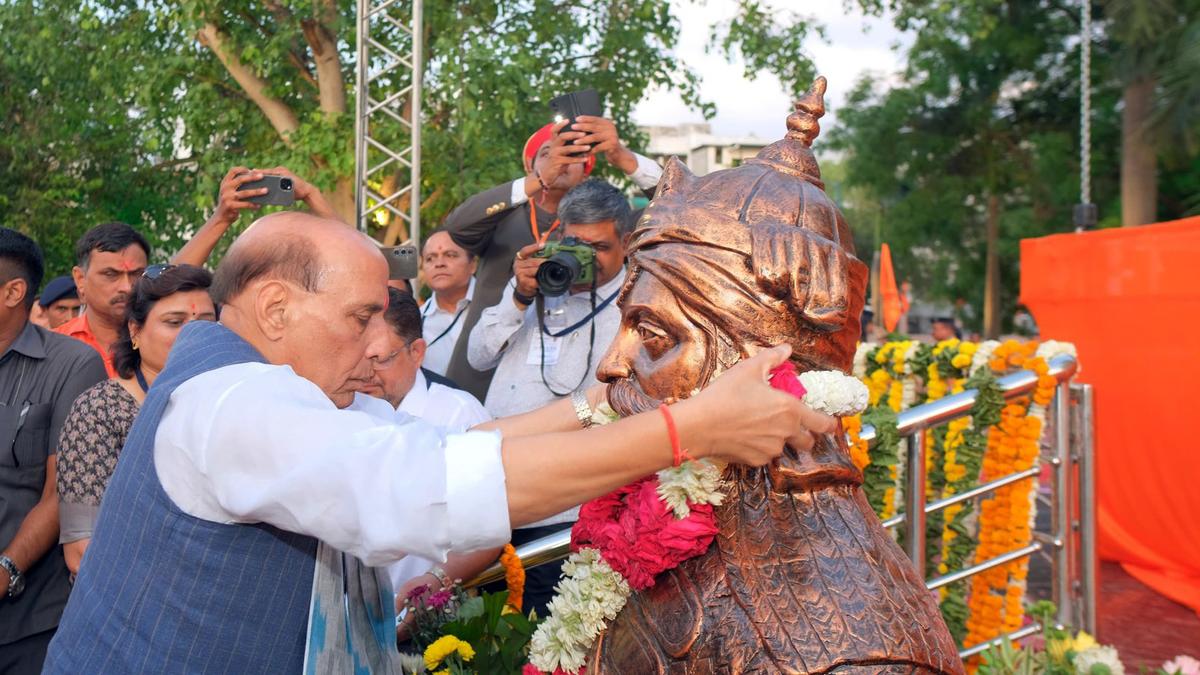
"Those who feel that Aurangzeb was a hero should have read Pandit Jawaharlal Nehru," declared Defense Minister Rajnath Singh, igniting a debate on historical figures and national identity. He asserted that while Rana Pratap and Shivaji Maharaj are rightfully celebrated as national heroes, Aurangzeb, the Mughal emperor, falls short of such recognition. Singh pointed to Nehru's writings, which depict Aurangzeb as a "bigot, cruel ruler," as evidence against the emperor's heroic status.
The Defense Minister's comments, made during a public address, directly challenge the narratives that attempt to portray Aurangzeb as a benevolent ruler. Singh's invocation of Nehru, India's first Prime Minister, adds weight to his argument, leveraging the historical perspective of a prominent figure who himself extensively studied and wrote about India's past. This isn't simply a historical debate; it touches upon the very core of India's national identity and the figures who embody its values. The choice of heroes reflects a nation's understanding of its past and its aspirations for the future.
Singh further elaborated that the heroism of Rana Pratap and Shivaji Maharaj stemmed not from religious animosity but from their courageous resistance against oppressive forces. He emphasized that neither figure was "anti-Muslim," highlighting their struggles as being against tyranny, not against a particular faith. This distinction is crucial. It reframes the narrative surrounding these historical figures, shifting the focus from religious conflict to a broader fight for justice and self-determination. This perspective aligns with a more inclusive and nuanced understanding of Indian history, emphasizing the shared struggles of people from diverse backgrounds against oppressive rule.
The debate over historical figures and their legacies is not new in India. Often, interpretations of history become intertwined with contemporary political discourse. However, Singh's direct challenge, coupled with his reference to Nehru's historical analysis, adds a new dimension to this ongoing conversation. By grounding his argument in Nehru's writings, Singh attempts to provide a historical basis for his perspective, appealing to a shared understanding of the past.
This renewed discussion about who deserves to be celebrated as a national hero carries significant implications. It raises questions about how history is interpreted, remembered, and ultimately, how it shapes national identity. The choice of national heroes is not simply a matter of historical accuracy but also a reflection of a nation’s values. It defines the ideals that a nation aspires to and the narratives it chooses to perpetuate. In a diverse and complex nation like India, these narratives play a crucial role in shaping public discourse and understanding of the shared past.
"Both Rana Pratap and Shivaji Maharaj were not anti-Muslim," reiterated Singh, underscoring the principle that heroism transcends religious divides. This statement, placed at the end of his address, serves as a powerful concluding remark, emphasizing the inclusive nature of true heroism. It leaves the public to contemplate the true meaning of national heroes and the values they represent in a pluralistic society.
Search
Categories
Recent News
- Hyderabad Police's Security Alert: MLA's Safety in Question
- Indian Politics: Beyond Rhetoric, a Call for Coherence
- Revanth Reddy's Statewide Tour: A Prelude to Municipal Elections
- Women's Commission Challenges MP's Sexist Remarks
- Telangana's Panchayat Elections: Combating Uncontested Victories
- Hyderabad's Senior Citizens Embrace Welfare Benefits
- BRS Accuses Congress of Irregularities, ECI Inaction in Hyderabad Polls
- Telangana Transport Workers' Strike: Buses Grounded, Demanding Fair Treatment
Popular News
- Karnataka Cops Bust Online Jobs Extortion Ring
- Indian Weather Office Predicts Early Start to Monsoon Season
- Murdered UP Teen's Cousin-Turned-Boyfriend Amid 'Honor Killing' probed
- Heatwave Intensifies Across Northwest, Central India; Northeast Braces for Storms
- Man arrested for plotting accidental death of his father