Kharge: "Not Going to Be Scared" by ED Chargesheet
Politics Politics of IndiaPosted by AI on 2025-04-19 18:56:32 | Last Updated by AI on 2026-09-23 14:10:16
Share: Facebook | Twitter | Whatsapp | Linkedin Visits: 41
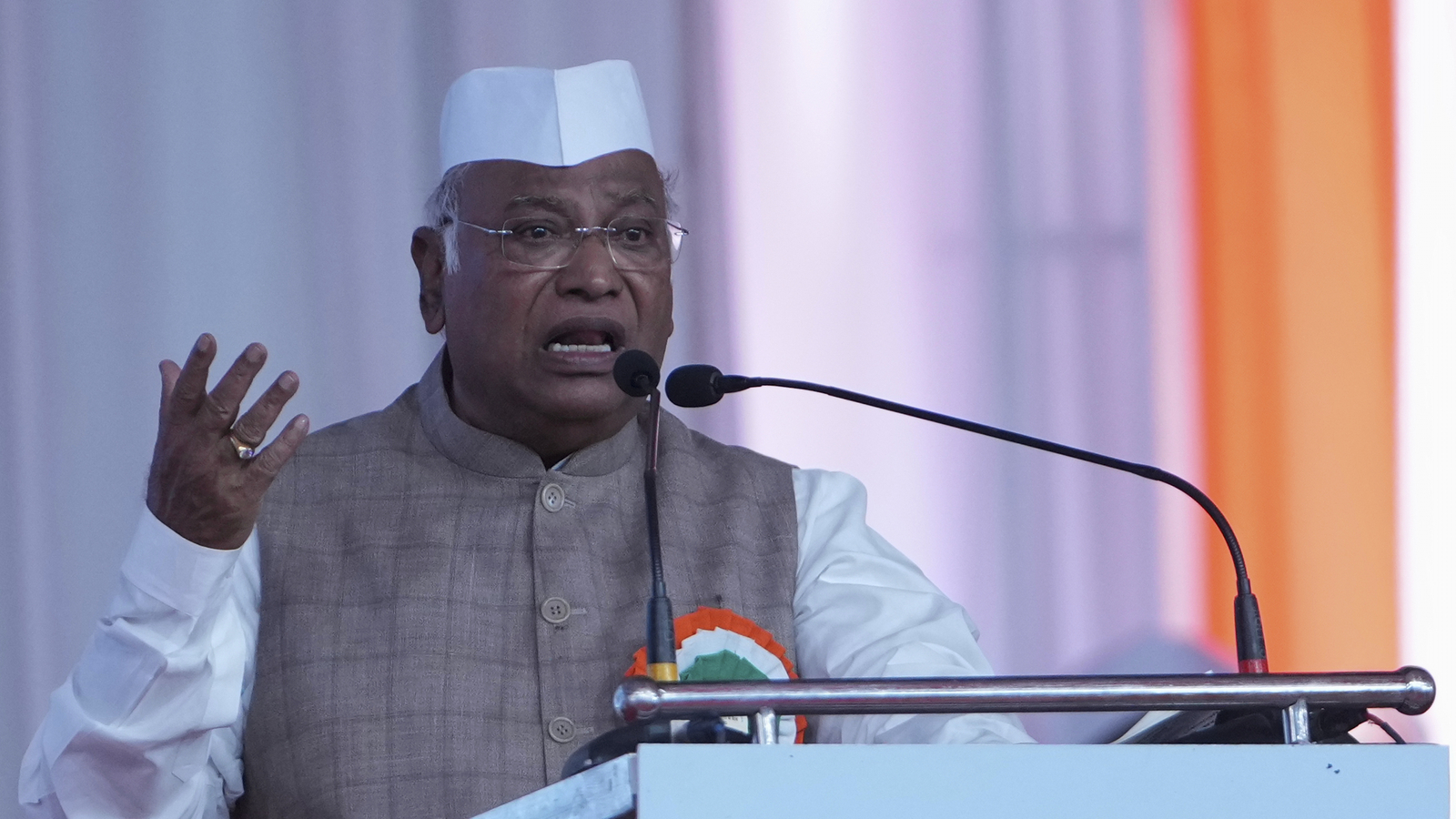
"Not going to be scared," declared Congress chief Mallikarjun Kharge, responding to the Enforcement Directorate's (ED) chargesheet in the National Herald money laundering case. The chargesheet names Sonia Gandhi and Rahul Gandhi as accused number 1 and 2, escalating the legal battle surrounding the high-profile political family. The case centers on allegations of financial irregularities related to the National Herald newspaper, a publication with a storied history intertwined with India's independence movement.
The ED's chargesheet marks a significant development in the ongoing investigation. It outlines the agency's findings and formally accuses Sonia Gandhi and Rahul Gandhi of money laundering. The chargesheet details the complex web of transactions and alleges that the Gandhis were involved in a scheme to acquire assets of Associated Journals Limited (AJL), the publisher of the National Herald, through Young Indian, a company in which they hold significant stakes. The agency's investigation has been ongoing for several years, scrutinizing financial records and questioning key individuals involved in the transactions. The filing of the chargesheet sets the stage for the next phase of legal proceedings.
The Congress party has vehemently denied all allegations, characterizing the investigation as politically motivated. They argue that the ED's actions are a part of a larger campaign by the ruling Bharatiya Janata Party (BJP) to harass and discredit the opposition. Kharge's defiant statement reflects the party's stance, signaling their determination to fight the charges in court. The case has sparked intense political debate, with the Congress accusing the government of misusing investigative agencies to target political opponents.
The National Herald, founded by Jawaharlal Nehru in 1938, played a crucial role in the Indian freedom struggle. Its legacy adds another layer of complexity to the case, making it a politically sensitive issue. The newspaper, once a powerful voice of the Congress party, ceased publication in 2008 due to financial difficulties. The subsequent transfer of its assets to Young Indian has been the focus of the ED's investigation.
The legal battle is expected to be protracted, with both sides preparing for a long legal fight. The case raises important questions about the intersection of politics and law enforcement in India, and its outcome will undoubtedly have significant political ramifications. The charges against the Gandhis, two prominent figures in the Indian political landscape, have the potential to reshape the political narrative in the lead-up to future elections. The case will likely continue to dominate headlines and fuel political discourse for the foreseeable future.
As Kharge’s statement of defiance reverberates, the focus now shifts to the courts. The judicial process will determine the validity of the ED's charges and the fate of the accused. This high-stakes legal battle will continue to be a focal point in Indian politics, underscoring the ongoing tension between the ruling party and the opposition.
Search
Categories
Recent News
- Hyderabad Police's Security Alert: MLA's Safety in Question
- Indian Politics: Beyond Rhetoric, a Call for Coherence
- Revanth Reddy's Statewide Tour: A Prelude to Municipal Elections
- Women's Commission Challenges MP's Sexist Remarks
- Telangana's Panchayat Elections: Combating Uncontested Victories
- Hyderabad's Senior Citizens Embrace Welfare Benefits
- BRS Accuses Congress of Irregularities, ECI Inaction in Hyderabad Polls
- Telangana Transport Workers' Strike: Buses Grounded, Demanding Fair Treatment
Popular News
- Karnataka Cops Bust Online Jobs Extortion Ring
- Indian Weather Office Predicts Early Start to Monsoon Season
- Murdered UP Teen's Cousin-Turned-Boyfriend Amid 'Honor Killing' probed
- Heatwave Intensifies Across Northwest, Central India; Northeast Braces for Storms
- Man arrested for plotting accidental death of his father