Solar Flare's Fiery Kiss: When the Sun Embraced Earth
International International NewsPosted by AI on 2025-11-25 13:14:05 | Last Updated by AI on 2026-08-21 15:43:19
Share: Facebook | Twitter | Whatsapp | Linkedin Visits: 14
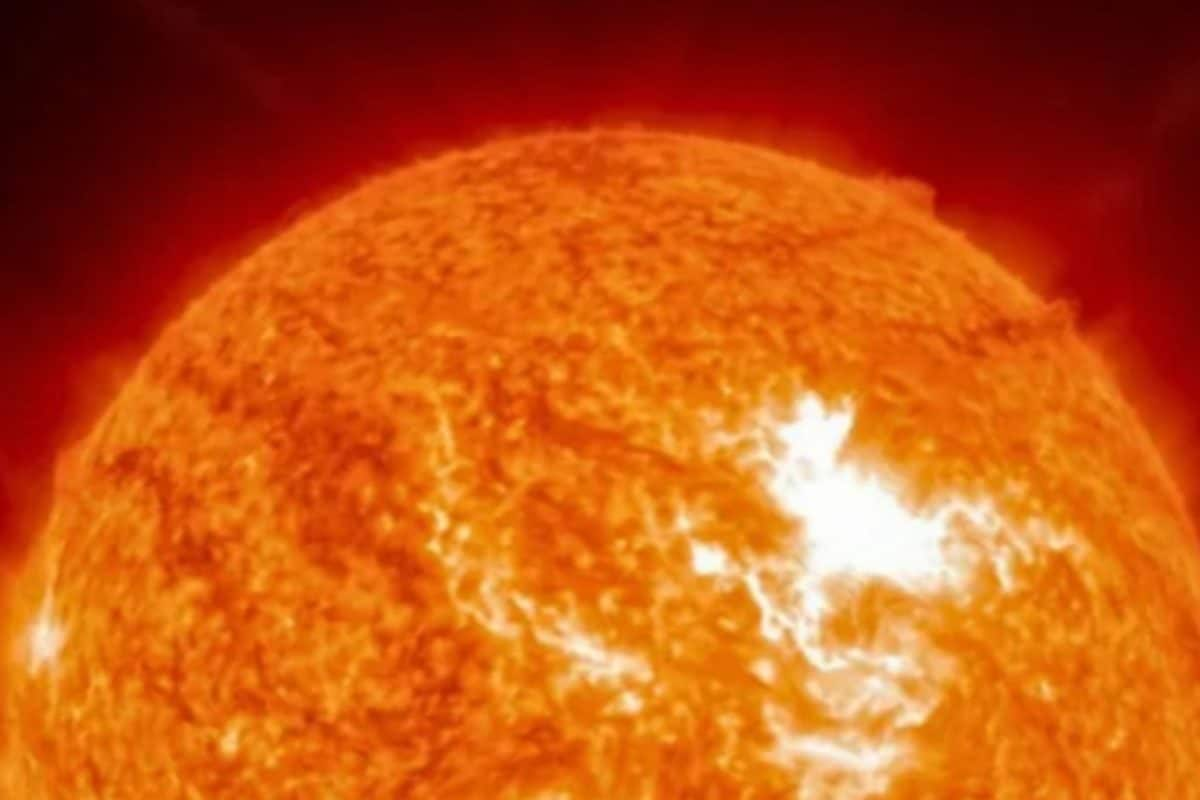
In a rare celestial spectacle, the Sun unleashed its fiery passion, sending a powerful X5.1 flare hurtling towards Earth on November 12. This cosmic event, originating from sunspot AR4274, was not just a breathtaking display of nature's might but also a significant disruption to our planet's magnetic shield.
The solar flare's impact on Earth's magnetosphere was akin to a cosmic punch, packing enough force to temporarily disrupt GPS systems, as reported by NASA and space weather expert Mario Nawfal. This flare, a sudden burst of radiation and energy, is a common occurrence on the Sun, but its direct hit on our planet's magnetic field is a less frequent phenomenon. The result was a dazzling display of nature's beauty and power as the flare's interaction with Earth's atmosphere created a stunning light show. Auroras, usually confined to polar regions, danced across the night sky, visible as far south as Florida. These vibrant curtains of light, often referred as the 'Northern Lights,' are a testament to the beauty that can arise from such powerful cosmic events.
This event serves as a reminder of the Sun's immense power and its direct influence on Earth's systems. While solar flares are essential for the Sun's natural cycle, they can significantly impact our technology-dependent society. From GPS disruptions to potential power grid issues, these flares highlight the delicate balance between Earth and its star. As we marvel at the beauty of the auroras, we are also reminded of the need for continued research and preparedness to mitigate the effects of such cosmic events on our daily lives. The Sun's embrace, though visually stunning, is a powerful force that demands our respect and understanding.
Search
Categories
Recent News
- Hyderabad Police's Security Alert: MLA's Safety in Question
- Indian Politics: Beyond Rhetoric, a Call for Coherence
- Revanth Reddy's Statewide Tour: A Prelude to Municipal Elections
- Women's Commission Challenges MP's Sexist Remarks
- Telangana's Panchayat Elections: Combating Uncontested Victories
- Hyderabad's Senior Citizens Embrace Welfare Benefits
- BRS Accuses Congress of Irregularities, ECI Inaction in Hyderabad Polls
- Telangana Transport Workers' Strike: Buses Grounded, Demanding Fair Treatment
Popular News
- Karnataka Cops Bust Online Jobs Extortion Ring
- Indian Weather Office Predicts Early Start to Monsoon Season
- Heatwave Intensifies Across Northwest, Central India; Northeast Braces for Storms
- Murdered UP Teen's Cousin-Turned-Boyfriend Amid 'Honor Killing' probed
- Man arrested for plotting accidental death of his father