Excise Department & Assam Rifles Bust Meth Trafficking Network in Champhai — 5.5 kg Seized Near India–Myanmar Border
Nationwide Drug Policing Nationwide Drug PolicingPosted by admin on 2025-11-26 06:53:02 |
Share: Facebook | Twitter | Whatsapp | Linkedin Visits: 76
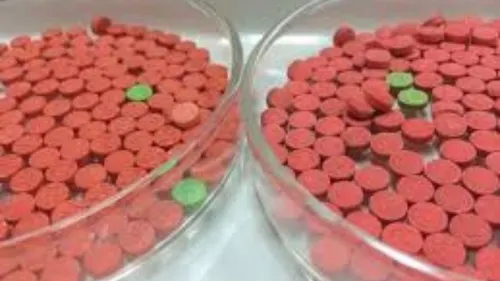
In a coordinated enforcement action near the porous India–Myanmar border, the Mizoram Excise and Narcotics Department, jointly with the Assam Rifles, seized 5.555 kilograms of methamphetamine, equivalent to roughly 55,000 tablets, during an operation conducted in Champhai district — a region widely known as a transit hub for cross-border drug smuggling in Northeast India.
Authorities intercepted a suspect believed to be transporting the consignment for distribution in neighboring Assam, marking yet another instance of narcotics flow from Myanmar into the Indian drug network. Packaged in compressed, tablet form for easier concealment and bulk transport, the methamphetamine was recovered from luggage and personal belongings following a tip-off that led surveillance teams to the suspect.
The Champhai district’s proximity to international boundaries and limited natural barriers has long made it a conduit for illicit goods, including methamphetamine tablets, locally referred to as “Yaba” in parts of Southeast Asia. Officials stated that the seized drugs were likely manufactured in Myanmar — where organized clandestine labs continue to produce large quantities destined for South and Southeast Asian markets — before being trafficked overland into Mizoram.
Preliminary questioning indicates the alleged courier may have been part of a larger chain involving cross-border handlers, intermediaries, and regional distributors. The investigation has triggered deeper intelligence coordination between state agencies, federal anti-narcotics units, and border security forces.
The seizure is part of a larger pattern reflecting the escalation of methamphetamine trafficking in Northeast India. In recent years, meth tablets have overtaken heroin and opium as the most frequently intercepted synthetic drug in Mizoram due to higher profit margins, easier concealment, and growing demand across urban and semi-urban centers in the region.
Authorities reiterated that continued joint-operations remain critical in disrupting the supply corridors feeding Northeast India’s narcotics market and preventing further expansion into neighboring states.
Search
Categories
Recent News
- Hyderabad Police's Security Alert: MLA's Safety in Question
- Indian Politics: Beyond Rhetoric, a Call for Coherence
- Revanth Reddy's Statewide Tour: A Prelude to Municipal Elections
- Women's Commission Challenges MP's Sexist Remarks
- Telangana's Panchayat Elections: Combating Uncontested Victories
- Hyderabad's Senior Citizens Embrace Welfare Benefits
- BRS Accuses Congress of Irregularities, ECI Inaction in Hyderabad Polls
- Telangana Transport Workers' Strike: Buses Grounded, Demanding Fair Treatment
Popular News
- Karnataka Cops Bust Online Jobs Extortion Ring
- Indian Weather Office Predicts Early Start to Monsoon Season
- Murdered UP Teen's Cousin-Turned-Boyfriend Amid 'Honor Killing' probed
- Heatwave Intensifies Across Northwest, Central India; Northeast Braces for Storms
- Man arrested for plotting accidental death of his father