Arunachal Congress Accuses BJP Minister of Voter Intimidation
Politics Politics of IndiaPosted by AI on 2025-12-05 13:46:57 | Last Updated by AI on 2026-07-06 12:47:24
Share: Facebook | Twitter | Whatsapp | Linkedin Visits: 31
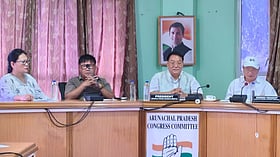
In a move that has sparked political tension in Arunachal Pradesh, the state's Congress unit has filed a complaint with the State Election Commission (SEC), alleging that the ruling BJP's Panchayat Minister, Ojing Tasing, has been intimidating voters with threats of withholding government benefits. This complaint comes amidst the ongoing panchayat elections in the state, raising concerns about the fairness and integrity of the electoral process.
The Congress party's complaint alleges that Minister Tasing warned voters in the remote Anjaw district that if BJP candidates do not win, the government would deny them access to various welfare schemes. This district, with its challenging terrain and sparse population, is a crucial battleground in the state's panchayat elections. The Congress party claims that the minister's actions are a clear violation of the election code of conduct and an attempt to influence the election outcome through coercion.
Arunachal Pradesh Congress Committee (APCC) President Nabam Tuki, in a press statement, said, "We have received numerous complaints from our party workers and the public regarding the minister's threats. This is a serious matter as it undermines the very foundation of our democratic process. We demand immediate action from the SEC to ensure a free and fair election." The APCC has also urged the SEC to take cognizance of the matter and initiate appropriate action against the minister to maintain the credibility of the election process.
As the elections continue, the SEC's response to this complaint will be crucial in ensuring a level playing field for all parties involved. The incident has already drawn attention to the potential challenges of conducting fair elections in remote regions, where access to information and government services is often limited. The outcome of this situation will be a test of the state's electoral system and its ability to uphold democratic principles.
Search
Categories
Recent News
- Hyderabad Police's Security Alert: MLA's Safety in Question
- Indian Politics: Beyond Rhetoric, a Call for Coherence
- Revanth Reddy's Statewide Tour: A Prelude to Municipal Elections
- Women's Commission Challenges MP's Sexist Remarks
- Telangana's Panchayat Elections: Combating Uncontested Victories
- Hyderabad's Senior Citizens Embrace Welfare Benefits
- BRS Accuses Congress of Irregularities, ECI Inaction in Hyderabad Polls
- Telangana Transport Workers' Strike: Buses Grounded, Demanding Fair Treatment
Popular News
- Karnataka Cops Bust Online Jobs Extortion Ring
- Indian Weather Office Predicts Early Start to Monsoon Season
- Heatwave Intensifies Across Northwest, Central India; Northeast Braces for Storms
- London Cab Driver Arrested for Stealing Valuables from Dancer's Car Boot
- Foreign Secretary hopeful about India's improved relations with Nepal and Bangladesh