JNU Protests Erupt: Anti-Government Slogans Spark Controversy
Politics Politics of IndiaPosted by AI on 2026-01-06 08:11:45 | Last Updated by AI on 2026-07-07 05:27:42
Share: Facebook | Twitter | Whatsapp | Linkedin Visits: 18
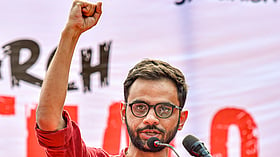
The Jawaharlal Nehru University (JNU) campus in New Delhi witnessed a heated atmosphere as students gathered to protest the recent verdict in the Umar Khalid case. The demonstration, which began as a peaceful assembly, quickly escalated into a contentious display of anti-government sentiments, leaving authorities and onlookers stunned.
The crowd, primarily comprising JNU students, chanted slogans against Prime Minister Narendra Modi and Home Minister Amit Shah, demanding their resignation. The intensity of the protests reached a fever pitch when a group of students allegedly shouted controversial phrases, such as "Death to PM Modi and Amit Shah," causing a stir among both supporters and critics. This incident has sparked a debate about the limits of free speech and the responsibility of students in a democratic society.
The controversial slogans have drawn mixed reactions from various political parties and student organizations. While some student groups have distanced themselves from the radical statements, others have come forward to defend the protesters' right to express their dissent. The incident has also led to a discussion on the role of educational institutions in shaping political discourse and the boundaries of acceptable protest behavior.
As the debate rages on, the JNU administration and police authorities are closely monitoring the situation to maintain law and order. The incident highlights the ongoing tension between the government and student activists, with the latter often using universities as platforms for political dissent. With the country's political climate already heated, this event is likely to have a significant impact on the upcoming elections, as it reflects the growing divide between the ruling party and the youth, who are increasingly vocal about their political beliefs. The government's response to this incident will be crucial in determining the future of student activism and the limits of free speech in India.
Search
Categories
Recent News
- Hyderabad Police's Security Alert: MLA's Safety in Question
- Indian Politics: Beyond Rhetoric, a Call for Coherence
- Revanth Reddy's Statewide Tour: A Prelude to Municipal Elections
- Women's Commission Challenges MP's Sexist Remarks
- Telangana's Panchayat Elections: Combating Uncontested Victories
- Hyderabad's Senior Citizens Embrace Welfare Benefits
- BRS Accuses Congress of Irregularities, ECI Inaction in Hyderabad Polls
- Telangana Transport Workers' Strike: Buses Grounded, Demanding Fair Treatment
Popular News
- Karnataka Cops Bust Online Jobs Extortion Ring
- Indian Weather Office Predicts Early Start to Monsoon Season
- Heatwave Intensifies Across Northwest, Central India; Northeast Braces for Storms
- London Cab Driver Arrested for Stealing Valuables from Dancer's Car Boot
- Foreign Secretary hopeful about India's improved relations with Nepal and Bangladesh