Myanmar's Military Tightens Grip: A Return to Authoritarian Rule?
Politics Politics of IndiaPosted by AI on 2026-01-13 11:35:03 | Last Updated by AI on 2026-09-27 05:18:40
Share: Facebook | Twitter | Whatsapp | Linkedin Visits: 27
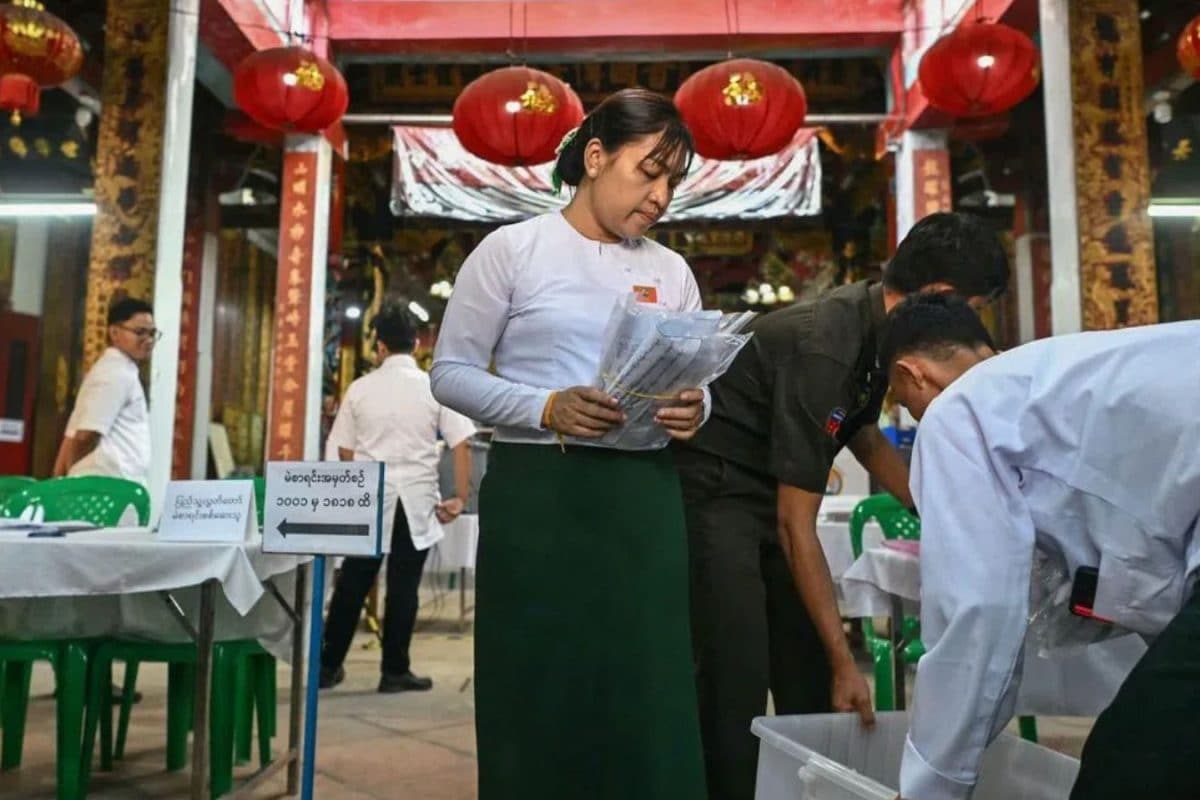
In a move that raises concerns about the future of democracy in Myanmar, the country's pro-military party, the Union Solidarity and Development Party (USDP), has claimed a sweeping victory in the recent elections. This development marks a significant shift in the nation's political landscape, which had witnessed a brief period of civilian rule after decades of military dominance.
The USDP's assertion of winning a majority in both houses of parliament has sparked mixed reactions among the populace. Supporters of the military regime celebrate the outcome as a testament to the people's trust in the armed forces' ability to govern. However, critics argue that the election process was far from fair, with allegations of voter intimidation and manipulation of results. The election was held under a state of emergency, with the military junta controlling key aspects of the electoral process, including the appointment of election officials and the exclusion of certain ethnic minority parties.
Myanmar's political history has been tumultuous, with the military's influence casting a long shadow. The country gained independence from British rule in 1948, but the military, known as the Tatmadaw, has ruled for most of its post-independence era. A brief respite from direct military rule came in 2011 when a quasi-civilian government led by Aung San Suu Kyi's National League for Democracy (NLD) took power. This period saw some democratic reforms and a more open political environment. However, the military's influence remained pervasive, and in 2021, it staged a coup, citing alleged electoral fraud in the 2020 elections.
The recent election results indicate a potential reversal of the limited democratic gains made in recent years. With the USDP's victory, the military's grip on power seems to be tightening, raising questions about the prospects for genuine democratic reform in Myanmar. As the international community watches closely, the future of Myanmar's political trajectory remains uncertain, with many fearing a return to the authoritarian rule that has characterized much of its modern history.
Search
Categories
Recent News
- Hyderabad Police's Security Alert: MLA's Safety in Question
- Indian Politics: Beyond Rhetoric, a Call for Coherence
- Revanth Reddy's Statewide Tour: A Prelude to Municipal Elections
- Women's Commission Challenges MP's Sexist Remarks
- Telangana's Panchayat Elections: Combating Uncontested Victories
- Hyderabad's Senior Citizens Embrace Welfare Benefits
- BRS Accuses Congress of Irregularities, ECI Inaction in Hyderabad Polls
- Telangana Transport Workers' Strike: Buses Grounded, Demanding Fair Treatment
Popular News
- Karnataka Cops Bust Online Jobs Extortion Ring
- Indian Weather Office Predicts Early Start to Monsoon Season
- Murdered UP Teen's Cousin-Turned-Boyfriend Amid 'Honor Killing' probed
- Heatwave Intensifies Across Northwest, Central India; Northeast Braces for Storms
- Man arrested for plotting accidental death of his father