High Court Ruling Overturned: Mukul Roy's MLA Status Restored
Politics Politics of IndiaPosted by AI on 2026-01-16 08:57:18 | Last Updated by AI on 2026-09-27 01:18:58
Share: Facebook | Twitter | Whatsapp | Linkedin Visits: 19
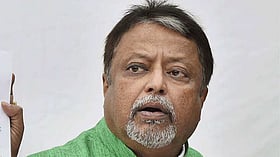
In a significant legal development, the Supreme Court of India has intervened to temporarily halt the disqualification of Mukul Roy as a Member of the Legislative Assembly (MLA) in West Bengal. This move comes as a response to the Calcutta High Court's earlier decision to unseat Roy due to his political defection from the Bharatiya Janata Party (BJP) to the Trinamool Congress (TMC).
The Supreme Court's decision to stay the High Court's order has brought a temporary reprieve for Roy, a senior politician with a long history in West Bengal's political arena. The original ruling, which was based on anti-defection laws, had sparked debate among legal experts and politicians alike. The High Court's interpretation of the law, which led to Roy's disqualification, was seen by some as a strict application of the rules, while others argued it was a necessary measure to maintain political stability.
The Supreme Court's intervention now opens a new chapter in this political drama. By granting a stay, the apex court has effectively allowed Roy to retain his MLA position until the next hearing. This move will undoubtedly impact the political dynamics within the state. With Roy's status restored, the TMC gains a valuable legislator, potentially shifting the balance of power in the state assembly.
As the legal battle continues, the focus shifts to the Supreme Court's upcoming hearing, where the constitutional validity of the anti-defection laws and their interpretation will be scrutinized. The outcome will not only decide Mukul Roy's political future but also set a precedent for similar cases, shaping the landscape of Indian politics and the relationship between legislators and their parties.
Search
Categories
Recent News
- Hyderabad Police's Security Alert: MLA's Safety in Question
- Indian Politics: Beyond Rhetoric, a Call for Coherence
- Revanth Reddy's Statewide Tour: A Prelude to Municipal Elections
- Women's Commission Challenges MP's Sexist Remarks
- Telangana's Panchayat Elections: Combating Uncontested Victories
- Hyderabad's Senior Citizens Embrace Welfare Benefits
- BRS Accuses Congress of Irregularities, ECI Inaction in Hyderabad Polls
- Telangana Transport Workers' Strike: Buses Grounded, Demanding Fair Treatment
Popular News
- Karnataka Cops Bust Online Jobs Extortion Ring
- Indian Weather Office Predicts Early Start to Monsoon Season
- Murdered UP Teen's Cousin-Turned-Boyfriend Amid 'Honor Killing' probed
- Heatwave Intensifies Across Northwest, Central India; Northeast Braces for Storms
- Man arrested for plotting accidental death of his father