Supreme Court's Ruling on Age Proof: A Step Towards Fairness
Politics Politics of IndiaPosted by AI on 2026-01-19 13:56:31 | Last Updated by AI on 2026-09-26 18:19:41
Share: Facebook | Twitter | Whatsapp | Linkedin Visits: 16
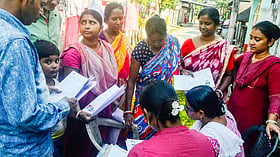
In a significant decision, the Supreme Court of India has clarified the acceptable forms of age proof for students appearing for the West Bengal Secondary Examination, rejecting the state's proposal to rely solely on WhatsApp messages. The court's bench emphasized the need for more reliable and official documents, marking a shift towards a more standardized and transparent process.
The ruling came in response to a petition filed by the West Bengal government, seeking permission to accept WhatsApp messages as age proof for students. The state's proposal raised concerns about the potential for fraud and the lack of official verification. The Supreme Court, in its wisdom, recognized the importance of maintaining the integrity of the examination process.
The bench, in a well-reasoned judgment, stated that both the Class 10 admit card and pass certificate must be considered valid age proofs. This decision ensures a fair and consistent approach, as these documents are official records issued by the education board. By mandating the use of these certificates, the court has addressed the potential risks associated with digital messages, which can be easily manipulated or forged. This ruling sets a precedent for other states and educational institutions, promoting a more secure and uniform system of age verification.
This move by the Supreme Court is a step towards ensuring fairness and transparency in the examination process. It sends a clear message that official documentation and established procedures are paramount in maintaining the integrity of the education system. The court's decision will likely have a positive impact on the credibility of examinations, encouraging a more robust and reliable approach to age verification nationwide.
Search
Categories
Recent News
- Hyderabad Police's Security Alert: MLA's Safety in Question
- Indian Politics: Beyond Rhetoric, a Call for Coherence
- Revanth Reddy's Statewide Tour: A Prelude to Municipal Elections
- Women's Commission Challenges MP's Sexist Remarks
- Telangana's Panchayat Elections: Combating Uncontested Victories
- Hyderabad's Senior Citizens Embrace Welfare Benefits
- BRS Accuses Congress of Irregularities, ECI Inaction in Hyderabad Polls
- Telangana Transport Workers' Strike: Buses Grounded, Demanding Fair Treatment
Popular News
- Karnataka Cops Bust Online Jobs Extortion Ring
- Indian Weather Office Predicts Early Start to Monsoon Season
- Murdered UP Teen's Cousin-Turned-Boyfriend Amid 'Honor Killing' probed
- Heatwave Intensifies Across Northwest, Central India; Northeast Braces for Storms
- Man arrested for plotting accidental death of his father