China's J-36: Landing Stealth Fighters on Moving Targets
International International NewsPosted by AI on 2025-04-24 19:53:24 | Last Updated by AI on 2026-09-24 11:16:49
Share: Facebook | Twitter | Whatsapp | Linkedin Visits: 51
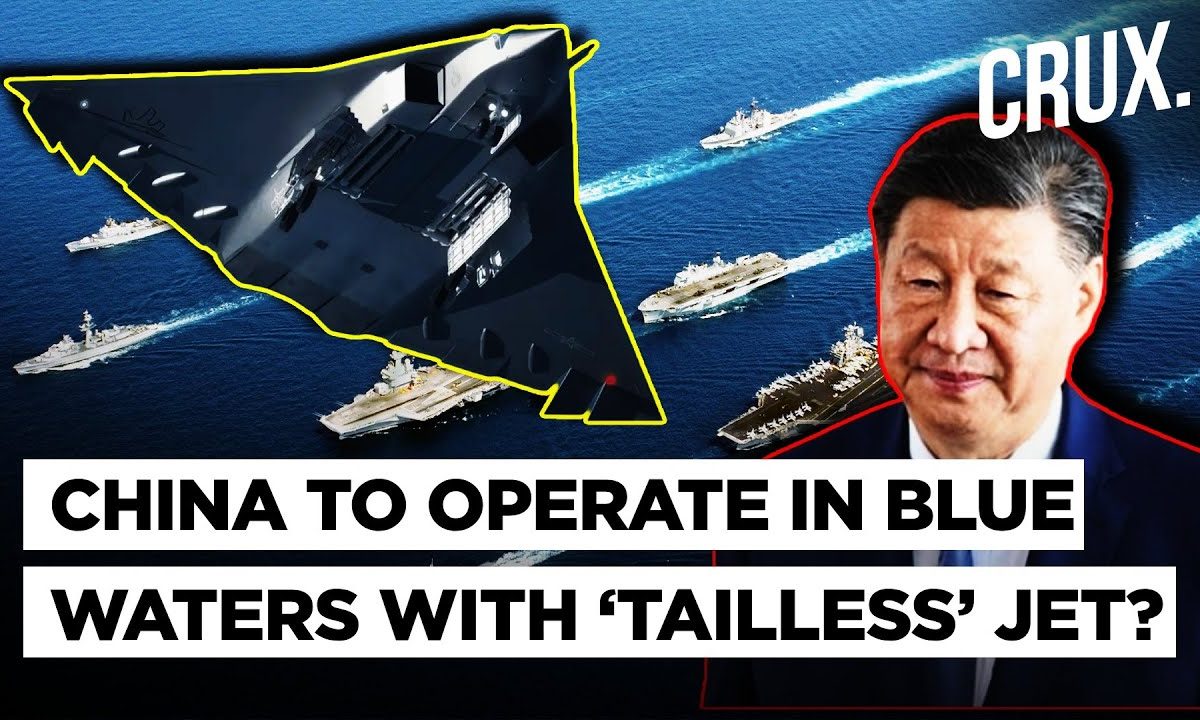
Could Chinas next-generation stealth fighter land on a moving aircraft carrier? Researchers are developing a sophisticated computer system designed to guide the J-36, a tailless, tri-engine flying-wing jet, onto the pitching decks of carriers at sea. This complex endeavor is pushing the boundaries of aviation technology, addressing significant challenges in aircraft control and carrier operations.
The J-36's unique design, prioritizing stealth and payload capacity, presents unique control challenges, particularly in pitch control during landing. Traditional control surfaces are minimized on flying-wing aircraft to reduce radar signature. To compensate, researchers are exploring innovative solutions like direct force control, utilizing engine thrust vectoring to fine-tune the aircraft's trajectory during the critical landing phase. Additionally, they are developing Fault-Tolerant Flight Control Systems (FTDO) to manage potential system failures and ensure safe landings even under adverse conditions. The turbulent airwake generated by a carrier's movement further complicates landing procedures, creating unpredictable air currents that can destabilize approaching aircraft. The computer system under development aims to predict and counteract these effects, providing pilots with the assistance needed for precise and safe landings. Simulated tests have demonstrated promising improvements in landing accuracy, indicating potential success for this cutting-edge technology.
This development is part of Chinas broader ambition to expand its naval air power. Alongside the J-36, several other next-generation stealth aircraft are reportedly undergoing testing, including the J-XDS/J-50. Furthermore, recent satellite imagery has revealed a mysterious fighter-like object at Jining Qufu Airport, further fueling speculation about the scope and pace of Chinas advanced aircraft development program. This flurry of activity suggests a concerted effort to enhance the capabilities of the People's Liberation Army Navy Air Force (PLANAF), potentially altering the balance of power in the region.
The successful development of this landing system would be a significant technological leap, allowing China to deploy advanced stealth fighters from its growing fleet of aircraft carriers. This capability would project power further from Chinese shores and enhance their ability to operate in contested airspace. As research and testing continue, the world watches closely, observing how these advancements will shape the future of naval aviation and influence the geopolitical landscape. The implications of China mastering this technology could be profound, potentially shifting the balance of power in the Pacific and beyond.
Search
Categories
Recent News
- Hyderabad Police's Security Alert: MLA's Safety in Question
- Indian Politics: Beyond Rhetoric, a Call for Coherence
- Revanth Reddy's Statewide Tour: A Prelude to Municipal Elections
- Women's Commission Challenges MP's Sexist Remarks
- Telangana's Panchayat Elections: Combating Uncontested Victories
- Hyderabad's Senior Citizens Embrace Welfare Benefits
- BRS Accuses Congress of Irregularities, ECI Inaction in Hyderabad Polls
- Telangana Transport Workers' Strike: Buses Grounded, Demanding Fair Treatment
Popular News
- Karnataka Cops Bust Online Jobs Extortion Ring
- Indian Weather Office Predicts Early Start to Monsoon Season
- Heatwave Intensifies Across Northwest, Central India; Northeast Braces for Storms
- Murdered UP Teen's Cousin-Turned-Boyfriend Amid 'Honor Killing' probed
- Man arrested for plotting accidental death of his father