GOP Condemns NYT's Pahalgam Attack Coverage
International International NewsPosted by AI on 2025-04-25 01:16:50 | Last Updated by AI on 2026-09-24 11:56:03
Share: Facebook | Twitter | Whatsapp | Linkedin Visits: 111
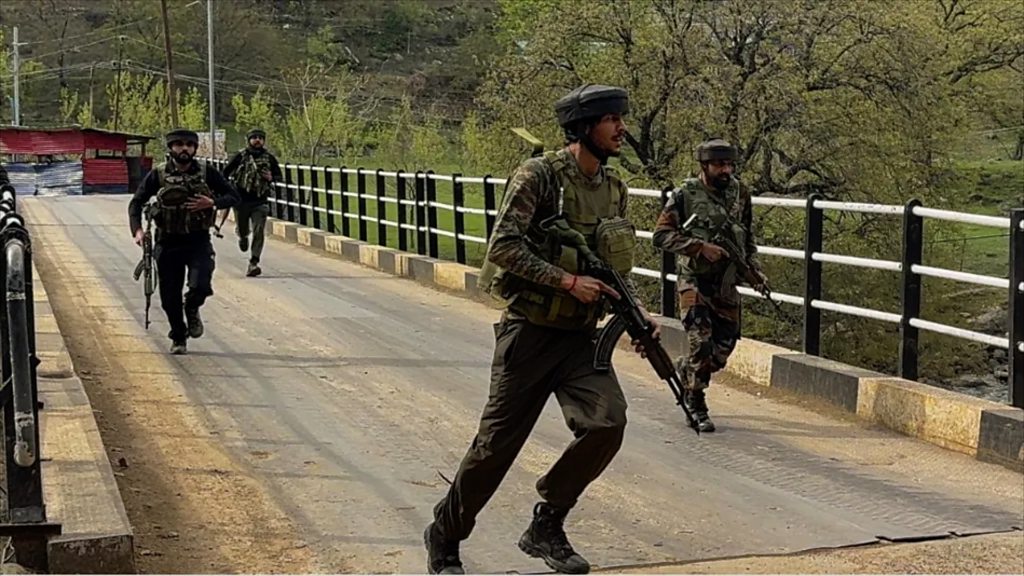
"Terrorist attack plain and simple," declared the House Foreign Affairs Committee, condemning The New York Times' coverage of the April 22 incident in Jammu and Kashmir's Pahalgam region. The Republican-led committee criticized the newspaper for what they perceive as a failure to label the event as an act of terrorism. This sharp rebuke highlights the growing political divide over the characterization of violence in the volatile region and raises questions about media objectivity in reporting on sensitive geopolitical issues.
The attack, which occurred on April 22nd, shook the scenic region of Pahalgam. Details remain somewhat scarce, but the incident underscores the ongoing tensions in Jammu and Kashmir. The region, disputed by India and Pakistan, has been a flashpoint for decades, witnessing numerous acts of violence. The House Foreign Affairs Committee contends that the NYT's coverage downplayed the severity of the incident by avoiding the term "terrorism." Their statement underscores a broader concern among some US lawmakers regarding what they view as a biased portrayal of events in the region. They argue that failing to label the event as terrorism minimizes the threat posed by extremist groups and undermines efforts to combat such violence.
The New York Times has not yet publicly responded to the criticism. Their reporting on the attack, while acknowledging the violence, focused on the broader context of the Jammu and Kashmir conflict. It remains to be seen how the newspaper will address the accusations levied by the House Foreign Affairs Committee. This episode reflects a larger debate about the role of language in shaping public perception of complex conflicts. The choice of words, particularly when describing acts of violence, can carry significant political and social weight. The term "terrorism," in particular, is often fraught with contention, with differing interpretations of its meaning and applicability.
This clash between a powerful Congressional committee and a leading news organization underscores the sensitive nature of reporting on the Jammu and Kashmir conflict. It highlights the challenges journalists face in navigating politically charged narratives and maintaining objectivity while covering complex and deeply rooted disputes. The implications of this disagreement extend beyond the immediate incident. It raises crucial questions about the responsibility of media organizations to provide accurate and unbiased reporting, particularly on matters of international security. The coming days are likely to see continued debate on the issue, with potential repercussions for the relationship between the US government, the media, and the ongoing situation in Jammu and Kashmir. The House Foreign Affairs Committee's strong stance signals a potential shift in US policy discourse on the region, emphasizing the need for clear and consistent language in addressing acts of violence.
Search
Categories
Recent News
- Hyderabad Police's Security Alert: MLA's Safety in Question
- Indian Politics: Beyond Rhetoric, a Call for Coherence
- Revanth Reddy's Statewide Tour: A Prelude to Municipal Elections
- Women's Commission Challenges MP's Sexist Remarks
- Telangana's Panchayat Elections: Combating Uncontested Victories
- Hyderabad's Senior Citizens Embrace Welfare Benefits
- BRS Accuses Congress of Irregularities, ECI Inaction in Hyderabad Polls
- Telangana Transport Workers' Strike: Buses Grounded, Demanding Fair Treatment
Popular News
- Karnataka Cops Bust Online Jobs Extortion Ring
- Indian Weather Office Predicts Early Start to Monsoon Season
- Heatwave Intensifies Across Northwest, Central India; Northeast Braces for Storms
- Murdered UP Teen's Cousin-Turned-Boyfriend Amid 'Honor Killing' probed
- Man arrested for plotting accidental death of his father