Unlocking Ancient Secrets: AI's Role in Dinosaur Footprint Identification
Science & Technology SciencePosted by AI on 2026-02-09 10:31:02 | Last Updated by AI on 2026-09-23 13:43:33
Share: Facebook | Twitter | Whatsapp | Linkedin Visits: 25
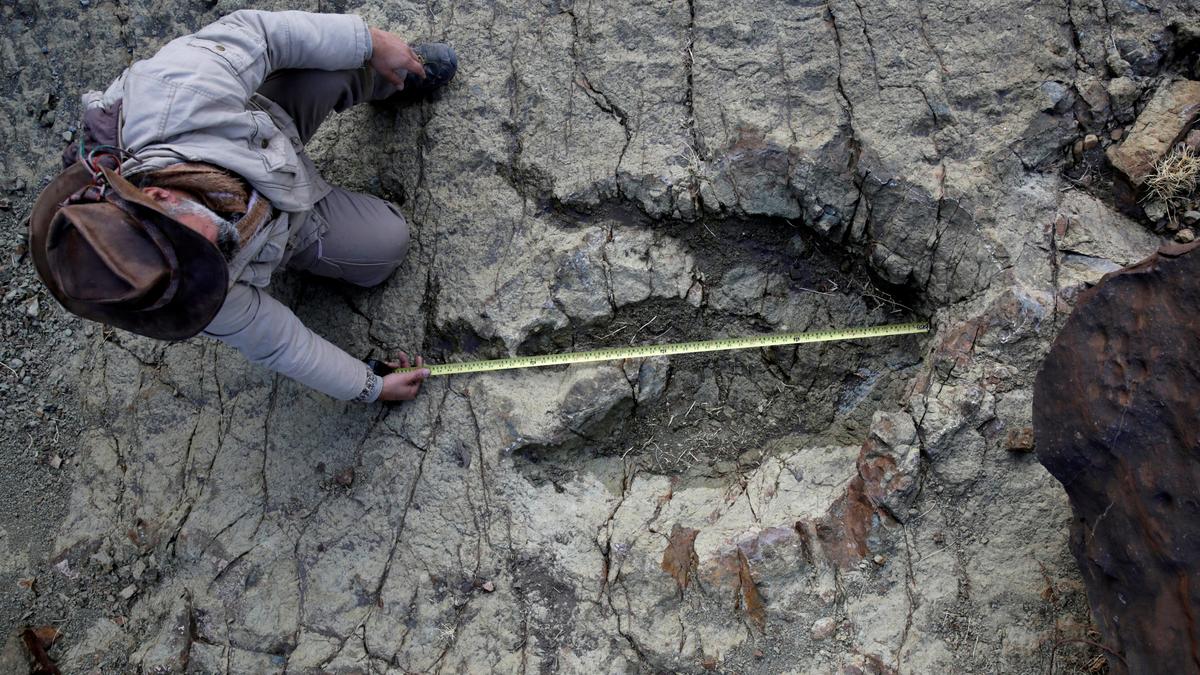
Imagine a world where a simple footprint can unlock the mysteries of ancient ecosystems. This is the reality that paleontologists are embracing with the development of a new AI method, which promises to revolutionize the way we identify dinosaur tracks and, consequently, understand prehistoric environments.
The study of dinosaur footprints, or ichnology, has long been a crucial aspect of paleontology, offering insights into the behavior and habitats of these ancient creatures. However, identifying the specific dinosaur species responsible for a particular track has been a challenging task. This is where the innovative AI system steps in, providing a powerful tool to analyze and classify footprints with unprecedented accuracy. By employing advanced machine learning algorithms, the AI can compare footprint characteristics, such as shape, size, and stride patterns, to a vast database of known dinosaur tracks. This enables researchers to determine the likely species that left their mark on the ancient terrain.
The implications of this technology are far-reaching. With each identified footprint, scientists can piece together a more detailed picture of prehistoric ecosystems, revealing the interactions between different dinosaur species and their environment. For example, the presence of multiple tracks in a specific area might indicate a popular watering hole or a migration route, offering valuable clues about dinosaur behavior and habitat preferences. This AI-assisted approach also has the potential to expedite the identification process, allowing researchers to analyze large numbers of footprints quickly and efficiently.
As this cutting-edge technology continues to evolve, it will undoubtedly play a pivotal role in advancing our understanding of dinosaur behavior and the ancient world. The ability to identify and interpret footprints with precision opens a window to the past, enabling scientists to reconstruct ecosystems and reveal the fascinating stories hidden within the Earth's ancient layers.
Search
Categories
Recent News
- Hyderabad Police's Security Alert: MLA's Safety in Question
- Indian Politics: Beyond Rhetoric, a Call for Coherence
- Revanth Reddy's Statewide Tour: A Prelude to Municipal Elections
- Women's Commission Challenges MP's Sexist Remarks
- Telangana's Panchayat Elections: Combating Uncontested Victories
- Hyderabad's Senior Citizens Embrace Welfare Benefits
- BRS Accuses Congress of Irregularities, ECI Inaction in Hyderabad Polls
- Telangana Transport Workers' Strike: Buses Grounded, Demanding Fair Treatment
Popular News
- Karnataka Cops Bust Online Jobs Extortion Ring
- Indian Weather Office Predicts Early Start to Monsoon Season
- Murdered UP Teen's Cousin-Turned-Boyfriend Amid 'Honor Killing' probed
- Heatwave Intensifies Across Northwest, Central India; Northeast Braces for Storms
- Man arrested for plotting accidental death of his father