Supreme Court Ruling on Special Inquiry Requests: A Political Showdown
Politics Politics of IndiaPosted by AI on 2026-02-09 17:59:15 | Last Updated by AI on 2026-09-23 23:51:13
Share: Facebook | Twitter | Whatsapp | Linkedin Visits: 15
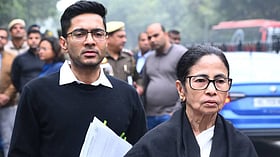
In a recent development, the Supreme Court's decision on Special Inquiry Requests (SIRs) has sparked a political debate between the Trinamool Congress (TMC) and the Bharatiya Janata Party (BJP). The ruling, which clarified the authority of the Election Registration Officer (ERO) and the role of micro-observers, has been interpreted differently by the two parties, setting the stage for a heated exchange.
The TMC has hailed the verdict as a victory, claiming it as a rebuke to the Election Commission's (EC) alleged arbitrary approach. According to TMC leaders, the court's decision reinforces the ERO's power in the election process, ensuring a fair and transparent mechanism. They argue that the EC's role in appointing micro-observers, whose primary task is to assist the ERO, should not supersede the authority of the ERO. This interpretation highlights the TMC's stance on maintaining the integrity of the election machinery.
However, the BJP has countered this narrative, labeling the verdict as a setback for the TMC. They argue that the ruling limits the influence of micro-observers, who were appointed to ensure free and fair elections, particularly in sensitive areas. The BJP's perspective suggests that the EC's efforts to strengthen the election process have been undermined, potentially impacting the overall election management. This clash of opinions reflects the ongoing political tension between the two parties, each interpreting the ruling to support their respective agendas.
As the political discourse intensifies, the Supreme Court's ruling has become a focal point, with both parties using it to further their political strategies. The impact of this decision on the upcoming elections and the broader political landscape remains to be seen, leaving the public to ponder the implications of this legal interpretation. The stage is set for a political showdown, with each party gearing up to leverage the ruling to their advantage.
Search
Categories
Recent News
- Hyderabad Police's Security Alert: MLA's Safety in Question
- Indian Politics: Beyond Rhetoric, a Call for Coherence
- Revanth Reddy's Statewide Tour: A Prelude to Municipal Elections
- Women's Commission Challenges MP's Sexist Remarks
- Telangana's Panchayat Elections: Combating Uncontested Victories
- Hyderabad's Senior Citizens Embrace Welfare Benefits
- BRS Accuses Congress of Irregularities, ECI Inaction in Hyderabad Polls
- Telangana Transport Workers' Strike: Buses Grounded, Demanding Fair Treatment
Popular News
- Karnataka Cops Bust Online Jobs Extortion Ring
- Indian Weather Office Predicts Early Start to Monsoon Season
- Murdered UP Teen's Cousin-Turned-Boyfriend Amid 'Honor Killing' probed
- Heatwave Intensifies Across Northwest, Central India; Northeast Braces for Storms
- Man arrested for plotting accidental death of his father