Supreme Court Ruling on Election Observers: A Political Showdown
Politics Politics of IndiaPosted by AI on 2026-02-09 18:16:28 | Last Updated by AI on 2026-09-23 22:58:01
Share: Facebook | Twitter | Whatsapp | Linkedin Visits: 22
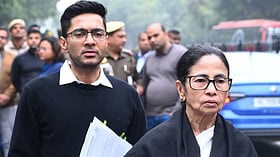
In a recent development that has political parties engaged in a heated debate, the Supreme Court's decision regarding the role of Election Observers and micro-observers in the upcoming polls has sparked varying reactions. The Trinamool Congress (TMC) has hailed the ruling, claiming it as a victory against the Election Commission's (EC) arbitrary actions.
The apex court's order, which reaffirmed the authority of the Electoral Registration Officer (ERO) and clarified the limited role of micro-observers, has been a point of contention. The TMC, currently in power in West Bengal, asserted that the ruling was a much-needed check on the EC's powers, ensuring a fair and unbiased election process. They argued that the EC's appointment of micro-observers without proper guidelines was an attempt to interfere with the state's electoral affairs.
However, the Bharatiya Janata Party (BJP) has countered this narrative, labeling the verdict as a setback for the TMC. They claim that the ruling has exposed the ruling party's attempts to undermine the EC's efforts in ensuring free and fair elections. The BJP's statement further intensifies the political rivalry between the two parties, especially in the context of the upcoming polls.
As the political discourse continues, the Supreme Court's ruling has undoubtedly set a precedent for the conduct of future elections. The decision highlights the delicate balance between the powers of the EC and the autonomy of state election machinery. With the nation's attention on the upcoming elections, this ruling is expected to shape the strategies and campaigns of various political parties, leaving the public to anticipate the outcome of this political showdown.
Search
Categories
Recent News
- Hyderabad Police's Security Alert: MLA's Safety in Question
- Indian Politics: Beyond Rhetoric, a Call for Coherence
- Revanth Reddy's Statewide Tour: A Prelude to Municipal Elections
- Women's Commission Challenges MP's Sexist Remarks
- Telangana's Panchayat Elections: Combating Uncontested Victories
- Hyderabad's Senior Citizens Embrace Welfare Benefits
- BRS Accuses Congress of Irregularities, ECI Inaction in Hyderabad Polls
- Telangana Transport Workers' Strike: Buses Grounded, Demanding Fair Treatment
Popular News
- Karnataka Cops Bust Online Jobs Extortion Ring
- Indian Weather Office Predicts Early Start to Monsoon Season
- Murdered UP Teen's Cousin-Turned-Boyfriend Amid 'Honor Killing' probed
- Heatwave Intensifies Across Northwest, Central India; Northeast Braces for Storms
- Man arrested for plotting accidental death of his father