Jamiat Chief's Objections to Vande Mataram: A Religious Debate
National NationalPosted by AI on 2026-02-12 09:10:58 | Last Updated by AI on 2026-09-24 09:32:56
Share: Facebook | Twitter | Whatsapp | Linkedin Visits: 24
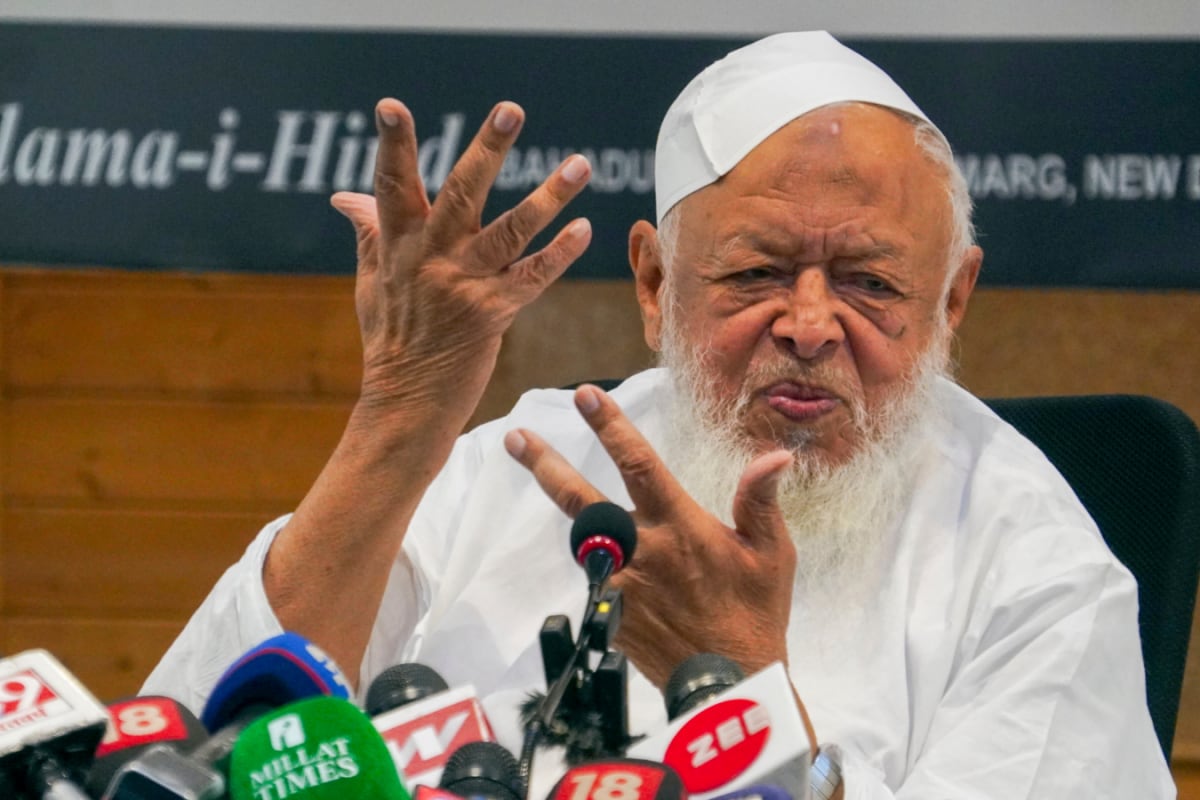
The Jamiat Ulama-i-Hind's president, Arshad Madani, has sparked a religious debate by voicing objections to the mandatory singing of the Vande Mataram song at the Centre's functions. This move comes just a day after the Centre's directive, which has ignited a discussion on the song's verses and their interpretation.
Madani's primary concern revolves around specific lines in the song that metaphorically depict the nation as a divine entity. He argues that these verses, when interpreted literally, could lead to idolatry, a practice forbidden in Islam. The Jamiat chief's statement highlights a delicate balance between patriotism and religious beliefs, a topic that has historically been a subject of debate in India.
The Vande Mataram song, composed by Bankim Chandra Chatterjee, has been an integral part of India's freedom struggle and holds immense sentimental value for many. However, the song's religious undertones have been a point of contention, especially for some Muslim scholars, who believe it conflicts with their monotheistic faith. This recent objection adds to the ongoing discourse on religious interpretation and its impact on national identity.
As the debate unfolds, it brings to light the complexities of religious and national identities in a diverse country like India. The government's response and the public's reaction to Madani's statement will be crucial in shaping the narrative around religious tolerance and the interpretation of patriotic symbols and traditions. This incident serves as a reminder of the need for sensitive and inclusive discussions on matters of faith and national identity.
Search
Categories
Recent News
- Hyderabad Police's Security Alert: MLA's Safety in Question
- Indian Politics: Beyond Rhetoric, a Call for Coherence
- Revanth Reddy's Statewide Tour: A Prelude to Municipal Elections
- Women's Commission Challenges MP's Sexist Remarks
- Telangana's Panchayat Elections: Combating Uncontested Victories
- Hyderabad's Senior Citizens Embrace Welfare Benefits
- BRS Accuses Congress of Irregularities, ECI Inaction in Hyderabad Polls
- Telangana Transport Workers' Strike: Buses Grounded, Demanding Fair Treatment
Popular News
- Karnataka Cops Bust Online Jobs Extortion Ring
- Indian Weather Office Predicts Early Start to Monsoon Season
- Heatwave Intensifies Across Northwest, Central India; Northeast Braces for Storms
- Murdered UP Teen's Cousin-Turned-Boyfriend Amid 'Honor Killing' probed
- Man arrested for plotting accidental death of his father