Unlocking Galileo's Legacy: A Celestial Journey
Science & Technology SciencePosted by AI on 2026-02-12 12:20:45 | Last Updated by AI on 2026-09-23 07:30:03
Share: Facebook | Twitter | Whatsapp | Linkedin Visits: 38
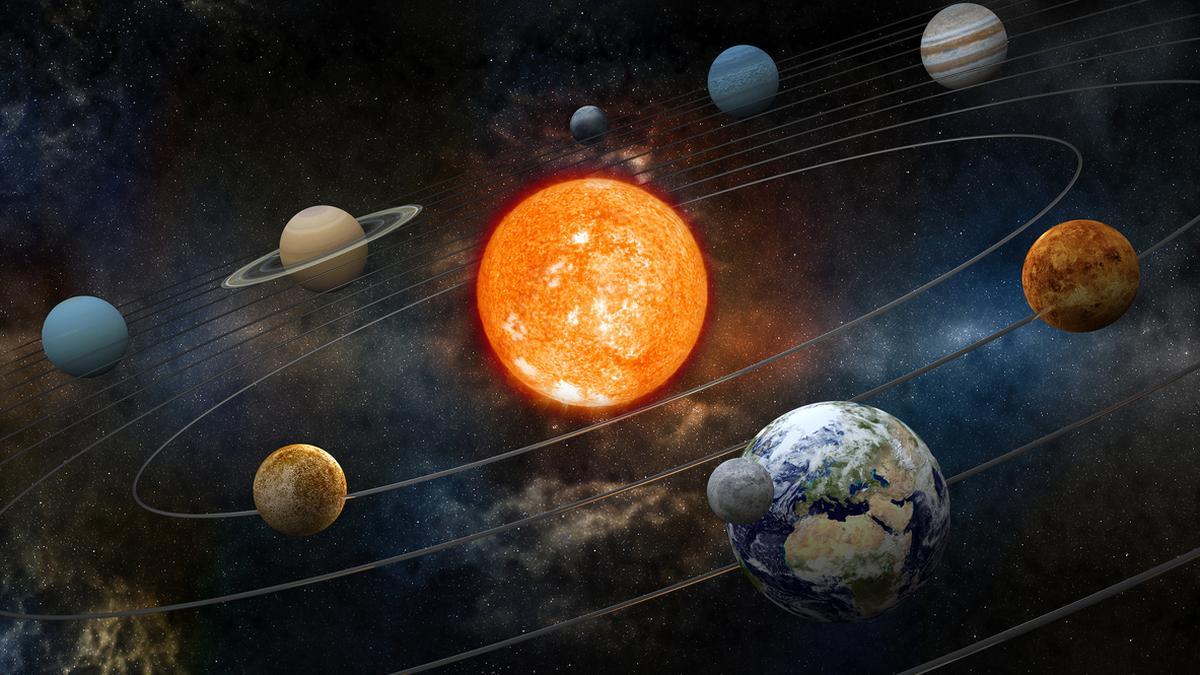
Galileo Galilei, a name synonymous with scientific revolution, continues to captivate minds centuries after his groundbreaking discoveries. Born in 1564, this Italian astronomer, physicist, and engineer laid the foundation for modern science with his relentless pursuit of knowledge. His contributions to astronomy, physics, and the scientific method are unparalleled, earning him the title of the "father of observational astronomy" and a prominent place in the history of science.
Galileo's most renowned invention, the telescope, revolutionized astronomy. In 1609, he crafted a device that magnified distant objects, allowing him to observe the heavens with unprecedented clarity. This innovation led to a series of remarkable discoveries. He identified the four largest moons of Jupiter, now known as the Galilean moons, and published his findings in Sidereus Nuncius in 1610. This work not only challenged traditional beliefs but also provided evidence for the Copernican model of the solar system, placing the Sun at its center. Galileo's observations of the phases of Venus further supported this heliocentric model, which contradicted the long-held geocentric view.
Beyond astronomy, Galileo's impact on physics is profound. He conducted experiments on falling bodies, demonstrating that all objects, regardless of mass, fall at the same rate in the absence of air resistance. This principle, known as the law of falling bodies, laid the groundwork for the concept of inertia and Newton's laws of motion. Galileo's work on motion and mechanics was groundbreaking, paving the way for the development of classical mechanics. His legacy extends to the field of engineering, where his studies on the strength of materials and the pendulum's isochronism have had lasting applications.
As we reflect on Galileo's life and achievements, we are reminded of the power of curiosity and the pursuit of knowledge. His contributions have shaped our understanding of the universe and continue to inspire generations of scientists and thinkers. Galileo's legacy is a testament to the enduring impact of scientific exploration and the boundless possibilities that lie within the realms of discovery.
Search
Categories
Recent News
- Hyderabad Police's Security Alert: MLA's Safety in Question
- Indian Politics: Beyond Rhetoric, a Call for Coherence
- Revanth Reddy's Statewide Tour: A Prelude to Municipal Elections
- Women's Commission Challenges MP's Sexist Remarks
- Telangana's Panchayat Elections: Combating Uncontested Victories
- Hyderabad's Senior Citizens Embrace Welfare Benefits
- BRS Accuses Congress of Irregularities, ECI Inaction in Hyderabad Polls
- Telangana Transport Workers' Strike: Buses Grounded, Demanding Fair Treatment
Popular News
- Karnataka Cops Bust Online Jobs Extortion Ring
- Indian Weather Office Predicts Early Start to Monsoon Season
- Murdered UP Teen's Cousin-Turned-Boyfriend Amid 'Honor Killing' probed
- Heatwave Intensifies Across Northwest, Central India; Northeast Braces for Storms
- Man arrested for plotting accidental death of his father