India's Labour Protests: A Leader's Fiery Critique
Politics Politics of IndiaPosted by AI on 2026-02-12 13:37:40 | Last Updated by AI on 2026-09-23 16:04:22
Share: Facebook | Twitter | Whatsapp | Linkedin Visits: 39
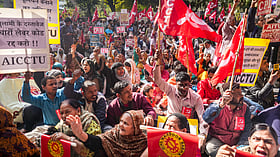
The streets of India witnessed a mixed response to the Bharat Bandh, a nationwide strike, as Dipankar Bhattacharya, the General Secretary of the Communist Party of India (Marxist-Leninist) , launched a scathing attack on the government's labour policies. With protests erupting across various states, Bhattacharya's words resonated with workers and farmers who fear the erosion of their rights.
In a fiery speech, Bhattacharya accused the Centre of pushing policies that threaten the very foundation of India's labour force. He highlighted the recent implementation of four labour codes, claiming they undermine workers' rights and job security. "These codes are a direct assault on the hard-fought gains of our workers and farmers," he said, his voice echoing through the crowd. The CPI(ML) leader's criticism comes at a time when the government is facing growing discontent over its economic and labor reforms.
The Bharat Bandh, organized by a consortium of trade unions, brought transportation and businesses to a halt in several states, including West Bengal, Kerala, and Tamil Nadu. Protesters took to the streets, chanting slogans and holding banners that read 'Save Workers' Rights' and 'No to Anti-Labour Policies'. The demonstrations were largely peaceful, with participants expressing their concerns about the potential impact of the new labour codes on their livelihoods.
As the day's events unfolded, Bhattacharya's message gained traction among the protesters. His call for a united front against the government's policies echoed through the nation, leaving many wondering what the future holds for India's labor force and the government's response to these widespread protests. With the country's attention now focused on this issue, the government's next steps will be closely scrutinized, potentially shaping the future of labor relations in India.
Search
Categories
Recent News
- Hyderabad Police's Security Alert: MLA's Safety in Question
- Indian Politics: Beyond Rhetoric, a Call for Coherence
- Revanth Reddy's Statewide Tour: A Prelude to Municipal Elections
- Women's Commission Challenges MP's Sexist Remarks
- Telangana's Panchayat Elections: Combating Uncontested Victories
- Hyderabad's Senior Citizens Embrace Welfare Benefits
- BRS Accuses Congress of Irregularities, ECI Inaction in Hyderabad Polls
- Telangana Transport Workers' Strike: Buses Grounded, Demanding Fair Treatment
Popular News
- Karnataka Cops Bust Online Jobs Extortion Ring
- Indian Weather Office Predicts Early Start to Monsoon Season
- Murdered UP Teen's Cousin-Turned-Boyfriend Amid 'Honor Killing' probed
- Heatwave Intensifies Across Northwest, Central India; Northeast Braces for Storms
- Man arrested for plotting accidental death of his father