Supreme Court Blocks Haryana's Safari Ambitions in Aravallis
National NationalPosted by AI on 2026-02-13 03:15:38 | Last Updated by AI on 2026-09-24 04:10:23
Share: Facebook | Twitter | Whatsapp | Linkedin Visits: 17
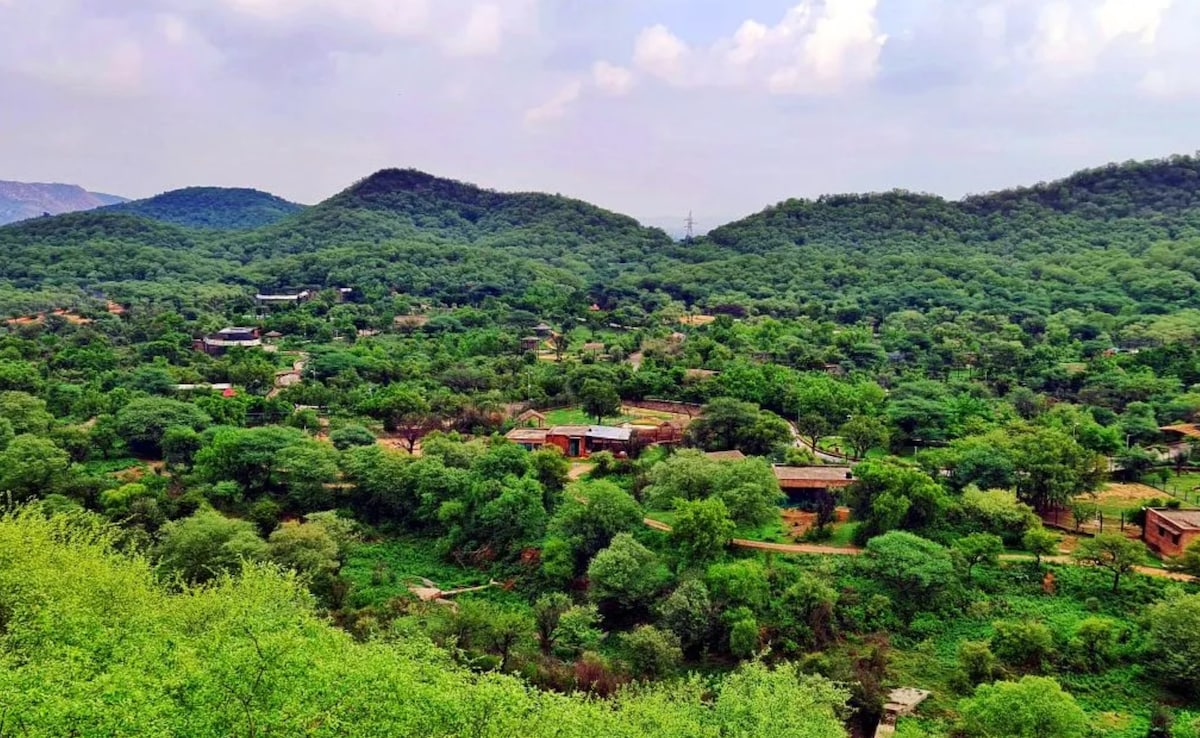
In a significant move to protect the Aravalli range, India's Supreme Court has firmly rejected the Haryana government's proposal for a jungle safari. This decision comes as a response to the state's request to submit a detailed plan for the safari, which aimed to boost tourism and conservation efforts.
The court's bench, led by Chief Justice of India D.Y. Chandrachud, firmly stated, "We will not allow anyone to touch the Aravallis." This powerful stance emphasizes the court's commitment to preserving the region's ecological integrity. The Aravalli range, a vital ecological zone, has been under threat from various development projects, including mining and infrastructure expansion. The proposed safari, while marketed as an eco-tourism initiative, raised concerns about potential environmental damage and the disruption of wildlife habitats.
The Supreme Court's decision is a crucial step towards safeguarding the Aravallis, known for their rich biodiversity and geological significance. The court's insistence on a clear definition of the Aravalli range before considering any development plans demonstrates a cautious and environmentally conscious approach. This move ensures that any future proposals will be thoroughly scrutinized to balance development and environmental preservation.
With this ruling, the Supreme Court sends a clear message to all stakeholders, including government bodies and developers, that any projects impacting the Aravallis will face rigorous examination. The court's proactive stance is a welcome development for environmental activists and conservationists who have long advocated for the protection of this ecologically sensitive region. As the debate over development versus conservation continues, this decision sets a precedent for prioritizing ecological sustainability in India's growth narrative.
Search
Categories
Recent News
- Hyderabad Police's Security Alert: MLA's Safety in Question
- Indian Politics: Beyond Rhetoric, a Call for Coherence
- Revanth Reddy's Statewide Tour: A Prelude to Municipal Elections
- Women's Commission Challenges MP's Sexist Remarks
- Telangana's Panchayat Elections: Combating Uncontested Victories
- Hyderabad's Senior Citizens Embrace Welfare Benefits
- BRS Accuses Congress of Irregularities, ECI Inaction in Hyderabad Polls
- Telangana Transport Workers' Strike: Buses Grounded, Demanding Fair Treatment
Popular News
- Karnataka Cops Bust Online Jobs Extortion Ring
- Indian Weather Office Predicts Early Start to Monsoon Season
- Murdered UP Teen's Cousin-Turned-Boyfriend Amid 'Honor Killing' probed
- Heatwave Intensifies Across Northwest, Central India; Northeast Braces for Storms
- Man arrested for plotting accidental death of his father