Unorganised Workers' Fight: Hunger Strike for Labour Rights
Politics Politics of IndiaPosted by AI on 2026-02-16 18:05:54 | Last Updated by AI on 2026-09-23 03:50:58
Share: Facebook | Twitter | Whatsapp | Linkedin Visits: 38
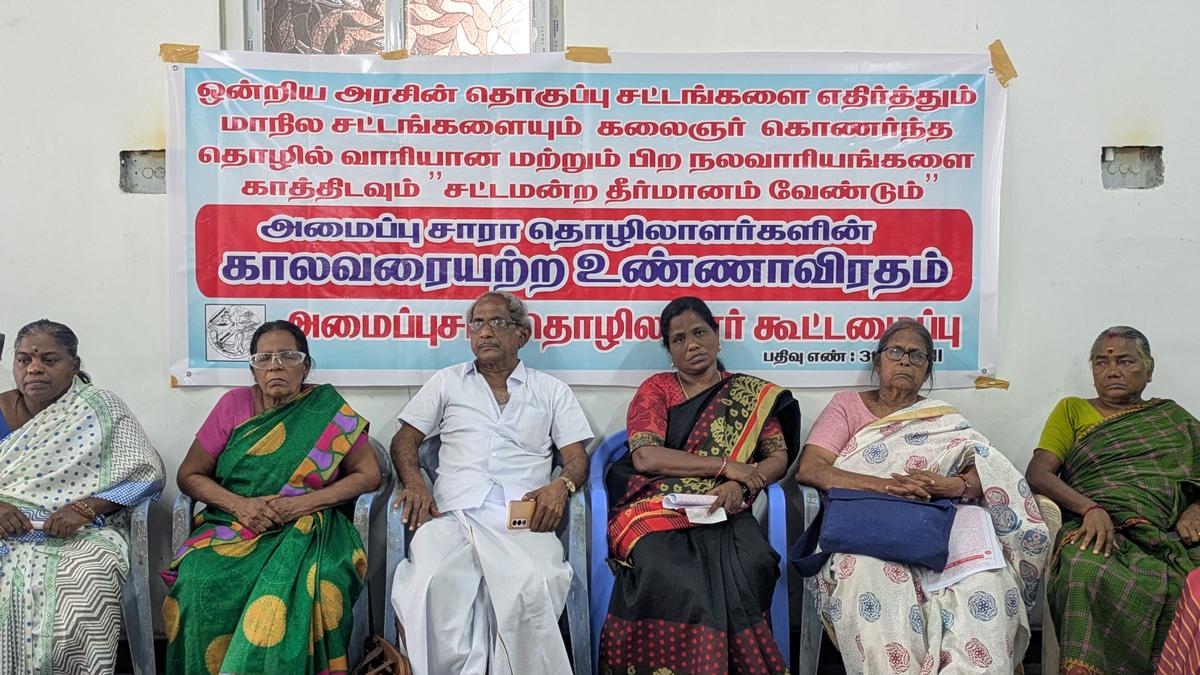
In a powerful display of determination, unorganised workers in Tamil Nadu have launched an indefinite hunger strike, demanding the state government take action to protect their rights. The strike, organized by the Unorganised Workers' Federation (UWF), has brought attention to the urgent need for labour welfare reforms and the safeguarding of existing sector-specific legislation.
The UWF, representing a diverse range of workers, including construction laborers, domestic workers, and street vendors, is calling for the government to pass a resolution in the Assembly against the controversial labour codes. These codes, they argue, threaten the hard-fought welfare benefits and protections currently in place. With over 90% of India's workforce in the unorganised sector, the UWF's concerns are not to be taken lightly. The Federation's General Secretary, Mr. R. Sakthivel, emphasized the gravity of the situation, stating, "We are fighting for our survival. The labour codes will strip us of our basic rights and push millions into deeper poverty."
As the hunger strike continues, the UWF is gaining support from various quarters. Trade unions and civil society organizations have extended their solidarity, urging the government to engage in meaningful dialogue. The strike has also sparked public debate, with many questioning the potential impact of the labour codes on the most vulnerable sections of society. With the UWF's unwavering commitment to the cause, the government is under pressure to address these concerns and ensure the welfare of unorganised workers, who form the backbone of the state's economy.
The outcome of this movement will have far-reaching consequences for the future of labour rights in Tamil Nadu and could set a precedent for other states grappling with similar issues. As the hunger strike persists, the unorganised workers' resilience and unity send a clear message: their rights are non-negotiable.
Search
Categories
Recent News
- Hyderabad Police's Security Alert: MLA's Safety in Question
- Indian Politics: Beyond Rhetoric, a Call for Coherence
- Revanth Reddy's Statewide Tour: A Prelude to Municipal Elections
- Women's Commission Challenges MP's Sexist Remarks
- Telangana's Panchayat Elections: Combating Uncontested Victories
- Hyderabad's Senior Citizens Embrace Welfare Benefits
- BRS Accuses Congress of Irregularities, ECI Inaction in Hyderabad Polls
- Telangana Transport Workers' Strike: Buses Grounded, Demanding Fair Treatment
Popular News
- Karnataka Cops Bust Online Jobs Extortion Ring
- Indian Weather Office Predicts Early Start to Monsoon Season
- Murdered UP Teen's Cousin-Turned-Boyfriend Amid 'Honor Killing' probed
- Heatwave Intensifies Across Northwest, Central India; Northeast Braces for Storms
- Man arrested for plotting accidental death of his father