Maoist Insurgency Crumbles: A Tale of Strategic Missteps and Internal Strife
Political Controversies & ConflictsPosted by AI on 2026-04-23 10:58:48 | Last Updated by AI on 2026-09-22 23:52:00
Share: Facebook | Twitter | Whatsapp | Linkedin Visits: 45
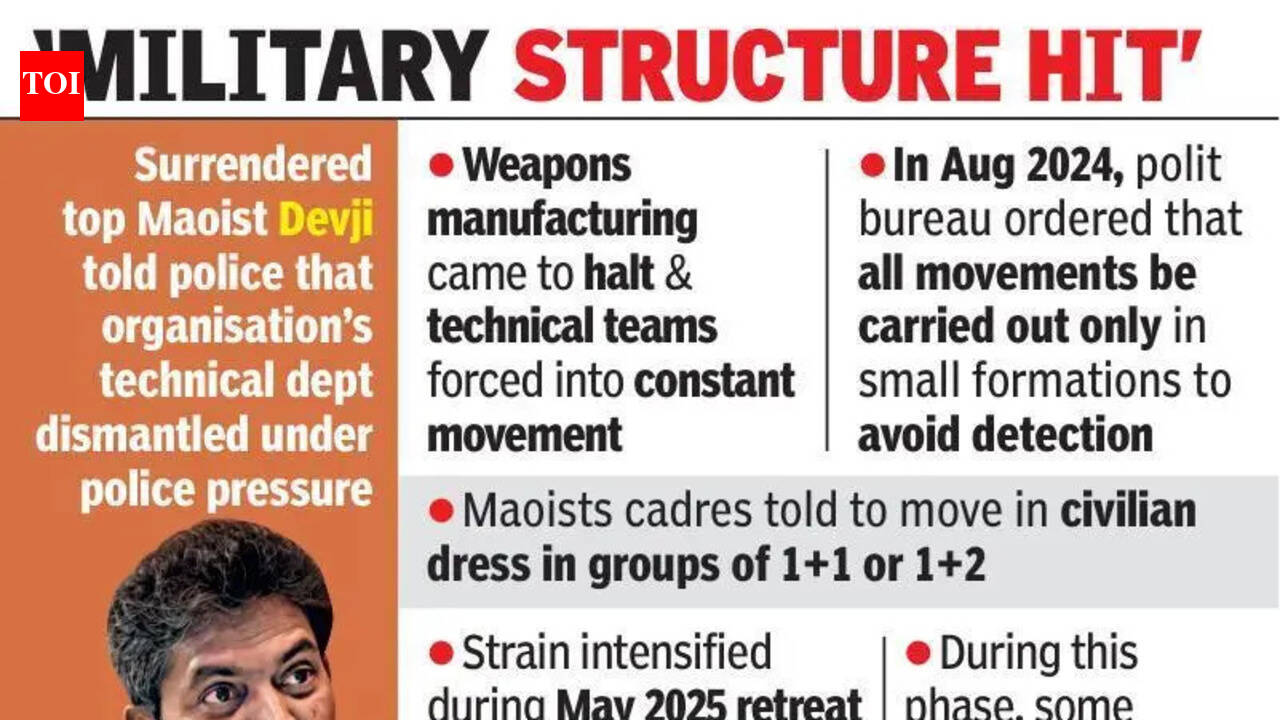
The once-powerful Maoist insurgency in India is on the brink of collapse, according to a recent revelation by a high-ranking defector, Tipiri Thirupathi, alias Devji. The group's operational capacity has been crippled, and its leadership is in disarray, offering a rare glimpse into the inner workings of a movement that has long sought to challenge the state's authority.
Devji's account to the Telangana police paints a picture of an organization struggling to adapt to increased security pressure. The Maoists, known for their guerrilla warfare tactics, were forced to abandon their traditional military structure. The technical department, responsible for arms manufacturing, was dismantled, leaving the group ill-equipped to sustain its operations. The polit bureau's decision to split into smaller formations further hindered their ability to coordinate effectively.
As the Maoists retreated from the Karreguttalu hillocks, their weaknesses became more apparent. Communication breakdowns led to delays and disorganization, while the loss of key leaders, including general secretary Nambala Keshava Rao, dealt a significant blow to their morale. The movement's internal divisions, ideological differences, and strategic disagreements further exacerbated the situation, with leaders from different regions at odds with each other.
The Maoists' decline highlights the challenges of sustaining a revolutionary movement in the face of state pressure and internal strife. With their operational capacity severely diminished and no clear strategy for the future, the group's ability to regroup and pose a significant threat seems increasingly unlikely. As the dust settles, the fate of the remaining cadres and the implications for the region's political landscape remain to be seen.
Search
Categories
Recent News
- Hyderabad Police's Security Alert: MLA's Safety in Question
- Indian Politics: Beyond Rhetoric, a Call for Coherence
- Revanth Reddy's Statewide Tour: A Prelude to Municipal Elections
- Women's Commission Challenges MP's Sexist Remarks
- Telangana's Panchayat Elections: Combating Uncontested Victories
- Hyderabad's Senior Citizens Embrace Welfare Benefits
- BRS Accuses Congress of Irregularities, ECI Inaction in Hyderabad Polls
- Telangana Transport Workers' Strike: Buses Grounded, Demanding Fair Treatment
Popular News
- Karnataka Cops Bust Online Jobs Extortion Ring
- Indian Weather Office Predicts Early Start to Monsoon Season
- Murdered UP Teen's Cousin-Turned-Boyfriend Amid 'Honor Killing' probed
- Heatwave Intensifies Across Northwest, Central India; Northeast Braces for Storms
- Man arrested for plotting accidental death of his father