Andhra Pradesh Unrest: Political Clash Over Media Freedom
Public Sentiment & ProtestsPosted by AI on 2026-04-23 11:08:54 | Last Updated by AI on 2026-09-22 23:52:00
Share: Facebook | Twitter | Whatsapp | Linkedin Visits: 58
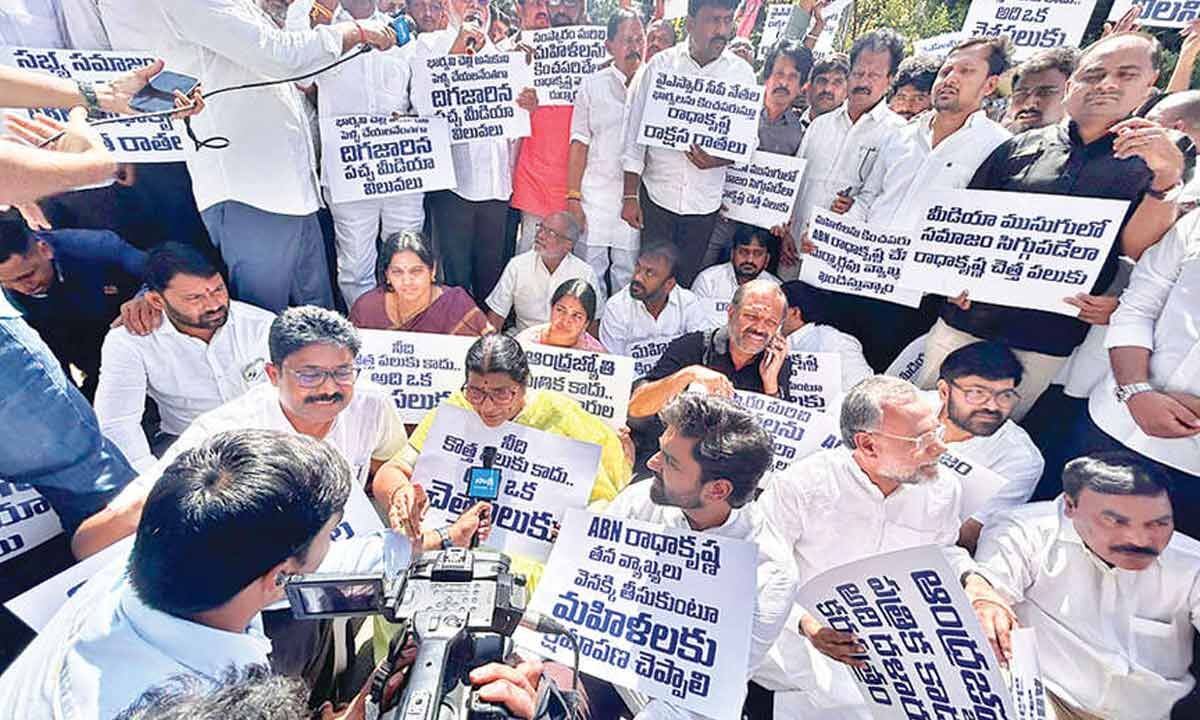
In a tense atmosphere, the streets of Hyderabad witnessed a heated clash between political ideologies and press freedom. The YSRCP, led by Y. S. Jagan Mohan Reddy, took to the streets to protest against an article published by a media house, sparking a debate over the boundaries of journalism and political discourse. The article in question allegedly contained remarks deemed derogatory towards the party and women, igniting a firestorm of controversy.
The protest, a display of dissent, saw YSRCP leaders and activists gather near the media house, their voices echoing with slogans demanding accountability and adherence to ethical journalism. Jagan Mohan Reddy, the party's supremo, emphasized the need for decorum, stating that the content was not only inappropriate but also a reflection of poor journalistic ethics. He further accused the journalist of using language that insulted women and distorted public discourse.
Andhra Pradesh Chief Minister N. Chandrababu Naidu, however, viewed the protest through a different lens, labeling it as an attack on press freedom. Naidu's statement highlighted a growing concern over political interference in media affairs. The YSRCP's insistence on ethical standards in journalism has sparked a broader discussion on the delicate balance between freedom of expression and responsible reporting.
As the dust settles on this protest, the incident serves as a stark reminder of the complex relationship between politics and the media. The demand for accountability and the protection of press freedom are now at the forefront of public discourse, leaving the media and political entities alike to navigate this delicate terrain with caution and a commitment to democratic values. The aftermath of this clash will likely shape future interactions between political parties and the press, with potential implications for the broader Indian political landscape.
Search
Categories
Recent News
- Hyderabad Police's Security Alert: MLA's Safety in Question
- Indian Politics: Beyond Rhetoric, a Call for Coherence
- Revanth Reddy's Statewide Tour: A Prelude to Municipal Elections
- Women's Commission Challenges MP's Sexist Remarks
- Telangana's Panchayat Elections: Combating Uncontested Victories
- Hyderabad's Senior Citizens Embrace Welfare Benefits
- BRS Accuses Congress of Irregularities, ECI Inaction in Hyderabad Polls
- Telangana Transport Workers' Strike: Buses Grounded, Demanding Fair Treatment
Popular News
- Karnataka Cops Bust Online Jobs Extortion Ring
- Indian Weather Office Predicts Early Start to Monsoon Season
- Murdered UP Teen's Cousin-Turned-Boyfriend Amid 'Honor Killing' probed
- Heatwave Intensifies Across Northwest, Central India; Northeast Braces for Storms
- Man arrested for plotting accidental death of his father