India Extends \$50 Million Financial Support to Maldives Amid Debt Crisis
International International NewsPosted by NewAdmin on 2025-05-12 11:45:01 |
Share: Facebook | Twitter | Whatsapp | Linkedin Visits: 31
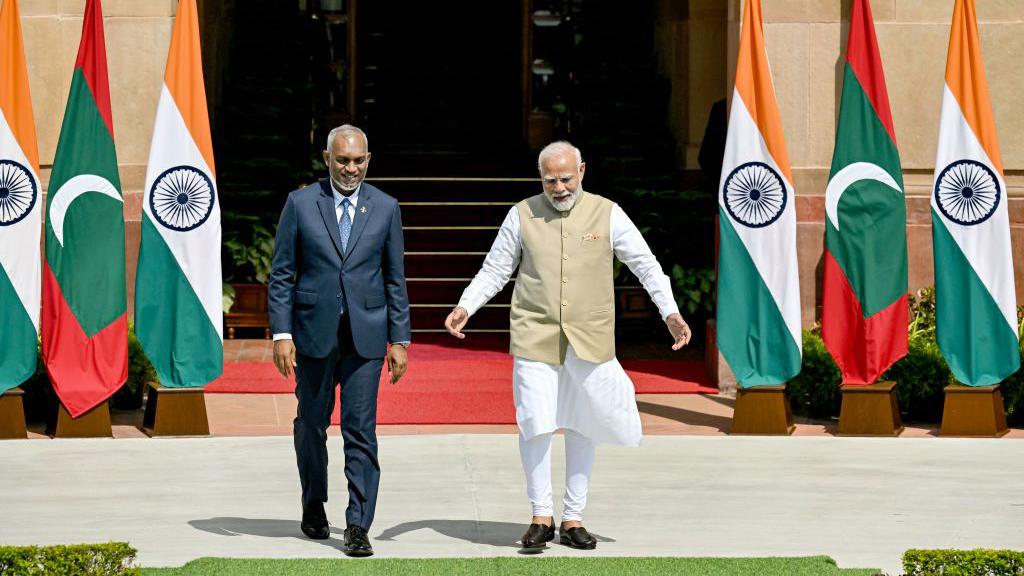
India has extended crucial financial support to the Maldives by rolling over its subscription to a $50 million treasury bill for another year. This decision, made at the request of the Maldivian government, highlights India's ongoing commitment to supporting its neighboring country, particularly amidst its economic challenges. The State Bank of India, as part of this support, renewed its subscription to the bill issued by the Maldives' Ministry of Finance. The Indian High Commission in the Maldives made the announcement on its official social media platform.
The financial assistance was publicly acknowledged by the Maldives' Foreign Minister Abdulla Khaleel, who expressed gratitude for India's timely intervention. He emphasized that this financial aid is a crucial component in helping the Maldives carry out necessary fiscal reforms aimed at strengthening the country’s economic resilience. The assistance further underscores the close relationship between India and the Maldives, especially in the context of the archipelago's current economic struggles.
The Maldives' economy is grappling with a substantial external debt, which has raised concerns over its ability to avoid a default. The country’s total public and publicly guaranteed debt reached a staggering $9.4 billion, or over 134% of its GDP, by the end of 2024. This represents a significant rise in debt compared to the previous year. The situation has been worsened by downgrades from major credit rating agencies like Fitch and Moody's, making it even more difficult for the Maldives to access new financing from international markets.
China and India are the two largest creditors to the Maldives, and both nations are vying for strategic influence over the island nation located in the Indian Ocean. With the Maldivian government facing mounting debt servicing obligations in 2025 and 2026, the support from India is seen as an important gesture of solidarity during a challenging economic period.
Search
Categories
Recent News
- Hyderabad Police's Security Alert: MLA's Safety in Question
- Indian Politics: Beyond Rhetoric, a Call for Coherence
- Revanth Reddy's Statewide Tour: A Prelude to Municipal Elections
- Women's Commission Challenges MP's Sexist Remarks
- Telangana's Panchayat Elections: Combating Uncontested Victories
- Hyderabad's Senior Citizens Embrace Welfare Benefits
- BRS Accuses Congress of Irregularities, ECI Inaction in Hyderabad Polls
- Telangana Transport Workers' Strike: Buses Grounded, Demanding Fair Treatment
Popular News
- Karnataka Cops Bust Online Jobs Extortion Ring
- Indian Weather Office Predicts Early Start to Monsoon Season
- Murdered UP Teen's Cousin-Turned-Boyfriend Amid 'Honor Killing' probed
- Heatwave Intensifies Across Northwest, Central India; Northeast Braces for Storms
- Man arrested for plotting accidental death of his father