IIT Madras and ISRO Unveil Indigenous IRIS Chip
Current Affairs NationalPosted by newadmin on 2025-02-13 08:57:50 |
Share: Facebook | Twitter | Whatsapp | Linkedin Visits: 97
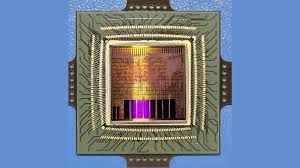
The Indian Institute of Technology Madras (IIT Madras) and the Indian Space Research Organisation (ISRO) have reached a significant milestone in semiconductor technology with the development and successful testing of an aerospace-quality SHAKTI-based semiconductor chip. Named IRIS (Indigenous RISCV Controller for Space Applications), this project is a crucial step toward self-reliance in advanced technology and aligns with the ‘Atmanirbhar Bharat’ mission.
The SHAKTI project, which is supported by the Ministry of Electronics and Information Technology under the ‘Digital India RISC-V’ initiative, focuses on fostering indigenous development of microprocessor-based products. RISC-V, an open-source Instruction Set Architecture (ISA), provides flexibility and security for designing custom processors, making it ideal for strategic applications.
The IRIS chip was designed by the ISRO Inertial Systems Unit (IISU) in Thiruvananthapuram, with implementation carried out in collaboration with IIT Madras. Every stage of the process, including design, fabrication, and packaging, was completed within India, highlighting the country’s growing capabilities in semiconductor manufacturing. The Semiconductor Laboratory (SCL) in Chandigarh handled the manufacturing, while Tata Advanced Systems in Karnataka managed the packaging.
The IRIS chip is built for multiple applications, including Internet of Things (IoT) devices and high-performance compute systems for critical and strategic needs. It features fault-tolerant internal memory to enhance reliability and integrates custom functional modules such as CORDIC and WATCHDOG timers, making it highly suitable for space missions.
This achievement is a crucial step forward in India's efforts to establish a robust semiconductor ecosystem. It marks the development of the third SHAKTI chip, following RIMO in 2018 and MOUSHIK in 2020. The successful booting of the IRIS chip demonstrates India's growing expertise in designing and producing high-quality semiconductors for specialized applications.
ISRO has plans to conduct a flight test using a product based on the IRIS controller in the near future. The successful development of this chip is expected to contribute significantly to the advancement of embedded controllers for future space missions, reinforcing India’s capabilities in space technology and semiconductor research.
Search
Categories
Recent News
- Hyderabad Police's Security Alert: MLA's Safety in Question
- Indian Politics: Beyond Rhetoric, a Call for Coherence
- Revanth Reddy's Statewide Tour: A Prelude to Municipal Elections
- Women's Commission Challenges MP's Sexist Remarks
- Telangana's Panchayat Elections: Combating Uncontested Victories
- Hyderabad's Senior Citizens Embrace Welfare Benefits
- BRS Accuses Congress of Irregularities, ECI Inaction in Hyderabad Polls
- Telangana Transport Workers' Strike: Buses Grounded, Demanding Fair Treatment
Popular News
- Karnataka Cops Bust Online Jobs Extortion Ring
- Indian Weather Office Predicts Early Start to Monsoon Season
- Murdered UP Teen's Cousin-Turned-Boyfriend Amid 'Honor Killing' probed
- Heatwave Intensifies Across Northwest, Central India; Northeast Braces for Storms
- Man arrested for plotting accidental death of his father