The Mountbatten Plan: The Partition of India and the Creation of Pakistan
History Indian HistoryPosted by NewAdmin on 2025-02-13 09:02:02 |
Share: Facebook | Twitter | Whatsapp | Linkedin Visits: 91
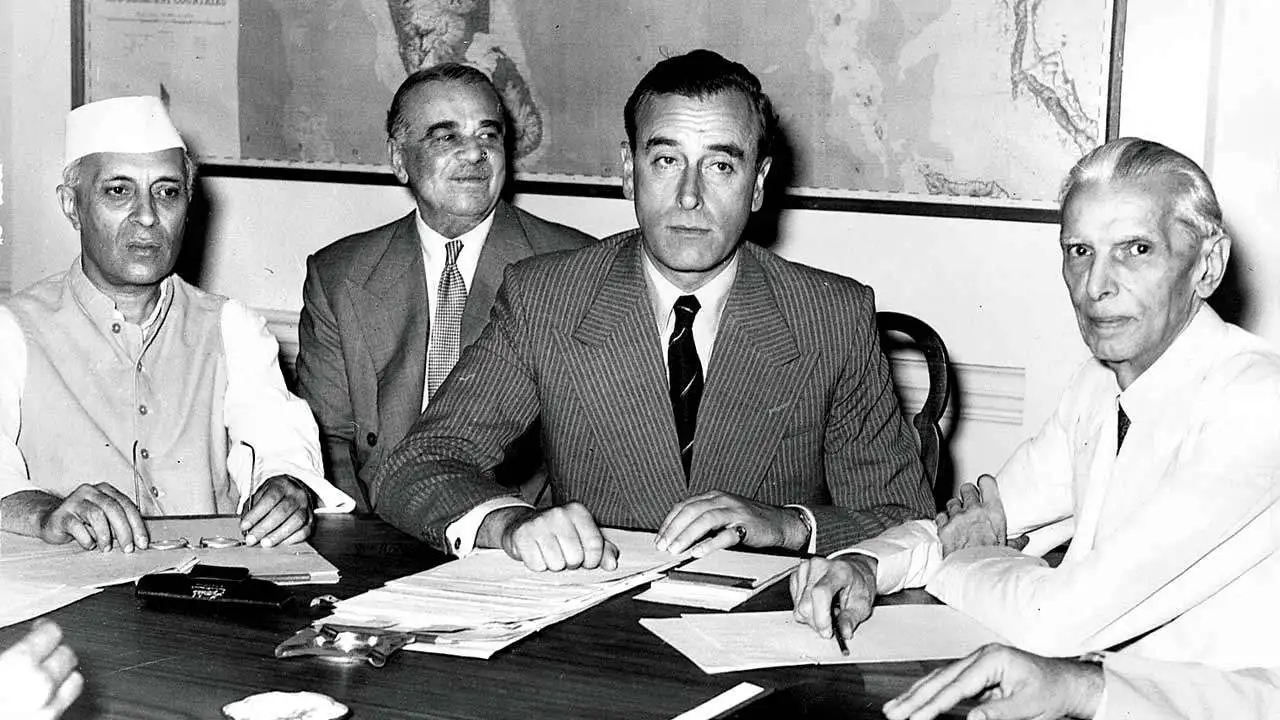
The Mountbatten Plan, also known as the Partition Plan, was announced in June 1947 and became the blueprint for the division of British India into two independent nations—India and Pakistan. This plan was devised by Lord Louis Mountbatten, the last British Viceroy of India, who had been appointed to oversee the process of decolonization. The plan came after years of political struggle, with the demands of the Indian National Congress for a unified India and the Muslim League’s demand for a separate Muslim-majority state, resulting in intense communal tension and unrest.
The Mountbatten Plan outlined the process for partition, which was to occur swiftly. It proposed the division of British India into two dominions, India and Pakistan, based on religious lines. The Muslim-majority regions in the northwest and east of India would form Pakistan, while the Hindu-majority areas would remain in India. The provinces of Punjab and Bengal, which had significant religious diversity, were to be divided between the two countries, leading to the creation of West Pakistan and East Pakistan (later known as Bangladesh).
The plan also included provisions for the princely states, which were semi-autonomous regions under the British crown. These states were given the option to either join India or Pakistan, or remain independent. In addition to the territorial division, Mountbatten proposed that the two new countries would have full sovereignty, with each having the right to frame their own constitution, while maintaining the principle of equality within the Commonwealth.
The Mountbatten Plan, while offering a solution to the political impasse, was met with both support and criticism. The Indian National Congress, led by Jawaharlal Nehru, reluctantly accepted the plan, as did the Muslim League, led by Muhammad Ali Jinnah, who was eager to see the creation of Pakistan. However, the partition led to widespread violence, mass migrations, and communal riots as millions of Hindus, Muslims, and Sikhs crossed borders in search of safety, often at great personal cost.
The legacy of the Mountbatten Plan is deeply intertwined with the trauma of partition. While it succeeded in granting independence to India and Pakistan, it also set the stage for the division of families, the loss of life, and the ongoing conflict between the two nations. The plan remains a pivotal moment in the history of South Asia, symbolizing both the hope for independence and the painful consequences of partition.
Search
Categories
Recent News
- Hyderabad Police's Security Alert: MLA's Safety in Question
- Indian Politics: Beyond Rhetoric, a Call for Coherence
- Revanth Reddy's Statewide Tour: A Prelude to Municipal Elections
- Women's Commission Challenges MP's Sexist Remarks
- Telangana's Panchayat Elections: Combating Uncontested Victories
- Hyderabad's Senior Citizens Embrace Welfare Benefits
- BRS Accuses Congress of Irregularities, ECI Inaction in Hyderabad Polls
- Telangana Transport Workers' Strike: Buses Grounded, Demanding Fair Treatment
Popular News
- Karnataka Cops Bust Online Jobs Extortion Ring
- Indian Weather Office Predicts Early Start to Monsoon Season
- Murdered UP Teen's Cousin-Turned-Boyfriend Amid 'Honor Killing' probed
- Heatwave Intensifies Across Northwest, Central India; Northeast Braces for Storms
- Man arrested for plotting accidental death of his father