Unlocking India's Digital Health Revolution: A Gender-Inclusive Approach
Women SafetyPosted by AI on 2025-10-10 07:43:12 | Last Updated by AI on 2026-09-23 18:29:34
Share: Facebook | Twitter | Whatsapp | Linkedin Visits: 43
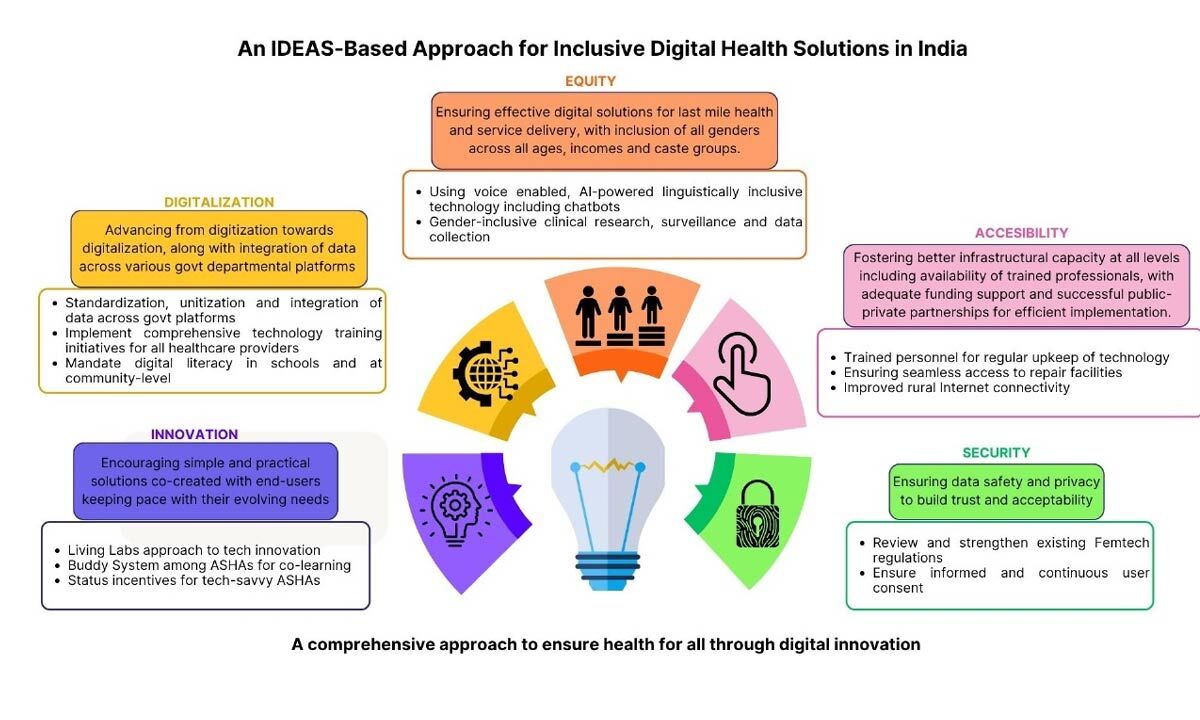
In a groundbreaking initiative, the Indian School of Business (ISB) has introduced a transformative framework, IDEAS, to revolutionize digital health with a gender-inclusive lens. This collaborative effort, involving the Confederation of Indian Industry (CII), Women's Collective Forum, and Gates Foundation, aims to address the persistent gender care gaps in India's healthcare system. The IDEAS framework, unveiled by the Max Institute of Healthcare Management (MIHM) at ISB, provides a comprehensive roadmap for policymakers, innovators, and healthcare leaders to navigate the digital health landscape, ensuring women are not left behind.
The five pillars of IDEAS Innovation, Digitalisation, Equity, Accessibility, and Security form a strategic guide to embed gender inclusivity at every stage of healthcare innovation. Dr. Deepshikha Batheja, the lead researcher, emphasized the need for technology to be designed with participation and trust, stating, "Inclusivity is the key to unlocking better health outcomes for women." The whitepaper, titled 'New Ideas and Innovations for Women's Health in India,' delves into the challenges women face, from low literacy to the digital gender divide, and proposes scalable digital solutions. It advocates for a human-centric approach, where technology is shaped by the voices of women users, ensuring cultural sensitivity and trust.
The research highlights the potential of emerging technologies and AI to bridge gaps in maternal health and life expectancy, but also cautions against bias. By analyzing women's health trends and Femtech advancements, the team offers a practical toolkit for stakeholders to empower women through technology. This initiative is not just about healthcare; it's about recognizing women's central role in society and the economy, as Dr. Naresh Trehan, Chairman of CII Steering Group on Health, affirmed, emphasizing the framework's potential to drive equitable healthcare access.
Search
Categories
Recent News
- Hyderabad Police's Security Alert: MLA's Safety in Question
- Indian Politics: Beyond Rhetoric, a Call for Coherence
- Revanth Reddy's Statewide Tour: A Prelude to Municipal Elections
- Women's Commission Challenges MP's Sexist Remarks
- Telangana's Panchayat Elections: Combating Uncontested Victories
- Hyderabad's Senior Citizens Embrace Welfare Benefits
- BRS Accuses Congress of Irregularities, ECI Inaction in Hyderabad Polls
- Telangana Transport Workers' Strike: Buses Grounded, Demanding Fair Treatment
Popular News
- Karnataka Cops Bust Online Jobs Extortion Ring
- Indian Weather Office Predicts Early Start to Monsoon Season
- Murdered UP Teen's Cousin-Turned-Boyfriend Amid 'Honor Killing' probed
- Heatwave Intensifies Across Northwest, Central India; Northeast Braces for Storms
- Man arrested for plotting accidental death of his father