Water Scarcity in Hyderabad: A Growing Concern
Social Issues Social Inequalities and exclusionPosted by NewAdmin on 2025-04-15 08:50:43 |
Share: Facebook | Twitter | Whatsapp | Linkedin Visits: 147
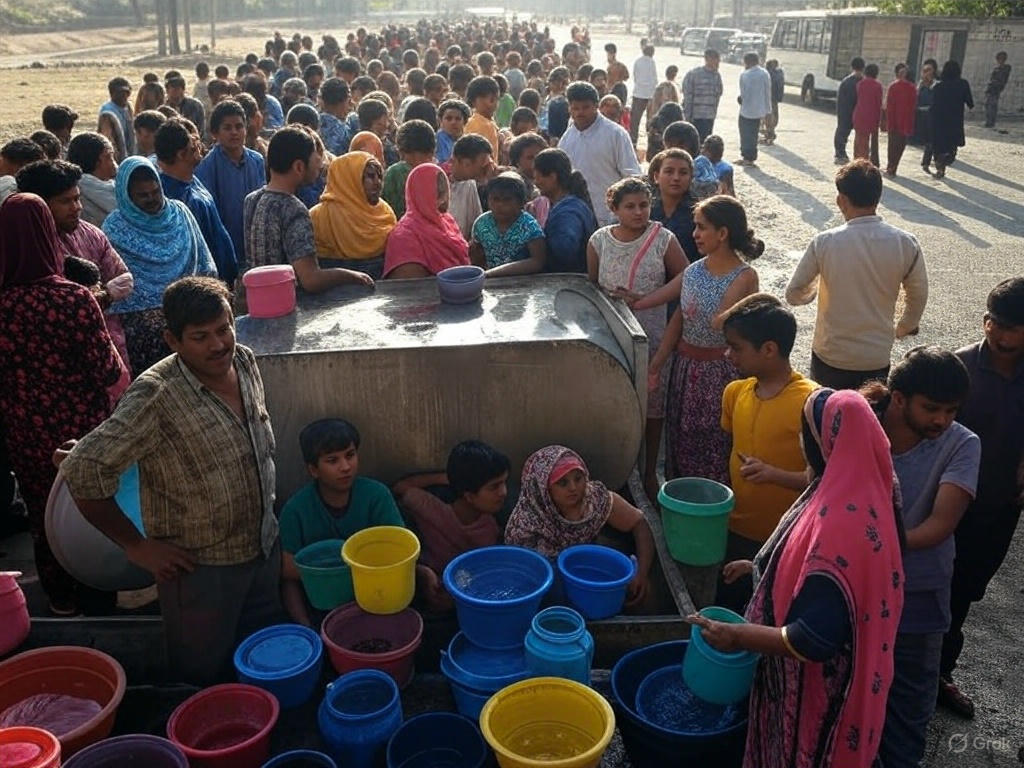
Water scarcity has emerged as a severe social issue in Hyderabad, India, in 2025, with the city facing its worst drought in decades. The Greater Hyderabad Municipal Corporation (GHMC) reports that reservoirs like Osman Sagar and Himayat Sagar are at critically low levels, supplying only 40% of the city’s water needs. Over 3 million residents, particularly in slums and peri-urban areas, are affected, with daily water supply cut to a few hours or less. X posts from locals, such as @HydCitizenVoice, highlight long queues at tankers and rising costs of private water deliveries.
Urbanization and climate change are key drivers, with rapid population growth straining infrastructure and erratic monsoons reducing groundwater recharge. While the government has initiated emergency measures—like drilling new borewells and importing water—critics argue these are short-term fixes. Community-led rainwater harvesting projects are gaining attention, but implementation lags due to funding and awareness gaps. Without sustainable solutions, water scarcity threatens public health, equity, and economic stability in Hyderabad.
Water scarcity continues to plague Hyderabad in 2025, with the city grappling with an escalating crisis as reservoirs dwindle to historic lows. The Greater Hyderabad Municipal Corporation (GHMC) recently reported that Osman Sagar and Himayat Sagar reservoirs are at just 35% capacity, down from 40% last month, forcing water rationing to two hours daily for over 3.5 million residents. X posts from users like @HydWaterCrisis highlight desperate scenes of long queues at water tankers, with private vendors charging up to 500 INR per tanker, a 50% price hike since March. Slum areas and peripheral neighborhoods are hit hardest, with reports of children missing school to fetch water.
New developments underscore the urgency. The Telangana government announced a $200 million plan on April 10, 2025, to drill 1,000 new borewells and revive defunct ones, though experts warn this may not suffice without rain. Community efforts are stepping up, with the NGO Hyderabad Green Initiative launching 50 rooftop rainwater harvesting systems in April, aiming to cover 200 by year-end. X users praise these efforts under #SaveHydWater, but criticize slow government action. Health officials report a 20% rise in waterborne diseases like cholera due to contaminated tanker water. Sustainable solutions, including watershed management and public awareness campaigns, are now critical to avert a humanitarian crisis.
Water scarcity has intensified into a full-blown crisis in Hyderabad by April 2025, posing a dire threat to the city’s 10 million residents. The Greater Hyderabad Municipal Corporation (GHMC) revealed that key reservoirs, Osman Sagar and Himayat Sagar, have plummeted to 35% capacity, a steep drop from 40% last month, due to erratic monsoons and over-extraction. This has slashed water supply to a mere two hours daily for over 3.5 million people, with peripheral slums and low-income areas bearing the brunt. X posts from users like @HydWaterCrisis depict harrowing scenes of residents queuing for hours at water tankers, with private vendors hiking prices to 500 INR per tanker—a 50% increase since March—exploiting the desperation. Children are increasingly absent from school, tasked with fetching water, while women report physical strain from carrying heavy containers over long distances.
Recent developments highlight both action and shortcomings. On April 10, 2025, the Telangana government unveiled a $200 million emergency plan to drill 1,000 new borewells and rehabilitate 500 defunct ones, aiming to boost groundwater reserves. However, hydrologists caution that this short-term measure may strain aquifers further without addressing recharge, especially as the city awaits the monsoon. Concurrently, the NGO Hyderabad Green Initiative launched a pilot project on April 15, installing 50 rooftop rainwater harvesting systems across urban wards, with a goal to scale to 200 by year-end. X users have rallied behind #SaveHydWater, praising community-driven efforts, but many, including @HydCitizenVoice, criticize the government’s delayed response and lack of long-term planning.
The crisis’s ripple effects are alarming. Health officials reported a 20% surge in waterborne diseases, including cholera and dysentery, linked to contaminated tanker water, straining local hospitals. Economic losses are mounting, with small businesses shutting down due to water shortages for operations, and agricultural outskirts facing crop failures. Social tensions are rising, with X posts documenting clashes over tanker access in areas like Secunderabad. Community resilience shines through, though—local groups are organizing water-sharing networks, and schools are introducing water conservation education.
Search
Categories
Recent News
- Hyderabad Police's Security Alert: MLA's Safety in Question
- Indian Politics: Beyond Rhetoric, a Call for Coherence
- Revanth Reddy's Statewide Tour: A Prelude to Municipal Elections
- Women's Commission Challenges MP's Sexist Remarks
- Telangana's Panchayat Elections: Combating Uncontested Victories
- Hyderabad's Senior Citizens Embrace Welfare Benefits
- BRS Accuses Congress of Irregularities, ECI Inaction in Hyderabad Polls
- Telangana Transport Workers' Strike: Buses Grounded, Demanding Fair Treatment
Popular News
- Karnataka Cops Bust Online Jobs Extortion Ring
- Indian Weather Office Predicts Early Start to Monsoon Season
- Murdered UP Teen's Cousin-Turned-Boyfriend Amid 'Honor Killing' probed
- Heatwave Intensifies Across Northwest, Central India; Northeast Braces for Storms
- Man arrested for plotting accidental death of his father