Lichens Show Resilience in Mars-Like Conditions
Current Affairs International IssuesPosted by newadmin on 2025-04-15 08:53:21 |
Share: Facebook | Twitter | Whatsapp | Linkedin Visits: 81
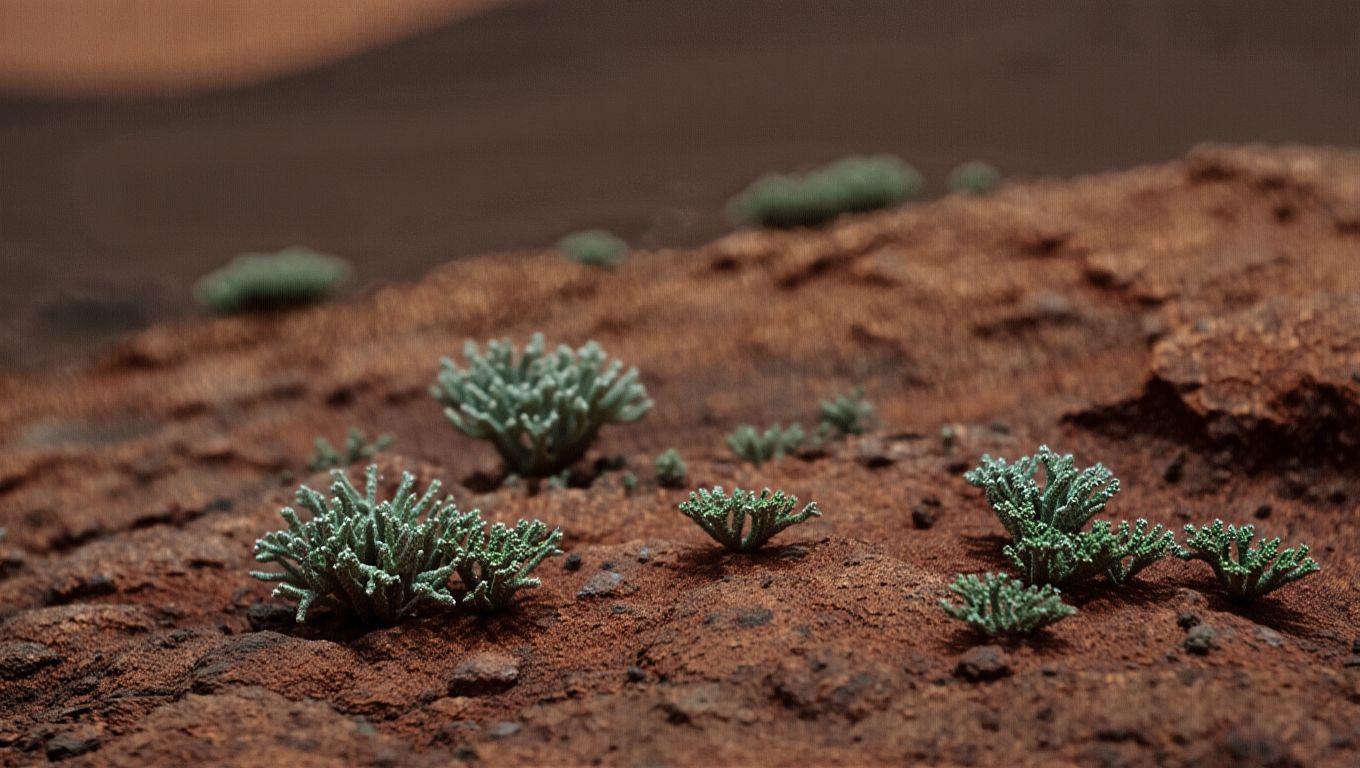
Recent scientific studies have brought forward fascinating evidence that certain lichens are capable of surviving under harsh Martian conditions. This breakthrough challenges previous assumptions about the limitations of life on Mars. The research has shown that lichens are not only able to endure the extreme environment but can also maintain metabolic activity, suggesting they are far more resilient than previously believed. These findings carry significant weight in the field of astrobiology, broadening the possibilities for life beyond Earth.
Lichens are unique symbiotic organisms formed through a partnership between a fungus and either algae or cyanobacteria. This biological cooperation enables them to survive in some of the most extreme environments on Earth, including arid deserts and icy polar regions. Their ability to withstand such tough conditions makes them ideal candidates for testing extraterrestrial survival.
In this study, researchers selected two lichen species, Diploschistes muscorum and Cetraria aculeata, for experimental trials under Mars-like conditions. These species were chosen due to their contrasting biological traits, which allowed scientists to better understand different survival strategies. Inside a specially designed Mars simulation chamber, the lichens were exposed for five hours to conditions that mimicked the Red Planet’s atmosphere, pressure, temperature fluctuations, and radiation exposure.
The most remarkable observation from the experiment was that the fungal part of the lichens remained metabolically active even in total darkness and despite high levels of X-ray radiation. This demonstrates that the organisms could potentially withstand the severe radiation that characterizes the Martian surface, undermining the long-standing belief that ionizing radiation alone would prevent life from existing there.
These findings have deep implications for the ongoing exploration of life in space. By showing that complex, symbiotic life forms like lichens can survive under Martian-like conditions, scientists are encouraged to further explore the idea that life could either exist or be sustained on other planets. It also opens the door to the idea of using hardy organisms such as lichens in future planetary colonization efforts.
Moving forward, researchers aim to investigate how lichens respond to prolonged radiation exposure over extended periods. While simulation chambers offer valuable insights, the next step would involve experiments in real Martian environments or conditions that more closely mirror the long-term realities of the planet. This continued exploration could offer critical clues into how life might adapt and even thrive beyond our world.
Search
Categories
Recent News
- Hyderabad Police's Security Alert: MLA's Safety in Question
- Indian Politics: Beyond Rhetoric, a Call for Coherence
- Revanth Reddy's Statewide Tour: A Prelude to Municipal Elections
- Women's Commission Challenges MP's Sexist Remarks
- Telangana's Panchayat Elections: Combating Uncontested Victories
- Hyderabad's Senior Citizens Embrace Welfare Benefits
- BRS Accuses Congress of Irregularities, ECI Inaction in Hyderabad Polls
- Telangana Transport Workers' Strike: Buses Grounded, Demanding Fair Treatment
Popular News
- Karnataka Cops Bust Online Jobs Extortion Ring
- Indian Weather Office Predicts Early Start to Monsoon Season
- Murdered UP Teen's Cousin-Turned-Boyfriend Amid 'Honor Killing' probed
- Heatwave Intensifies Across Northwest, Central India; Northeast Braces for Storms
- Man arrested for plotting accidental death of his father