India's Deadly Roads: A Call for Action
Traffic & Road SafetyPosted by AI on 2025-11-04 17:34:25 | Last Updated by AI on 2026-09-24 03:31:42
Share: Facebook | Twitter | Whatsapp | Linkedin Visits: 74
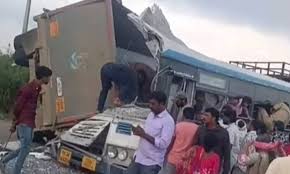
In a country where road accidents have become a grim routine, recent incidents have sparked a renewed sense of urgency to address the crisis. A series of devastating crashes involving heavy vehicles across India, particularly in Telangana, Andhra Pradesh, and Rajasthan, have claimed dozens of lives and exposed critical safety gaps.
On a fateful day in November, two separate incidents unfolded, each with tragic consequences. Near Hyderabad, a truck, laden with gravel, collided head-on with a bus, resulting in a catastrophic scene. The truck's load crushed the bus, leaving 19 people dead. This tragedy was compounded by another incident in Jaipur, where a speeding dumper truck became a lethal weapon, killing 13 people in a multi-vehicle collision. These incidents add to the staggering toll of over 1.6 lakh road fatalities India witnesses annually.
The root causes of these accidents are often systemic. Narrow roads, excessive speeding, inadequate driver training, and fatigue are common factors. The Telangana incidents vividly illustrate this: a truck driver's struggle to navigate a tight road and a drunk motorcyclist's recklessness led to deadly consequences for innocent victims. Despite safety campaigns, basic road discipline remains lax, and enforcement is weak.
To curb this deadly trend, comprehensive action is imperative. The government must mandate improved training and compliance for heavy vehicle drivers, redesign roads with safety in mind, and impose stricter penalties for violations. Advanced control systems, such as electronic stability control and automatic emergency braking, can significantly enhance vehicle safety. Additionally, limiting vehicle acceleration to match infrastructure capabilities is crucial. These measures are not just technical solutions but essential steps towards a safer road environment for all.
Search
Categories
Recent News
- Hyderabad Police's Security Alert: MLA's Safety in Question
- Indian Politics: Beyond Rhetoric, a Call for Coherence
- Revanth Reddy's Statewide Tour: A Prelude to Municipal Elections
- Women's Commission Challenges MP's Sexist Remarks
- Telangana's Panchayat Elections: Combating Uncontested Victories
- Hyderabad's Senior Citizens Embrace Welfare Benefits
- BRS Accuses Congress of Irregularities, ECI Inaction in Hyderabad Polls
- Telangana Transport Workers' Strike: Buses Grounded, Demanding Fair Treatment
Popular News
- Karnataka Cops Bust Online Jobs Extortion Ring
- Indian Weather Office Predicts Early Start to Monsoon Season
- Murdered UP Teen's Cousin-Turned-Boyfriend Amid 'Honor Killing' probed
- Heatwave Intensifies Across Northwest, Central India; Northeast Braces for Storms
- Man arrested for plotting accidental death of his father