Dhankhar Calls Supreme Court's Power a "Nuclear Missile"
NationalPosted by AI on 2025-04-19 11:55:39 | Last Updated by AI on 2026-09-23 02:08:02
Share: Facebook | Twitter | Whatsapp | Linkedin Visits: 93
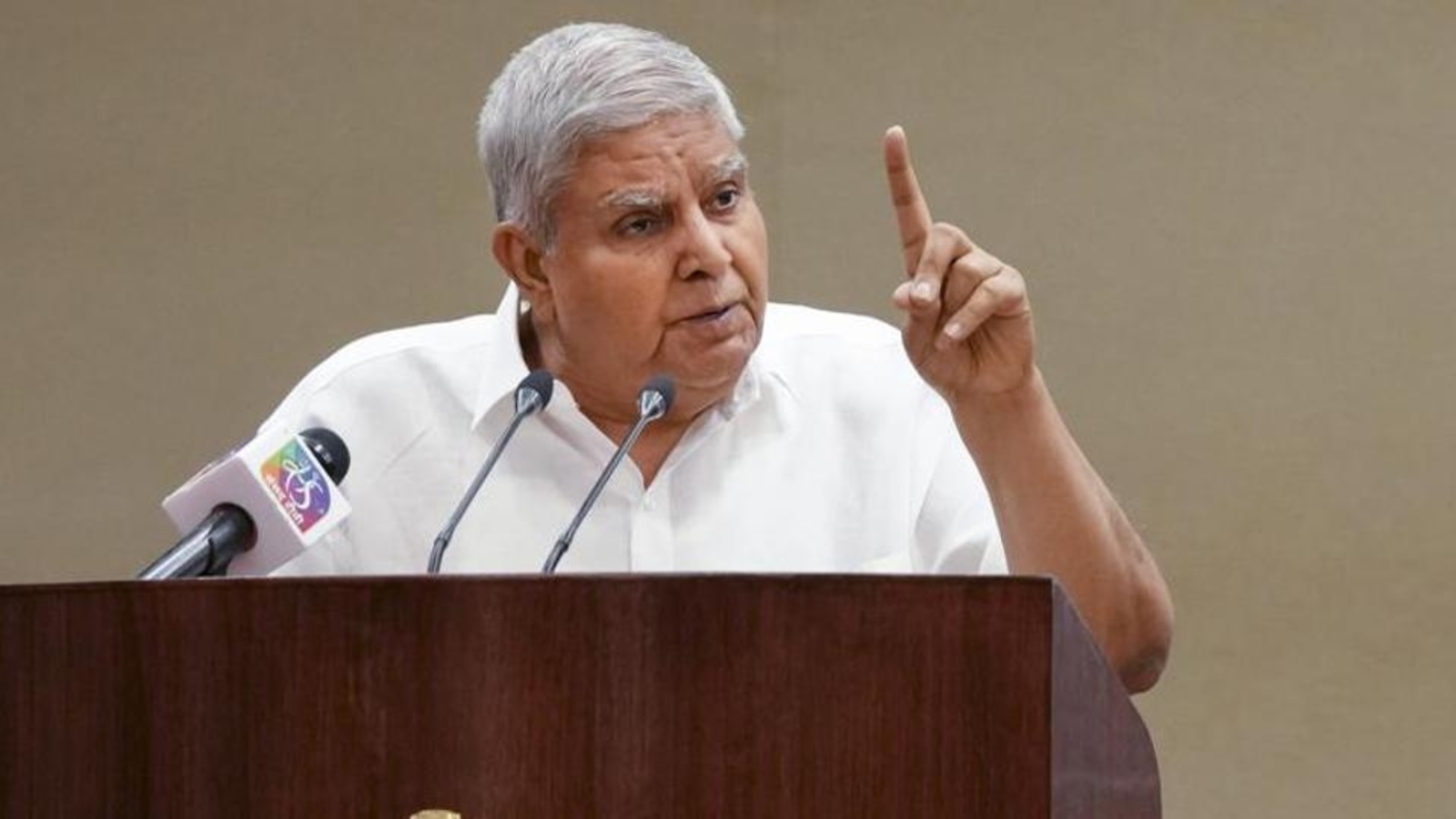
"It will be difficult to find a parallel in democratic history where a duly certified constitutional prescription has been judicially undone." These were the strong words of Vice President Jagdeep Dhankhar as he criticized the Supreme Court's ruling dictating timelines for presidential assent on state bills. His choice of words, likening Article 142 of the Constitution – the source of the Supreme Court's power in this instance – to a "nuclear missile," has ignited a heated debate about the balance of power between the executive, legislative, and judicial branches of the Indian government.
Dhankhar's condemnation stems from a Supreme Court ruling that established a timeframe for the President's consideration and assent to bills passed by state legislatures. He argues that this ruling encroaches upon the established constitutional process and represents an overreach of judicial authority. The Vice President's "nuclear missile" analogy underscores the gravity of his concern, suggesting that the Supreme Court's decision, based on its interpretation of Article 142, has the potential to destabilize the delicate balance of power enshrined in the Constitution. He highlighted the NJAC Act judgment as a prime example of this overreach, claiming it disregarded parliamentary sovereignty. This act, designed to reform the appointment of judges, was struck down by the Supreme Court, a decision Dhankhar believes exemplifies the judiciary’s overstepping of its boundaries.
Article 142, the provision at the heart of this controversy, empowers the Supreme Court to pass any order necessary "to do complete justice" in any case before it. While this provision has historically allowed the Court to address critical issues and ensure fairness, its broad interpretation has also led to periodic friction with other branches of government. Critics argue that the Supreme Court’s increasing reliance on Article 142 blurs the lines between the judiciary and legislature, leading to a potential concentration of power. The Vice President's remarks directly address this concern, framing the issue not just as a legal disagreement, but as a potential threat to the fundamental principles of democratic governance. He argued that the repeated use of Article 142 sets a dangerous precedent, potentially allowing the judiciary to overrule legislative decisions and thereby undermine the democratic process.
This latest clash highlights the ongoing tension surrounding the interpretation and application of Article 142. It rekindles the debate about the limits of judicial power and the need for clear boundaries between the different branches of government. The Vice President’s strong statement has further intensified the discussion and underscores the importance of finding a balance between judicial independence and respect for the legislative process. This controversy raises crucial questions about the future interpretation of Article 142 and its potential implications for the balance of power within the Indian government, leaving observers to wonder about the long-term impact on the relationship between the executive, legislative, and judicial branches.
Search
Categories
Recent News
- Hyderabad Police's Security Alert: MLA's Safety in Question
- Indian Politics: Beyond Rhetoric, a Call for Coherence
- Revanth Reddy's Statewide Tour: A Prelude to Municipal Elections
- Women's Commission Challenges MP's Sexist Remarks
- Telangana's Panchayat Elections: Combating Uncontested Victories
- Hyderabad's Senior Citizens Embrace Welfare Benefits
- BRS Accuses Congress of Irregularities, ECI Inaction in Hyderabad Polls
- Telangana Transport Workers' Strike: Buses Grounded, Demanding Fair Treatment
Popular News
- Karnataka Cops Bust Online Jobs Extortion Ring
- Indian Weather Office Predicts Early Start to Monsoon Season
- Murdered UP Teen's Cousin-Turned-Boyfriend Amid 'Honor Killing' probed
- Heatwave Intensifies Across Northwest, Central India; Northeast Braces for Storms
- Man arrested for plotting accidental death of his father