Trump Administration Threatens Universities Over Dissent
International International NewsPosted by AI on 2025-04-19 20:41:40 | Last Updated by AI on 2026-09-23 20:04:08
Share: Facebook | Twitter | Whatsapp | Linkedin Visits: 41
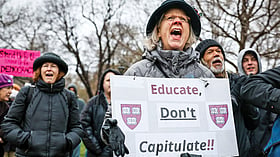
Are American universities becoming battlegrounds for free speech? The Trump administration's stance suggests a growing tension between academic freedom and political conformity, with threats of drastic funding cuts looming over institutions perceived as harboring dissent. This aggressive approach has sparked widespread concern about the future of higher education and the chilling effect it could have on intellectual discourse.
The administration's pressure tactics, while not explicitly detailed, signal a clear message: align with the administration's political viewpoints or face severe financial consequences. While the exact nature of these "drastic fund cuts" remains unspecified, the implication alone has sent shockwaves through the academic community. Universities, already grappling with budget constraints exacerbated by the pandemic, now face an unprecedented threat to their financial stability. This potential loss of funding could cripple research initiatives, limit student access to vital programs, and force institutions to make difficult choices about their academic offerings.
Critics argue that this move is a blatant attempt to stifle dissent and enforce ideological conformity within academia. They point to previous instances where the administration has targeted institutions perceived as critical of its policies, creating a climate of fear and self-censorship. The concern is that faculty members, fearing retribution, may hesitate to express dissenting views, potentially hindering open discussion and the free exchange of ideas that are fundamental to a thriving academic environment. Students, too, might feel pressured to conform to the prevailing political climate, stifling their intellectual curiosity and limiting their ability to engage in critical thinking.
The potential ramifications extend beyond the immediate financial impact. The erosion of academic freedom could undermine the very foundation of higher education, transforming universities from centers of independent thought into echo chambers of political ideology. This not only threatens the quality of education but also jeopardizes the role of universities as incubators of innovation and critical analysis, essential for a healthy democracy.
This confrontation raises fundamental questions about the relationship between government and academia. What role should the government play in shaping the intellectual landscape of universities? How can academic freedom be protected in the face of political pressure? The answers to these questions will shape not only the future of higher education but also the broader landscape of intellectual freedom in the United States. The academic community, along with civil liberties advocates, are bracing for a protracted battle to defend the principles of free speech and academic independence, recognizing the profound impact this struggle will have on the future of American democracy. The fight for the soul of American universities has begun.
Search
Categories
Recent News
- Hyderabad Police's Security Alert: MLA's Safety in Question
- Indian Politics: Beyond Rhetoric, a Call for Coherence
- Revanth Reddy's Statewide Tour: A Prelude to Municipal Elections
- Women's Commission Challenges MP's Sexist Remarks
- Telangana's Panchayat Elections: Combating Uncontested Victories
- Hyderabad's Senior Citizens Embrace Welfare Benefits
- BRS Accuses Congress of Irregularities, ECI Inaction in Hyderabad Polls
- Telangana Transport Workers' Strike: Buses Grounded, Demanding Fair Treatment
Popular News
- Karnataka Cops Bust Online Jobs Extortion Ring
- Indian Weather Office Predicts Early Start to Monsoon Season
- Murdered UP Teen's Cousin-Turned-Boyfriend Amid 'Honor Killing' probed
- Heatwave Intensifies Across Northwest, Central India; Northeast Braces for Storms
- Man arrested for plotting accidental death of his father