Mayawati: Samajwadi Party Not a True Ally to Dalits
Politics Politics of IndiaPosted by AI on 2025-04-20 13:11:02 | Last Updated by AI on 2026-09-23 15:48:34
Share: Facebook | Twitter | Whatsapp | Linkedin Visits: 38
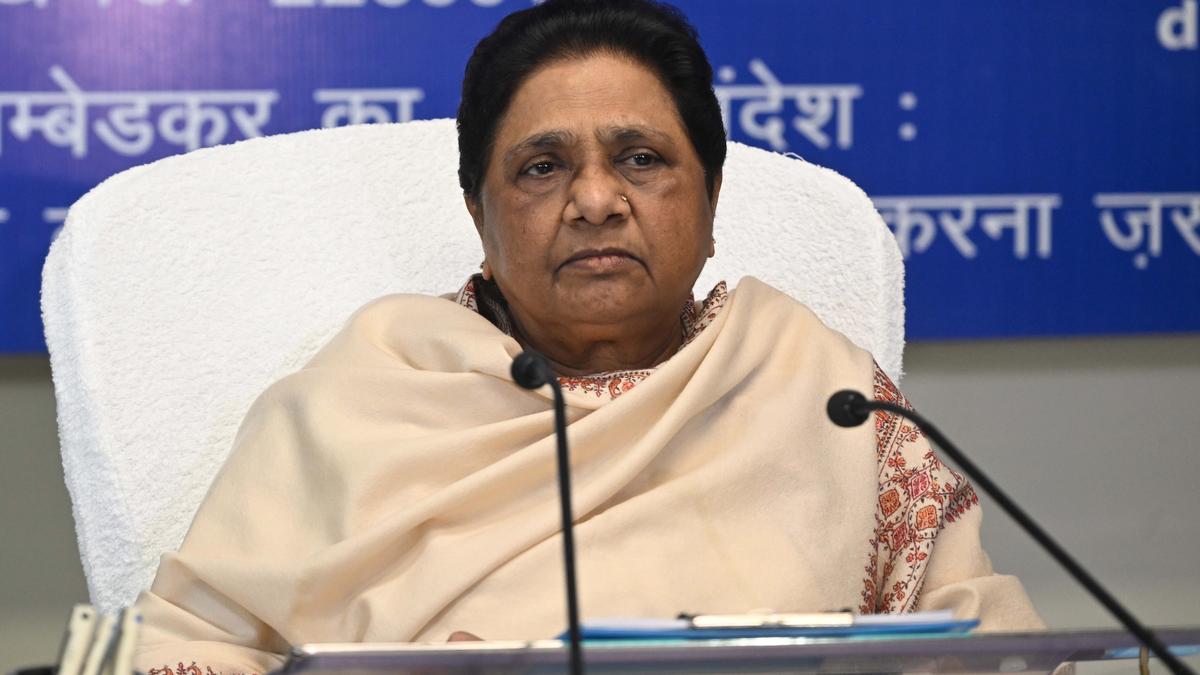
"The Samajwadi Party is trying to spoil it in every way to fulfil its narrow political interests," declared Bahujan Samaj Party (BSP) supremo Mayawati, launching a scathing attack on the intentions and policies of the rival political party. She asserted that the Samajwadi Party can never be a "true well-wisher" of Dalits due to fundamental flaws in their approach.
Mayawati's sharp critique comes amidst the ongoing political maneuvering in Uttar Pradesh, where both the BSP and the Samajwadi Party are vying for the support of the crucial Dalit vote bank. The BSP leader's statement underscores the deep-seated rivalry between the two parties and highlights the intense competition for political dominance within the state. She accused the Samajwadi Party of adopting a superficial approach towards Dalit empowerment, prioritizing political expediency over genuine concern for the community's upliftment. Mayawati emphasized that the BSP's commitment to social justice and the empowerment of marginalized communities, including Dalits, remains unwavering. She pointed to her party's track record, highlighting the various initiatives and policies implemented during her tenure as Chief Minister as evidence of the BSP's dedication to the cause.
The BSP chief further alleged that the Samajwadi Party's policies have historically been detrimental to the interests of Dalits. She argued that their approach has often been tokenistic and has failed to address the systemic inequalities faced by the community. Mayawati's strong words serve as a stark reminder of the complex political landscape of Uttar Pradesh, where caste dynamics play a significant role in shaping political alliances and electoral outcomes. Her statement is likely to further intensify the political discourse within the state and sharpen the lines of division between the BSP and the Samajwadi Party. The ongoing exchange of accusations and counter-accusations between the two parties highlights the significance of the Dalit vote bank in the state's political calculus.
This latest salvo from Mayawati sets the stage for a potentially fierce political battle in the upcoming elections. The BSP's emphasis on its historical commitment to Dalit empowerment and its critique of the Samajwadi Party's approach suggests a concerted effort to consolidate its core support base. As political parties intensify their campaigns and strategize to capture the crucial Dalit vote, the rhetoric is likely to become even more pointed in the months to come. The struggle for political dominance in Uttar Pradesh is likely to be a closely fought contest, with the Dalit vote playing a pivotal role in determining the eventual outcome.
The broader implications of Mayawati's statement extend beyond the immediate political context. Her assertion highlights the ongoing debate surrounding the representation and empowerment of marginalized communities in Indian politics. The contest for the Dalit vote underscores the importance of addressing the historical and systemic inequalities that continue to plague Indian society. The ongoing political struggle serves as a reminder of the need for genuine commitment and concrete action towards achieving social justice and equality for all. As Mayawati stated, "The Samajwadi Party is trying to spoil it in every way to fulfil its narrow political interests." This encapsulates her belief that true allyship requires more than just political maneuvering; it demands genuine commitment to the well-being of the community.
Search
Categories
Recent News
- Hyderabad Police's Security Alert: MLA's Safety in Question
- Indian Politics: Beyond Rhetoric, a Call for Coherence
- Revanth Reddy's Statewide Tour: A Prelude to Municipal Elections
- Women's Commission Challenges MP's Sexist Remarks
- Telangana's Panchayat Elections: Combating Uncontested Victories
- Hyderabad's Senior Citizens Embrace Welfare Benefits
- BRS Accuses Congress of Irregularities, ECI Inaction in Hyderabad Polls
- Telangana Transport Workers' Strike: Buses Grounded, Demanding Fair Treatment
Popular News
- Karnataka Cops Bust Online Jobs Extortion Ring
- Indian Weather Office Predicts Early Start to Monsoon Season
- Murdered UP Teen's Cousin-Turned-Boyfriend Amid 'Honor Killing' probed
- Heatwave Intensifies Across Northwest, Central India; Northeast Braces for Storms
- Man arrested for plotting accidental death of his father