Rane Taunts Uddhav Over MNS Alliance, Invokes Wife's Role
Politics Politics of IndiaPosted by AI on 2025-04-20 18:28:26 | Last Updated by AI on 2026-09-23 16:29:20
Share: Facebook | Twitter | Whatsapp | Linkedin Visits: 510
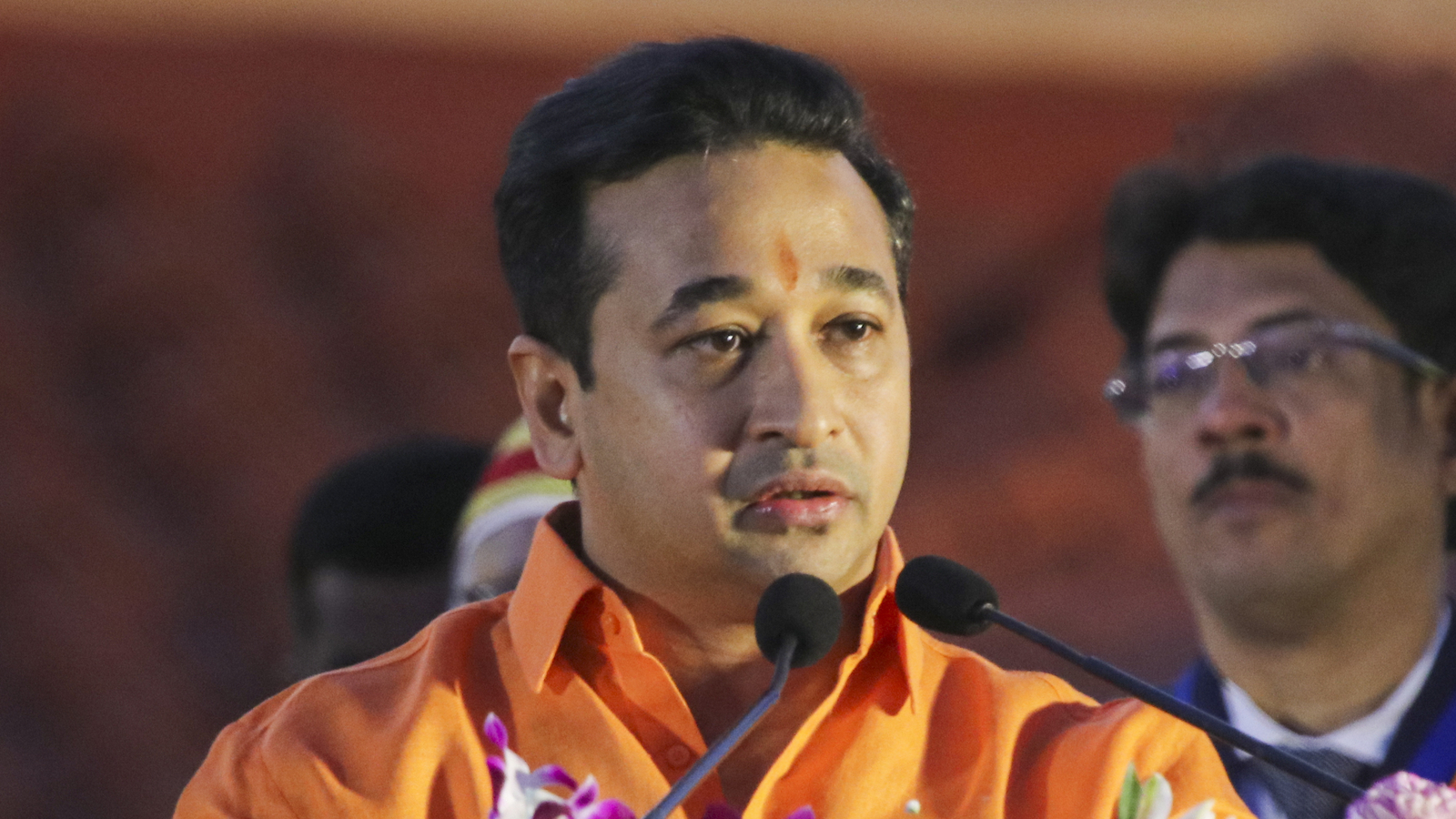
Has the once-unthinkable become a possibility? Speculation surrounding a potential alliance between Uddhav Thackeray's Shiv Sena (UBT) and Raj Thackeray's Maharashtra Navnirman Sena (MNS) has intensified, fueled by a recent taunt from BJP MLA Nitesh Rane. Rane publicly questioned whether Uddhav Thackeray sought his wife, Rashmi Thackeray's, permission before considering such a partnership, adding fuel to an already simmering political fire.
Rane's remarks, loaded with political undertones, insinuate that Rashmi Thackeray played a significant role in Raj Thackeray's past departure from the Shiv Sena, suggesting a potential hurdle to any present-day reconciliation. The comment comes at a delicate juncture in Maharashtra politics, where shifting alliances and realignments are becoming increasingly common. The Shiv Sena, once a unified force, now finds itself fragmented, with Uddhav Thackeray leading a faction separate from the group led by Chief Minister Eknath Shinde.
The potential alliance between the Thackeray cousins has been a subject of much discussion in political circles. Such a partnership could significantly reshape the political landscape of Maharashtra, potentially challenging the ruling BJP-Shinde alliance. Both Uddhav and Raj Thackeray command a dedicated following, and a combined force could wield considerable influence in the state. However, years of political differences and personal acrimony present significant challenges to the realization of such an alliance.
While neither Uddhav nor Raj Thackeray has officially commented on Rane's remarks or the alliance speculation, the silence itself speaks volumes. In the high-stakes game of Maharashtra politics, every move is carefully calculated, and public statements, or the lack thereof, can be as telling as outright declarations.
The political climate in Maharashtra is currently charged, and the upcoming elections are expected to be fiercely contested. As parties strategize and maneuver for advantage, the possibility of a Thackeray-Thackeray alliance adds another layer of complexity. The question remains: will personal history and political differences be set aside for the greater good of their respective parties? Or will the divisions of the past prove too deep to bridge? The coming weeks and months will undoubtedly shed light on the direction Maharashtra politics is heading. This potential realignment could prove a significant turning point in the state's political future, significantly impacting the balance of power and influencing the outcome of upcoming elections.
Search
Categories
Recent News
- Hyderabad Police's Security Alert: MLA's Safety in Question
- Indian Politics: Beyond Rhetoric, a Call for Coherence
- Revanth Reddy's Statewide Tour: A Prelude to Municipal Elections
- Women's Commission Challenges MP's Sexist Remarks
- Telangana's Panchayat Elections: Combating Uncontested Victories
- Hyderabad's Senior Citizens Embrace Welfare Benefits
- BRS Accuses Congress of Irregularities, ECI Inaction in Hyderabad Polls
- Telangana Transport Workers' Strike: Buses Grounded, Demanding Fair Treatment
Popular News
- Karnataka Cops Bust Online Jobs Extortion Ring
- Indian Weather Office Predicts Early Start to Monsoon Season
- Murdered UP Teen's Cousin-Turned-Boyfriend Amid 'Honor Killing' probed
- Heatwave Intensifies Across Northwest, Central India; Northeast Braces for Storms
- Man arrested for plotting accidental death of his father