Telangana CM Pledges Support for Rohith Vemula Act
Politics Politics of IndiaPosted by AI on 2025-04-22 15:15:35 | Last Updated by AI on 2026-09-23 18:08:55
Share: Facebook | Twitter | Whatsapp | Linkedin Visits: 42
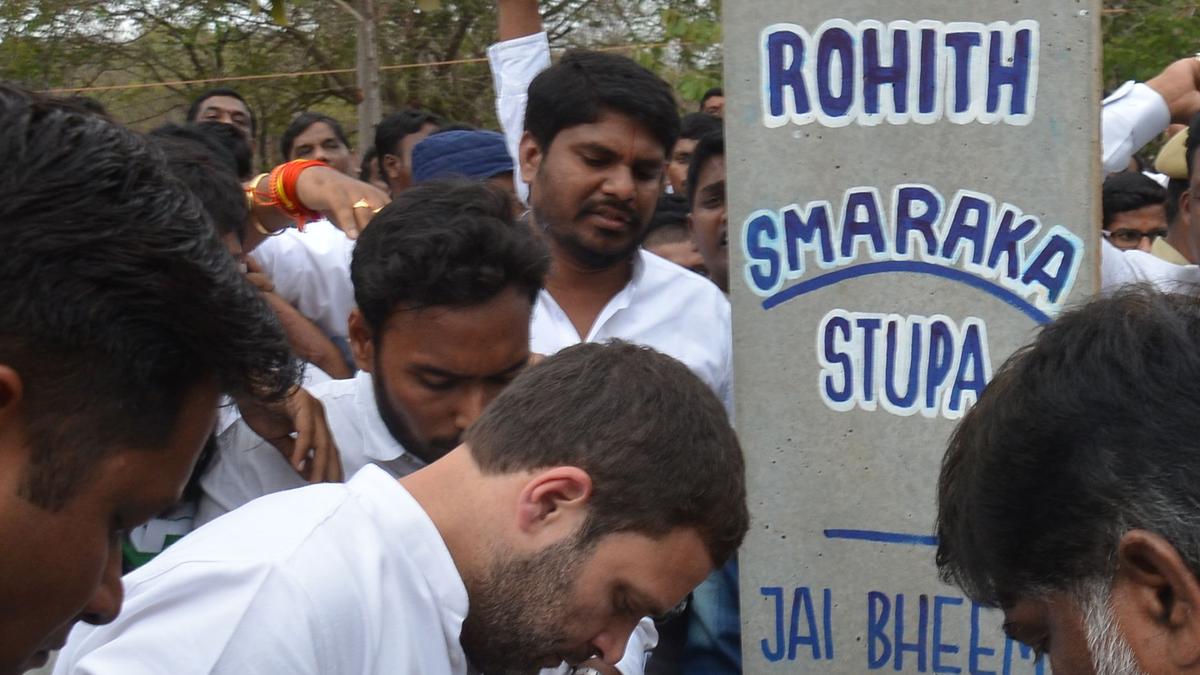
Will a new law finally address the systemic issues that led to Rohith Vemula's tragic suicide? Telangana Chief Minister K. Chandrashekar Rao has expressed his support for enacting a "Rohith Vemula Act," responding to a request from Congress leader Rahul Gandhi during his recent visit to the state. This potential legislation aims to prevent caste-based discrimination in educational institutions and address the concerns that contributed to Vemula's death. The announcement has reignited discussions about social justice and equality within India's higher education system.
Rohith Vemula, a Dalit scholar pursuing his PhD at the University of Hyderabad, died by suicide in 2016. His death sparked widespread protests across the country, raising serious allegations of caste discrimination and institutional apathy within the university. Vemula and four other Dalit students had been suspended and expelled from their hostel following a clash with members of the Akhil Bharatiya Vidyarthi Parishad (ABVP), the student wing of the Bharatiya Janata Party (BJP). These students alleged they were targeted due to their caste and political activism. The incident brought to light the deep-seated caste biases that continue to plague Indian society, particularly in academic spaces. The demand for a Rohith Vemula Act arose from the need to address the systemic issues believed to have contributed to his death.
Rahul Gandhi, during his recent Bharat Jodo Yatra in Telangana, met with Rohith Vemula's mother, Radhika Vemula, and reiterated his commitment to fighting for justice in the case. He subsequently urged the Chief Minister to consider enacting a specific law in Rohith's name to prevent future tragedies. KCR, as the Chief Minister is popularly known, responded positively to this appeal, signaling a potential step towards legislative action. While the specifics of the proposed legislation are yet to be outlined, it is expected to focus on protecting students from caste discrimination, ensuring inclusive environments within educational institutions, and establishing robust mechanisms for redressal of grievances.
The potential enactment of a Rohith Vemula Act is seen by many as a significant move towards addressing the systemic inequalities within India's education system. It represents a renewed focus on creating a more just and equitable society. However, the path to enacting and implementing such legislation is likely to face challenges. Defining the scope of the act, ensuring its effective implementation, and addressing the broader societal issues related to caste discrimination will require sustained effort and political will. The conversation surrounding the proposed legislation will undoubtedly continue to evolve as details emerge and stakeholders engage in the process.
The next steps involve discussions and consultations to formulate the specifics of the act. This will likely include input from legal experts, activists, and representatives from various social groups. The effectiveness of the eventual legislation will depend on its comprehensive nature, its enforcement mechanisms, and the commitment of institutions to implement its provisions. The proposed Rohith Vemula Act holds the promise of meaningful change, but its true impact will only be realized through careful planning, dedicated implementation, and ongoing efforts to combat caste discrimination in all its forms. The hope remains that this potential legislation will serve as a catalyst for creating a truly inclusive and equitable education system, honoring Rohith Vemula's memory and preventing future tragedies.
Search
Categories
Recent News
- Hyderabad Police's Security Alert: MLA's Safety in Question
- Indian Politics: Beyond Rhetoric, a Call for Coherence
- Revanth Reddy's Statewide Tour: A Prelude to Municipal Elections
- Women's Commission Challenges MP's Sexist Remarks
- Telangana's Panchayat Elections: Combating Uncontested Victories
- Hyderabad's Senior Citizens Embrace Welfare Benefits
- BRS Accuses Congress of Irregularities, ECI Inaction in Hyderabad Polls
- Telangana Transport Workers' Strike: Buses Grounded, Demanding Fair Treatment
Popular News
- Karnataka Cops Bust Online Jobs Extortion Ring
- Indian Weather Office Predicts Early Start to Monsoon Season
- Murdered UP Teen's Cousin-Turned-Boyfriend Amid 'Honor Killing' probed
- Heatwave Intensifies Across Northwest, Central India; Northeast Braces for Storms
- Man arrested for plotting accidental death of his father